
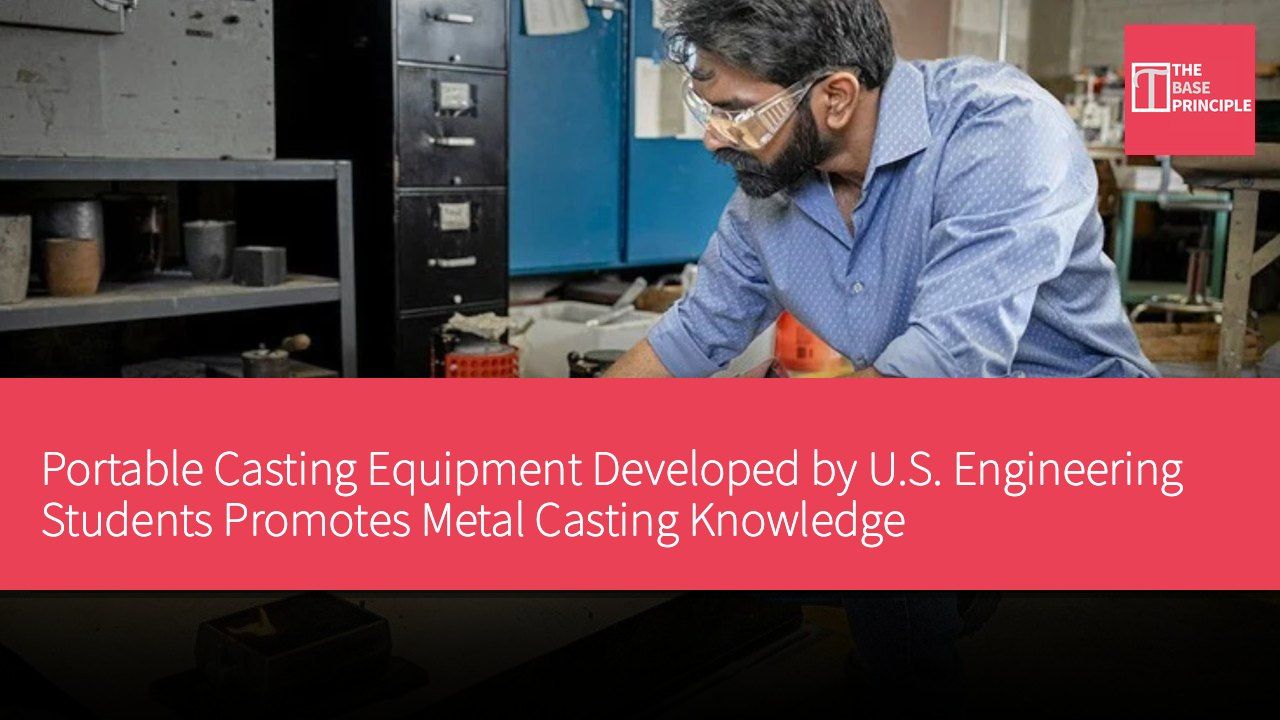
- The portable metal casting toolkit promotes knowledge of metal casting.
- Participants can create metal souvenirs hands-on, enhancing the learning experience.
- The program has attracted the attention of educators, with participation growing year by year.
- Behera's research focuses on developing new aluminum alloys to replace titanium.
The portable metal casting toolkit developed by the University of Wisconsin-Milwaukee (UWM) is bringing traditional casting techniques into classrooms, public events, and even local bars. This compact demonstration device, called "Foundry in a Box," allows participants to safely pour molten tin into molds to create small souvenirs, such as keychains, providing a hands-on experience of the fundamentals of metal casting. The toolkit is designed as an outreach tool, condensing a process typically associated with large industrial facilities into a portable unit.
Participants, wearing protective gloves and safety goggles, pour molten tin into molds and take home a completed metal souvenir while learning how casting supports products in industries such as automotive, aerospace, construction, and manufacturing.
Unlike machining, which removes material, casting involves pouring liquid metal into molds and allowing it to solidify into the desired shape. This method can produce components with complex geometries and remains a key part of manufacturing, from small hardware to large industrial machinery. UWM PhD student Swaroop Behera stated, "Metal casting is everywhere. As long as someone is making something with any metal, metal casting exists."
Expanding the Impact of Casting Education
The project aims to expose students and the public to manufacturing techniques that are often overlooked in traditional science and engineering education. Although "Foundry in a Box" has existed before, Behera helped expand its reach after becoming president of the UWM chapter of the American Foundry Society. Since then, the team has taken the portable casting device to schools, university events, and community venues, with participation growing from a handful of students to hundreds each year. The program has also attracted the attention of educators. Reports indicate that a demonstration of the portable casting system at the Wisconsin Technical Education Association conference drew a full audience.
Behera noted that allowing participants to create items hands-on makes manufacturing concepts more accessible and encourages greater interest in engineering disciplines.
Industry Recognition and Research Development
The outreach program has also received recognition from the industry. The Casting Education Foundation, which strengthens ties between universities and the metal casting industry, established a graduate scholarship at UWM after witnessing the success of the program, with Behera being the first recipient. In addition to the outreach program, Behera's doctoral research focuses on developing aluminum alloys that can replace titanium in certain high-temperature applications—an advancement that could ultimately benefit industries seeking lighter, higher-performance materials, including aerospace and advanced manufacturing. Titanium is valued for its strength and high-temperature performance but comes with high processing costs.
Developing aluminum alloys that perform well under harsh conditions can provide manufacturers with an alternative material option, although any substitute will depend on the specific application and its performance requirements.
While his plans remain open, Behera expressed a desire to continue connecting engineering research with practical applications and to encourage more students to explore careers in manufacturing. "Science has come a long way, and technology is catching up—this is where materials science comes into play," he said. "You are always trying to identify and solve a specific problem for a particular industry."
The Impact of Portable Casting on Education
The portable metal casting toolkit not only exposes students and the public to manufacturing techniques that have traditionally been overlooked but also enhances interest in engineering through hands-on experiences. The success of this program demonstrates the increasingly close ties between education and industry, capable of inspiring greater awareness of metal casting. As participation grows, such outreach programs could serve as a model for other schools and institutions to promote science and engineering education, further fostering the integration of technology with practical applications.