
Key Points
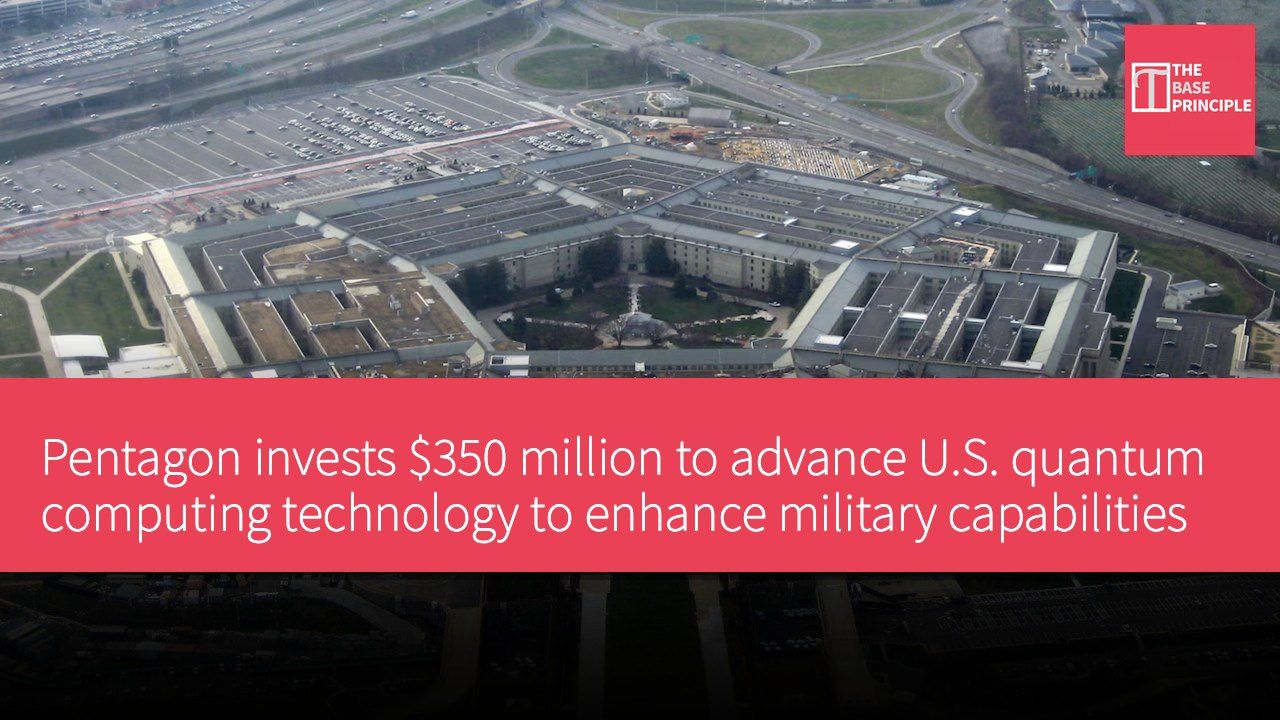
- The U.S. Department of Defense will allocate approximately $350 million to advance quantum computing technology.
- The program aims to develop next-generation weapons and more efficient military systems.
- China also regards quantum technology as a strategic priority, attracting substantial investment.
- The U.S. Department of Energy launches the Quantum Genesis Q competition, providing funding to support relevant companies.
Military Applications of Quantum Computing
The Pentagon expects the resulting capabilities to aid in developing next-generation weapons, platforms, and other military systems that could be more effective, more cost-efficient, and easier to manufacture. Quantum computers leverage quantum mechanical effects to process information, enabling them to solve certain problems differently than classical computers. Potential applications include modeling advanced materials and chemical reactions, optimizing complex logistics networks, and solving computational problems that current systems struggle to handle. Cryptography is another strategic area of concern, as future quantum computers with sufficient computational power could break widely used public-key encryption methods, although current machines cannot yet do so at the required scale. This prospect has also accelerated efforts to develop quantum-resistant encryption technologies.China's Quantum Research Priorities
China treats quantum technology as a strategic research priority and has attracted substantial state investment. The country established the National Laboratory for Quantum Information Sciences in 2017, and its 2026–2030 Five-Year Plan designates quantum research and applications as a key focus area. The Chinese military has shown interest in potential cyber warfare applications. A 2026 report describes more than 10 experimental quantum cyber warfare tools being developed by the People's Liberation Army, though their capabilities and operational maturity remain unclear. Washington is also responding through defense and civilian research programs; according to Bloomberg, U.S. lawmakers have discussed increasing annual military spending on quantum development and applications by 68% to $567 million. The U.S. Department of Energy has also launched the Quantum Genesis Q competition, providing up to $215 million in funding to companies working to develop fault-tolerant quantum computers. The Pentagon's latest initiative also includes additional support for companies attempting to build practical quantum computers, the South China Morning Post reported. Its Strategic Capital Office signed a conditional loan commitment worth $150 million with PsiQuantum, with the funds intended to bolster the company's advanced manufacturing and prototyping capabilities in the United States.Strategic Significance of U.S. Quantum Computing Investment
The U.S. Department of Defense's investment underscores the importance of quantum computing technology in the military domain, particularly in enhancing technological advantage and addressing potential threats. As China increases its investment in quantum technology, this U.S. initiative is not only a means to enhance its own military capabilities but also a key measure to maintain global technological leadership. Potential applications of quantum computing, including cryptography and optimization of complex logistics, could change the future patterns of warfare, making competition among nations for quantum technology increasingly intense.H
About the author
Henderson