
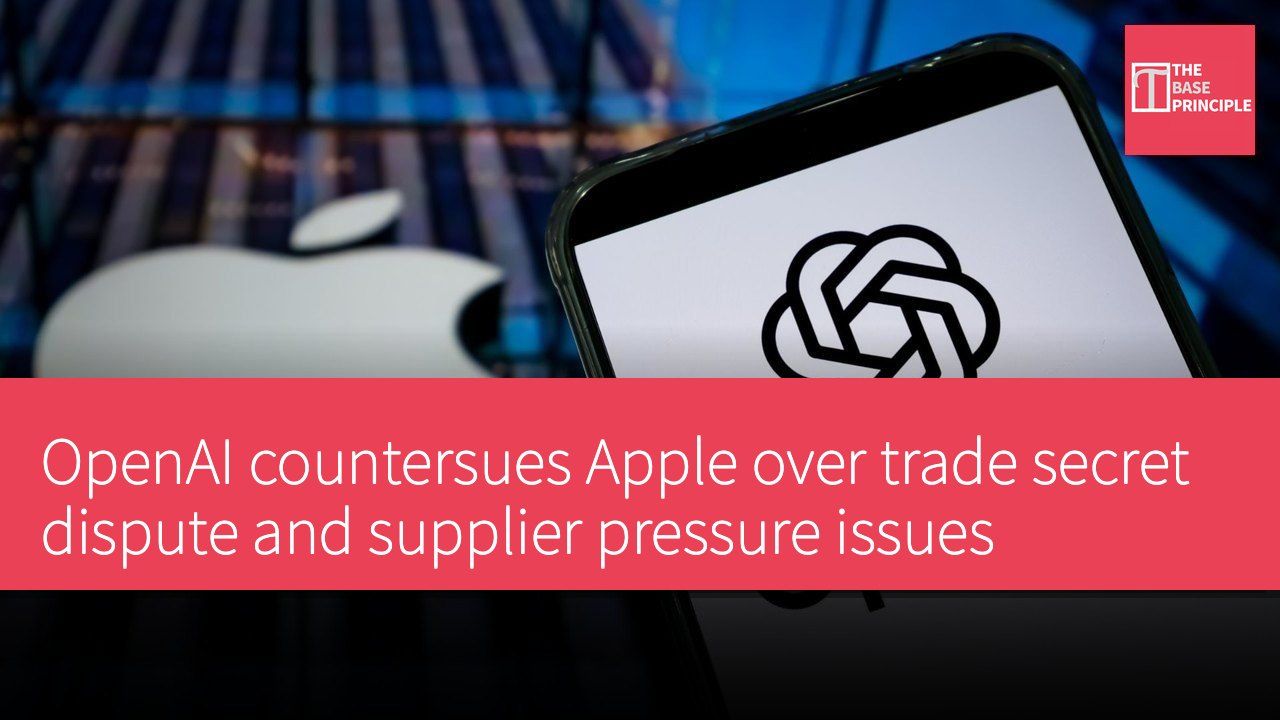
- OpenAI accuses Apple of stealing confidential information and obstructing supplier access.
- The incident involves supply chain impacts and the future development of personal device ecosystems.
- This case reflects the conflict between the two parties regarding employee mobility and confidential information.
- The incident may affect suppliers' caution in accepting new clients.
OpenAI has escalated its trade secret dispute with Apple, filing a countersuit in California court on November 27, accusing Apple of stealing confidential information and attempting to obstruct access for its hardware suppliers, aiming to stifle competition through improper means. This follows a previous lawsuit filed by Apple against OpenAI, with the conflict extending from software to the personal device market, where OpenAI accuses Apple of using its market power to suppress competition and threatening suppliers interested in collaborating on new hardware products.
According to a report from the Financial Times, OpenAI claims that Apple is using its "scale and financial power" to suppress competition and has threatened suppliers that might collaborate with OpenAI. The case involves supply chain impacts, employee mobility, and the future development of personal device ecosystems. The complaint alleges that Apple has exceeded typical supply chain influence, attempting to lock down manufacturing capabilities and key components, involving a former employee who previously worked at OpenAI and later returned to Apple, leaking information about the company's product plans and supplier relationships.
OpenAI accuses Apple of encouraging employees to store company files on personal devices and cloud storage accounts, likening the situation to a Hotel California-style trap.
OpenAI's Allegations Against Apple
On the other hand, OpenAI also claims that Apple is using its strategy to promote new personal devices as a reason to expand its ambitions in the hardware domain; this includes the planned acquisition of Jony Ive's io Factory for $640 million by May 2025, aiming to develop its own devices that can compete with Apple. OpenAI states that these hardware ambitions are intended to challenge Apple's previously monopolistic position in the hardware market, traditionally dominated by the iPhone, and that tensions between the two parties have intensified due to disputes over employee mobility and confidential information. Both parties have yet to publicly respond to the latest allegations.
According to a summary by 9to5Mac, OpenAI has countersued Apple, emphasizing that Apple has stolen trade secrets and prevented it from engaging with suppliers related to future devices. The list of plaintiffs includes io Products and former Apple executives Tang Tan and Chang Liu; Apple's allegations focus on confidential engineering information and hardware development details being taken to assist OpenAI's business device plans. OpenAI has also responded to last year's allegations, stating that it was previously attempting to prevent Apple employees from being hired.
This case reflects the conflict between the two parties regarding employee mobility, confidential information, and supplier relationships, extending the dispute to future digital device strategies.
In terms of market reaction, the incident may lead suppliers to be more cautious when accepting new clients and could affect OpenAI's timeline for hardware product releases. Reports also indicate that Apple has stated it will provide more evidence to support its investigation while seeking a preliminary injunction to prevent OpenAI from further using its alleged trade secrets; the previously scheduled trial dates and litigation processes are also affected by this new wave of lawsuits. More information can be found in the official responses and press releases on openai.com and apple.com.
Reports also indicate that the dispute between the two parties has extended from earlier supply chain and employee confidentiality issues to involve data sharing and cross-company collaboration among colleagues. OpenAI has accused Apple of urging employees to store data on personal devices or in the cloud for non-work purposes and noted that Apple has encouraged former employees to join OpenAI; meanwhile, Apple has emphasized that it is conducting a comprehensive investigation and responding to the allegations through legal processes. This case will influence the legal strategies and business actions of both companies in the coming months.
Impact of the Incident on the Technology Industry
In terms of long-term impact on the technology industry, the incident exposes the competition between software giants and hardware giants in terms of economies of scale, supply chain control, employee mobility, and intellectual property protection. If the court ultimately rules in favor of OpenAI, it could lead to new changes in the cooperation models among tech giants; conversely, if Apple wins, it may further consolidate its supply chain control in the high-end device market while affecting the development and public relations strategies of future new devices.
Currently, there has been no public ruling, and the public must closely monitor the court's future proceedings and the responses from both parties. For digital products and software giants, this dispute is not just a business confrontation but also concerns innovation momentum, supply chain transparency, and the establishment of trust mechanisms between companies. For the latest developments, it is advisable to keep an eye on updates from openai.com and apple.com.
From a long-term perspective, if OpenAI's hardware ambitions are amplified, it could drive broader cross-platform integration, but it also requires the establishment of a more rigorous framework for data protection and business ethics to ensure that suppliers' independence and innovation momentum are not stifled by market forces. Conversely, if Apple can maintain existing supply chain stability through a win or compromise solution, it may retain its leading position in the integration of new hardware and software while stabilizing investor confidence. Ultimately, this dispute centers on how to define the boundaries of cooperation between companies while protecting user and employee interests under competitive pressure.
In the future, both parties' judicial processes and public responses will be worth closely watching, as these dynamics may influence how other tech companies approach employee hiring, confidential information handling, and collaboration with other tech firms. As the global tech market becomes increasingly fragmented, court rulings may become important cases for the industry regarding "how to balance protecting innovation and maintaining competition."
Why did OpenAI file a countersuit against Apple?
OpenAI accuses Apple of stealing confidential information and attempting to obstruct access for its hardware suppliers, aiming to stifle competition through improper means.
What impact does this lawsuit have on suppliers?
The incident may lead suppliers to be more cautious when accepting new clients and could affect OpenAI's timeline for hardware product releases.
What is Apple's response to OpenAI's allegations?
Apple has stated it will provide more evidence to support its investigation and is seeking a preliminary injunction to prevent OpenAI from further using its alleged trade secrets.
What long-term impact does this dispute have on the technology industry?
The incident exposes the competition between software giants and hardware giants in terms of supply chain control, employee mobility, and intellectual property protection, which may change cooperation models among tech giants.
What is the current progress of this lawsuit?
Currently, there has been no public ruling, and the public must closely monitor the court's future proceedings and the responses from both parties.
The Struggle for Supply Chain Control and Competitive Pressure
This case reveals the intense competition between tech giants over supply chain control and intellectual property protection. The dispute between OpenAI and Apple involves not only the protection of trade secrets but also the future development and market strategies of digital devices. If the court rules in favor of OpenAI, it may change the cooperation models among tech companies, promoting a fairer competitive environment; conversely, if Apple wins, it may further consolidate its dominant position in the market, affecting the industry's innovation momentum.