
- NuScale Power has received NRC approval, becoming the first small modular reactor manufacturer.
- NuScale is collaborating with Doosan Enerbility to supply upper reactor cooling systems to support the reactors.
- NuScale's first commercial plant is under construction in Romania, utilizing six upgraded nuclear reactor modules.
- Doosan Enerbility will enhance manufacturing capabilities to support NuScale's reactor module production.
U.S. energy company NuScale Power has received approval from the Nuclear Regulatory Commission (NRC), becoming the first approved small modular reactor (SMR) manufacturer, and has partnered with South Korea's Doosan Enerbility to provide upper reactor cooling systems (URCS) for its reactors. The two companies recently signed an agreement to deploy URCS in NuScale's commercial-scale reactors. As demand for clean energy rises, countries are refocusing on nuclear power for its ability to generate electricity on demand without carbon emissions.
Learning from past experiences, project delays during facility construction can lead to cost overruns, and nuclear energy is expected to make a comeback in the form of small modular reactors, which are produced in factories and assembled on-site.
NuScale's Business Plan
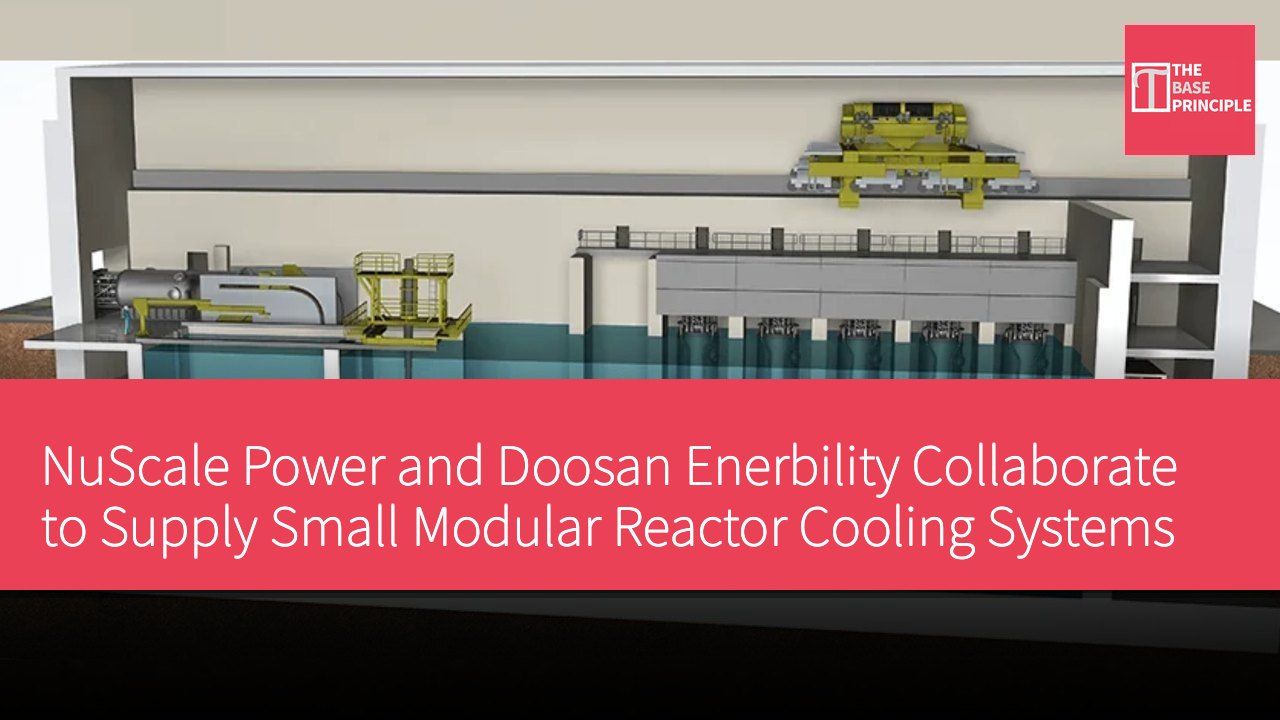
Founded in 2007, NuScale Power is one of the first companies in the U.S. dedicated to turning this vision into commercial reality. The company received approval from the U.S. NRC for its 50 megawatt (MW) design in 2020. More than five years later, NuScale is constructing its first commercial-scale plant at a former coal power station in Romania, which will utilize six upgraded nuclear reactor modules. NuScale's SMR design is a pressurized water reactor that combines steam generation and heat exchange in the same unit, with each module capable of generating 77 MW of electricity.
The company refers to its assembled plants as VOYAGR, which can include four, six, or 12 modules based on user requirements. A 12-module plant has a maximum output of 924 MW, while its first installation in Romania will feature six modules, with a total output of 462 MW.
Doosan Enerbility's Role
Under the new agreement, Doosan will manufacture the upper reactor cooling system (URCS), a critical component within the reactor pressure vessel that maintains coolant under high temperature and pressure. "This contract marks an important step in the transition of SMR technology from technical validation to actual manufacturing," said Jongdoo Kim, CEO of Doosan Enerbility's nuclear division, in a press release. "With our extensive experience in nuclear manufacturing, Doosan will continue to support NuScale's commercial projects." John Hopkins, President and CEO of NuScale Power, stated, "This agreement is a significant step in transforming our approved design into deliverable modules."
Doosan's nuclear manufacturing facilities and collaboration since 2019 have equipped us with the manufacturing capabilities and process maturity required to deliver NPM to meet customer timelines.
As NuScale works to build its first plant in Romania, Doosan will increase its manufacturing capacity to support the production of reactor modules. The company is also strengthening its supply chain and manufacturing readiness to ensure timely delivery of components to NuScale.
Commercialization Process of Small Modular Reactors
As global demand for clean energy increases, the commercialization of small modular reactors (SMRs) becomes particularly important. NuScale Power's successful approval and its collaboration with Doosan Enerbility signify a crucial step in moving nuclear technology from theory to practice. Doosan Enerbility's manufacturing capabilities and experience will provide essential support to NuScale, ensuring timely delivery of reactor modules, which is vital for meeting market demand and driving the resurgence of nuclear energy.