
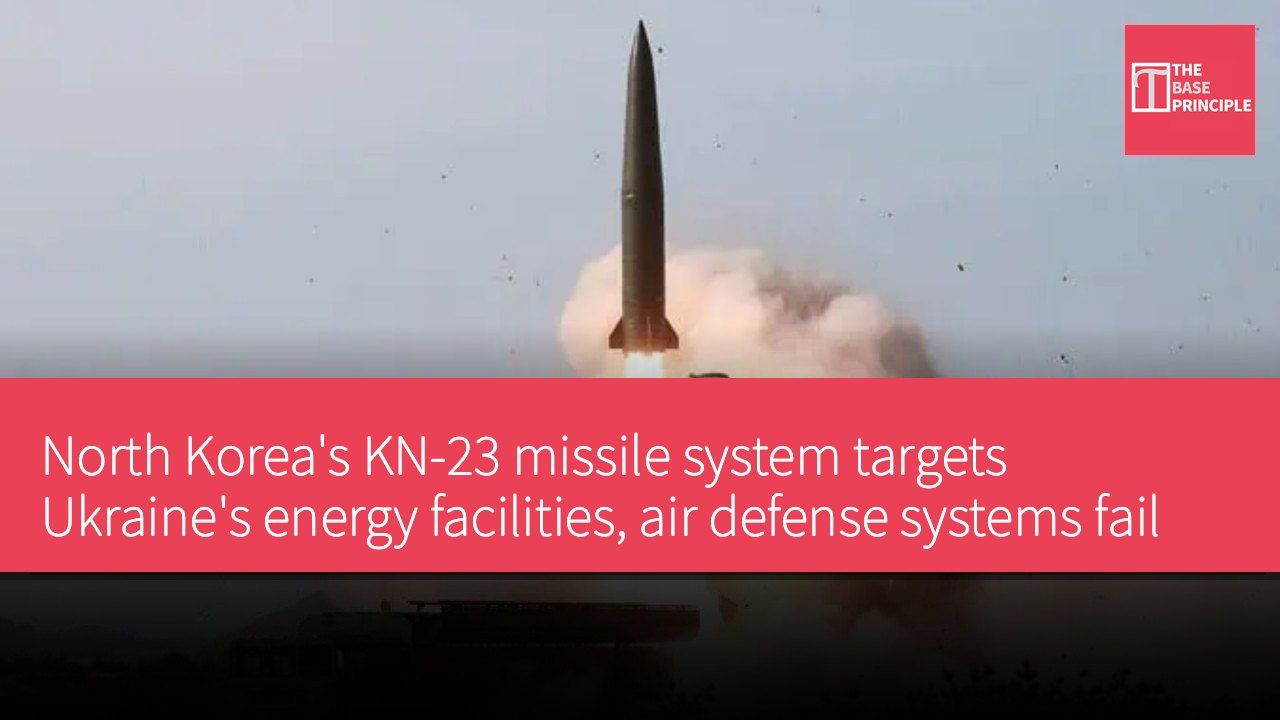
- The KN-23 missile system from North Korea played a significant role in the attack on Kyiv.
- Most KN-23 missiles were not intercepted by Ukraine's air defense systems, with only four successfully shot down.
- The KN-23 missiles possess stealth and maneuverability, making them difficult for air defense systems to counter.
- Russia's recent missile launch accuracy has improved, posing a threat to Ukraine.
According to Ukrainian President Volodymyr Zelensky, the KN-23 missile system from a U.S. adversary played a significant role in the attack on Kyiv on November 7. Russia launched 36 short-range missiles manufactured in North Korea, targeting Ukraine's critical energy infrastructure in anticipation of the upcoming winter. Zelensky stated on social media that most of these missiles were not intercepted by Ukraine's air defense systems, with only four successfully shot down.
Introduction to the KN-23 Missile System
North Korea's KN-23 missile, known in Pyongyang as Hwasong-11A, is a "tactical guided weapon" that can be launched from mobile launchers, featuring short-range coverage capabilities. These North Korean missiles are similar in design to Russia's Iskander-M missile, appearing to have a larger warhead and a longer range.
Reports indicate that in initial tests conducted in May 2019, the missile achieved a range of 150-260 miles (240-420 kilometers), with a maximum altitude of 30-37 miles (50-60 kilometers) during its ballistic trajectory. Over the following two months, the range was further increased, nearing 270 miles (430 kilometers). Missile defense advocates reported that one missile even flew approximately 430 miles (690 kilometers), reaching a maximum altitude of 30 miles (50 kilometers).
Experts from the Center for Strategic and International Studies (CSIS) have also confirmed the maximum range data for the KN-23.
The missile uses solid fuel, with a low and flat flight path that shortens flight time. This allows ballistic missiles to evade enemy radar and interception systems, as they do not follow a standard ballistic parabolic trajectory and possess maneuverability during flight. The Ukrainian Ministry of Defense stated in April of this year that the KN-23 had been used in previous attacks and acknowledged that this type of weapon is "extremely difficult to counter" for air defense systems.
Improvement in Missile Accuracy
Nevertheless, the accuracy of North Korean missile systems was initially low. Reports indicated that the KN-23 missiles launched by Russia in early 2024 were often inaccurate. Since December 2024, as manufacturers upgraded designs based on operational usage data, the accuracy of launches and strikes has improved. According to Ukrainian officials, by December 2025, over 20 ballistic missiles launched by Russia landed within 50 to 100 meters of their intended targets, a significant improvement compared to earlier instances where they often deviated by 1000 to 3000 meters.
The latest attack targeted substations in the Kyiv region, which connect the Rivne and Khmelnytskyi nuclear power plants with Kyiv and central Ukraine. Other substations in the Vinnytsia, Zhytomyr, Rivne, Kharkiv, and Dnipropetrovsk regions were also damaged, with Russia simultaneously launching 172 drones during this attack.
On October 30, the U.S. State Department approved a plan to potentially sell 500 Patriot air defense interceptor missiles to Ukraine, which is a primary defense measure against ballistic missiles, with Lockheed Martin being the main defense contractor.
The Threat of North Korean Missiles to Ukraine's Energy Infrastructure
North Korea's KN-23 missile system has demonstrated its threat to Ukraine's energy infrastructure in recent attacks, especially with winter approaching. The design of this missile allows it to evade air defense systems, posing a challenge to Ukraine's defensive capabilities. With the improvement in missile accuracy, Russia's attacks will become more threatening, particularly against energy infrastructure, which could impact Ukraine's energy supply and civilian life. While U.S. air defense support is crucial, its effectiveness against this new type of missile remains to be seen.