
- A new aluminum coating could simplify the production of battery components.
- The water-based coating is designed to remain effective after stamping.
- Coated aluminum can improve component durability and electrical insulation.
- Novelis emphasizes the use of recycled aluminum to reduce environmental impact.
A new aluminum coating promises to simplify the production of battery components by protecting the metal during forming and adding properties needed for electric vehicles and energy storage systems. Novelis is expanding its portfolio of aluminum coating solutions, targeting components in battery applications, including battery enclosures, casings, and electrical connectors known as busbars. The approach combines automotive-grade aluminum sheet with surface treatments designed to improve corrosion resistance and formability. The company says the coating material can also be engineered to provide electrical insulation in specific battery applications.
Application of the water-based coating
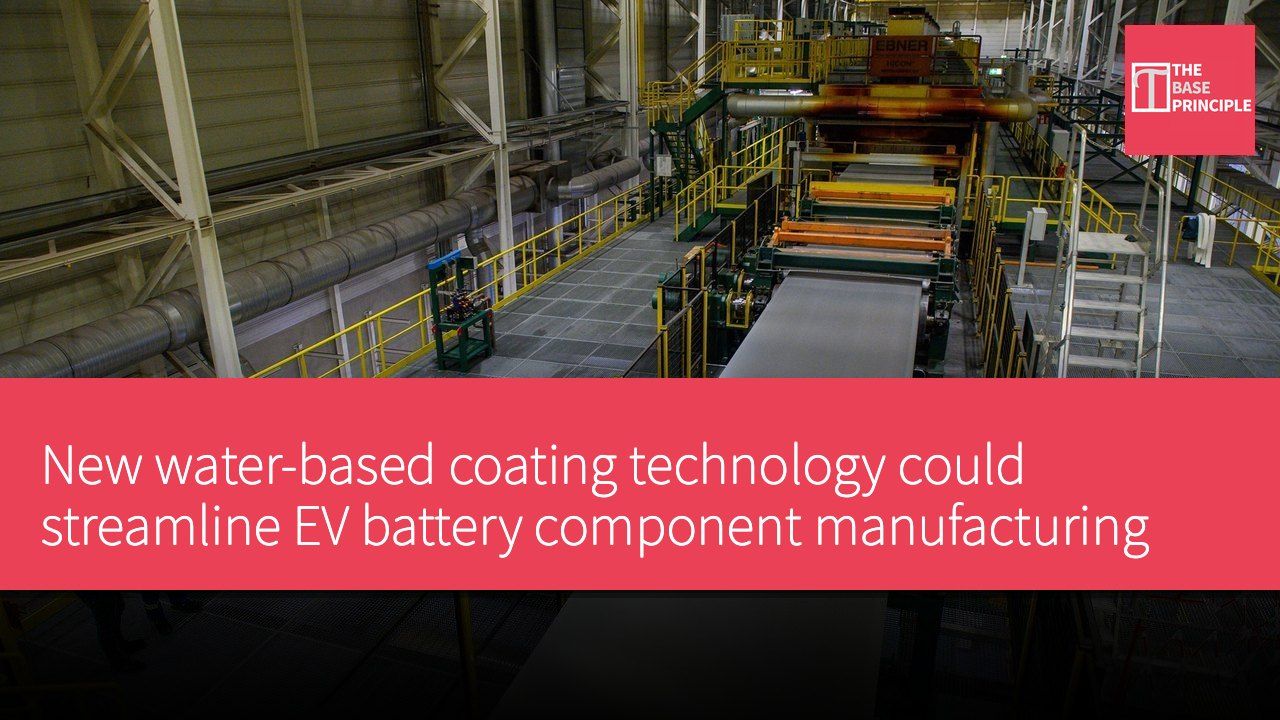
A key part of the technology is applying a water-based coating to aluminum coils that are then formed into components. The coating is designed to remain effective after stamping, which could allow manufacturers to skip some processing steps that would otherwise be needed on untreated aluminum.
Battery components must be able to withstand demanding production and operating conditions. Aluminum is favored for being lightweight, durable and recyclable, but components may need additional surface treatments to protect them from corrosion or to provide electrical insulation. Novelis says its pre-applied coating can meet those requirements before the aluminum reaches the forming stage. Because the coating is already on the coil, manufacturers may be able to reduce their reliance on external lubricants and additional plating processes.
Milan Felberbaum, Novelis's European R&D director, said: "Drawing on decades of automotive expertise, we have developed aluminum solutions that combine advanced surface technology with high-performance sheet for demanding battery applications. By integrating these capabilities, we help customers improve manufacturing efficiency while supporting battery performance and durability." The company says the coating has been validated on its advanced coating line in Germany, and that its ability to survive stamping is particularly important because battery components typically need to be shaped into complex geometries after the coating is applied.
Reducing production complexity
This coated aluminum can be used for battery enclosures and casings, where its corrosion resistance helps improve component durability. It can also be tuned to provide electrical insulation where needed, useful for components that must avoid unwanted electrical contact. The technology targets both electric mobility and stationary energy storage, giving the material applications across different battery systems, not just automotive ones.
Novelis also emphasizes the use of recycled aluminum. The company says high-recycled-content, low-carbon aluminum can support efforts to reduce the environmental footprint of the battery supply chain. Closed-loop recycling can potentially return aluminum recovered from products back into the manufacturing cycle. The announcement, then, is less about changing battery chemistry than about changing the materials and production processes around batteries. By combining aluminum's lightweight properties with pre-applied coatings, the company aims to make battery component manufacturing simpler while meeting durability and insulation requirements.
The approach could also help manufacturers reduce production complexity if fewer coating and lubrication stages are needed. However, the announcement does not provide specific figures on cost savings, production time reductions or battery performance improvements. Novelis is positioning its expanded portfolio for the growing battery and energy storage market, building on its experience supplying aluminum products to the automotive industry.
Item Specification Material type Aluminum Coating type Water-based coating Application scope Battery enclosures, casings and busbars
Impact of the new technology on battery manufacturing
This new water-based coating technology can not only improve the production efficiency of battery components but also reduce reliance on traditional surface treatments, which is critical to the development of electric vehicles and energy storage systems. As demand for batteries grows, this kind of innovation can help lower production costs and environmental impact and support sustainability. Novelis's approach reflects its expertise in aluminum materials and signals a long-term commitment to future battery technology.