
- The electromagnetic reflection characteristics of drones are crucial for security strategies.
- Researchers are using Physical Vapor Deposition technology to alter material radar signatures.
- Plans are in place to apply PVD coatings to complex drone geometries.
- Artificial metasurface materials may offer a cheaper and faster alternative.
As drones become central components of security and defense strategies, controlling their radar signatures has become a commercial and tactical priority. Modifying the electromagnetic reflection characteristics of drones can prevent them from being detected from a distance as they approach radar detection ranges or allow them to bypass military airspace without triggering aerial defense systems. Samel Arslanagic, an associate professor and head of the electromagnetic systems department at the Technical University of Denmark (DTU), stated that researchers at DTU are collaborating with Aarhus University, the Danish Technological Institute, and industry partners including TICRA and Arctic Unmanned to develop advanced electromagnetic materials.
Introduction to Physical Vapor Deposition Technology
The research project is proceeding along two complementary paths, with the first path focusing on a technique known as Physical Vapor Deposition (PVD), which is a method for creating ultra-thin surface coatings that can alter the radar characteristics of materials.
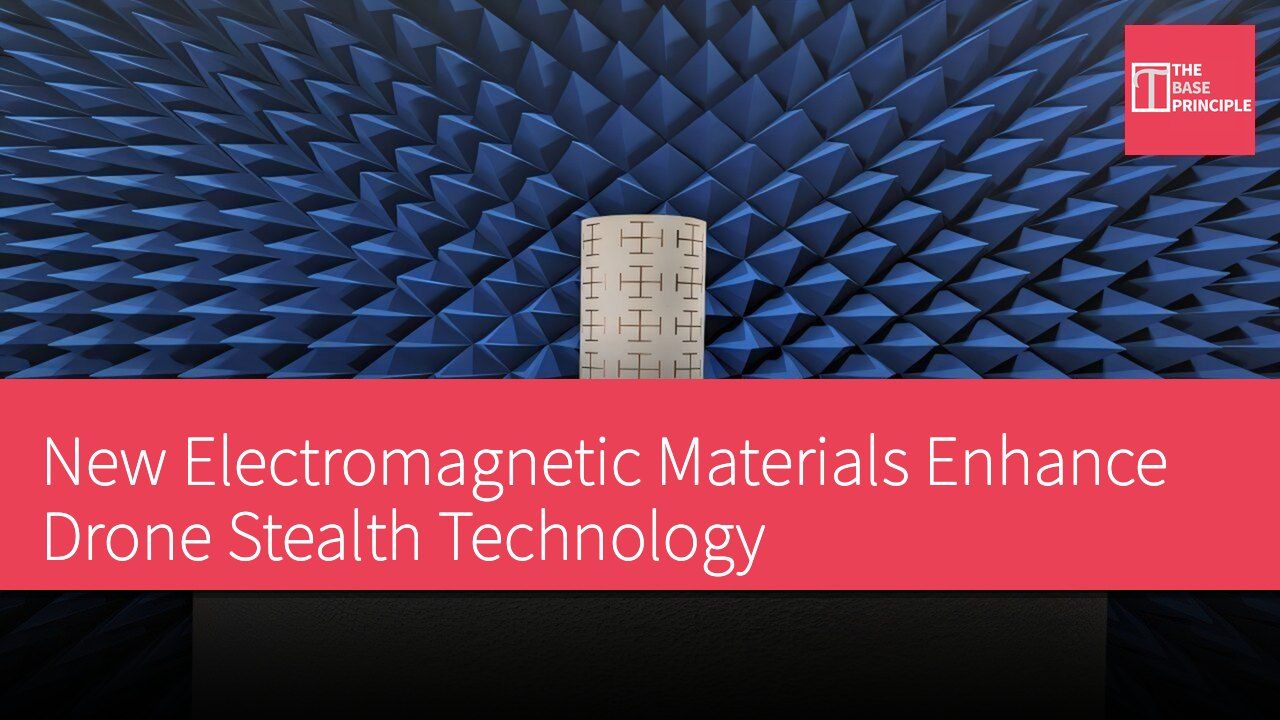
By bombarding surfaces with specific atoms, researchers can create customized materials that enhance or diminish radar reflections, effectively making external detection more difficult. In laboratory tests of the basic geometric designs of PVD-coated materials, researchers successfully attenuated reflected electromagnetic waves significantly; however, current tests have only used simple structures such as rectangular plates and cylinders. According to Arslanagic, these shapes are ideal because they allow for a fundamental theoretical understanding of how waves interact with materials and how intensity is lost upon impact.
The next step for this method is to apply PVD coatings to the complex geometries of fully assembled drones. After initial radar characteristic tests at the DTU electromagnetic testing center, the precise electromagnetic properties of the benchmark drone materials designated for coating were recorded. This data provides a foundation for models that can calculate how future structural PVD coatings can be optimized to become efficient as the geometries approach those of real drone exteriors. Industry experts will be directly involved in these tests, providing the necessary expertise in manufacturing, radar systems, and electromagnetic modeling to support complex computational models.
Potential of Artificial Metasurfaces
In terms of design, the main requirement emphasized by industrial partners is that the final lightning protection materials must remain robust without adding to the overall weight of the drone. The alliance anticipates that the coating will become a core process in the early stages of drone manufacturing. Additionally, researchers are investigating whether coatings can be applied only to areas of the drone that are vulnerable to electromagnetic wave attacks, to save resources and expedite coating times.
Meanwhile, the second path of the project utilizes artificial metasurfaces as core materials. These structures consist of patterns of metallic and insulating microelements that can influence the reflection of electromagnetic energy based on their construction. Arslanagic explains that these metasurfaces hold significant potential for radar manipulation. Due to the way the materials are utilized, manufacturing metasurfaces for drone exteriors may be cheaper and less time-consuming than the PVD method.
Future Developments in Drone Stealth Technology
As the importance of drones in security and military applications continues to grow, enhancing their stealth capabilities has become critical. Through research on Physical Vapor Deposition technology and artificial metasurface materials, it is possible to effectively alter the radar characteristics of drones, thereby improving their survivability. These technologies not only reduce the risk of detection but also optimize drone performance without adding weight. As technology advances, future drones may offer greater flexibility and cost-effectiveness in design and application, providing better support for various types of missions.