
- The B8 pile failed to sustain a nuclear chain reaction; Germany still faced major obstacles to success.
- The reactor required twice the uranium and heavy water on hand, both in extremely limited supply.
- Germany chose heavy water as its neutron moderator, but supply was disrupted by Allied operations.
- Research shows a vast gap between the German nuclear program and actual material availability.
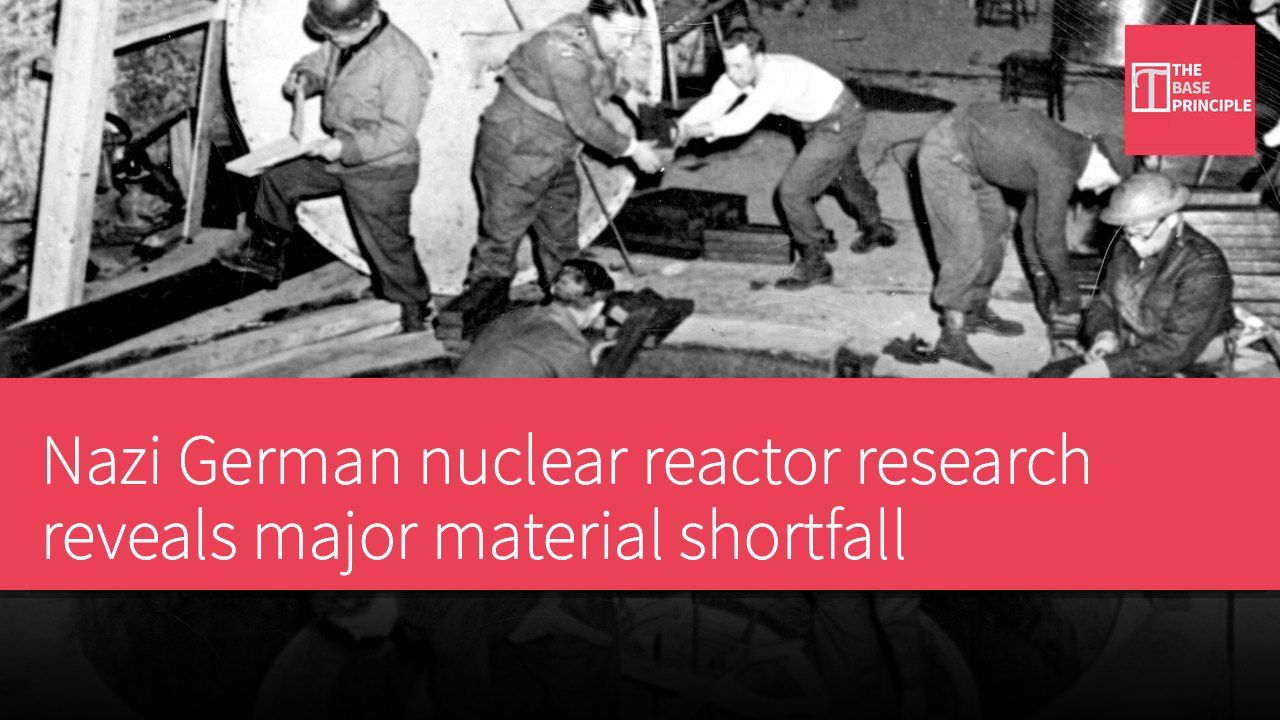
When U.S. forces reached Nazi Germany's final experimental nuclear reactor, the B8 pile, in 1945, they found a machine that had never sustained a nuclear chain reaction. Although they dismantled it, a question lingered: just how close were the Germans to success? The project's scientific leader, Werner Heisenberg, later described the B8 pile as a single step from success. Decades later, two surviving uranium cubes and a trove of wartime documents gave researchers a way to test that claim. Timothy Koeth and his colleagues found the obstacles were far greater than Heisenberg portrayed.
The reactor would have needed roughly twice the uranium it possessed, and roughly twice the heavy water that Norway's supplier produced during the entire war.
Analysis of reactor material requirements
The B8 reactor used natural uranium as fuel and heavy water as a neutron moderator. The two materials played distinct roles in the attempt to sustain nuclear fission. When a uranium atom splits, it releases neutrons that can cause other uranium atoms to split. A reactor reaches criticality when enough neutrons trigger further fissions to maintain a chain reaction without dying out. In the German design, however, the neutrons released by fission moved too fast to support the process effectively. The moderator's job is to slow those neutrons, improving their ability to trigger additional fissions.
German scientists chose heavy water because it contains deuterium, a heavy isotope of hydrogen. Uranium alone was therefore insufficient; the reactor also needed enough moderator to sustain a chain reaction.
Koeth and his colleagues examined two natural uranium cubes from the German wartime nuclear program and consulted historical records, technical reports, correspondence and other archival sources. Their reconstruction indicates that reaching criticality would have required roughly twice the uranium available to the B8 pile. The heavy-water requirement presented an even larger hurdle: it amounted to twice the total wartime output of Norway's Norsk Hydro. The Norwegian facility at Vemork was Germany's source of heavy water, making the reactor program dependent on a limited supply that Allied operations targeted repeatedly.
Although graphite can moderate neutrons in some reactors, the researchers found that graphite in German-controlled territory was unsuitable for the purpose.
Major gap in German nuclear program
The picture that emerges draws a distinction between Germany's nuclear ambitions and a near-critical reactor, and the vast gulf between those ambitions and the material supply needed to realize them. Heisenberg's account implied a relatively narrow gap between failure and success, but the analysis identifies shortfalls that could not be overcome by tinkering with the existing machine. A working reactor would not itself have constituted a nuclear weapon. The reactor represented a potential pathway to produce fissile material for a bomb, which made German progress a concern for the Manhattan Project. By the researchers' assessment, Germany lacked the uranium and suitable moderator needed to make its final reactor design sustain a chain reaction.
Dilemmas and challenges of the German nuclear program
Germany's nuclear program during World War II faced major material-supply challenges, particularly shortages of uranium and heavy water. Although Heisenberg believed Germany was close to success, the resources actually required far exceeded available supply, revealing the limits of German nuclear ambitions. This situation not only affected Germany's nuclear weapons development but also heightened Allied concern over its progress. While reactor operation did not equal nuclear weapons production, it was a crucial pathway to producing fissile material, thereby influencing the overall course of the war.