
Key Points
- NASA tests 12 heat protection capsules to develop heat protection systems for future missions.
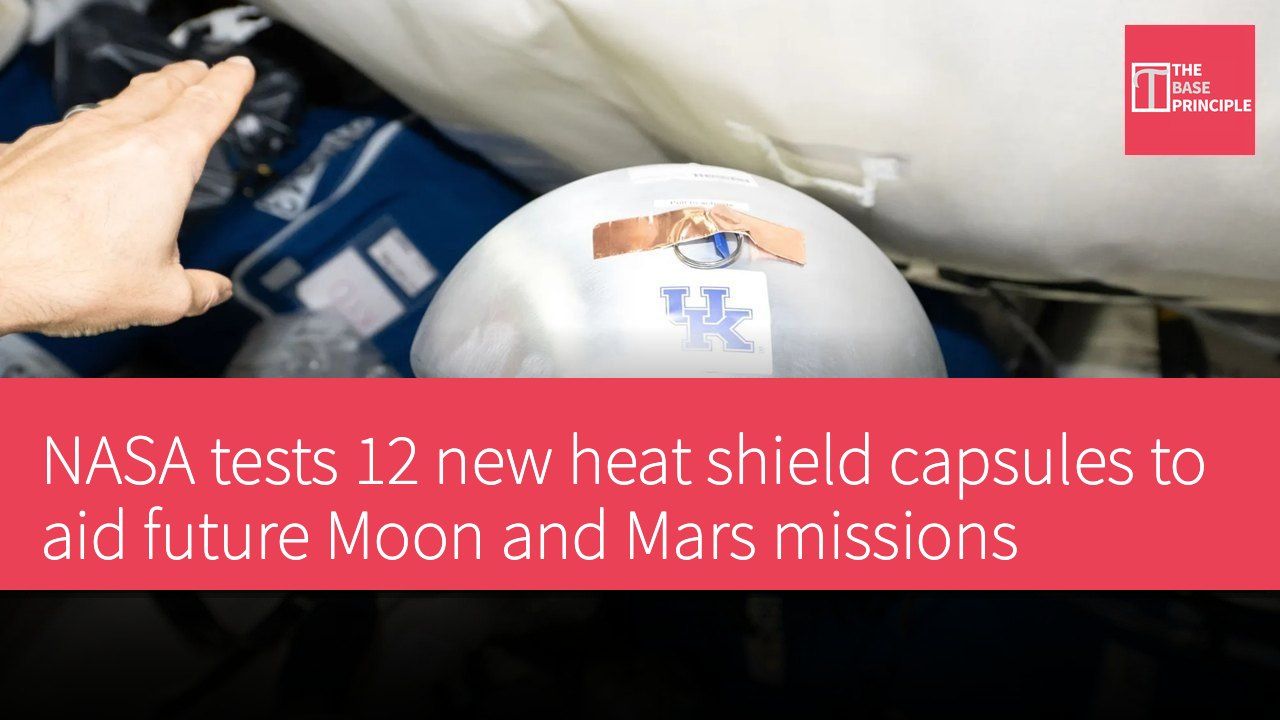
- The capsules were designed by University of Kentucky students and contain multiple sensors to collect data.
- Tests include 3D-printed heat shields and new MERINO materials.
- The experiment aims to compare computational predictions with actual reentry performance, advancing heat protection technology.
Experiment Objectives and Partners
The capsules will separate from the spacecraft and collect performance data on different heat protection materials under extreme conditions. This experiment, called the Kentucky Reentry Probe Experiment 3 (KREPE-3), is a collaboration among NASA, the University of Kentucky and other research partners. It uses a spacecraft already slated for disposal to conduct relatively low-cost testing of advanced heat protection technology. The 12 capsules were designed by University of Kentucky students and contain sensors to measure temperature, pressure, motion, magnetic fields and light during atmospheric reentry. The capsules will transmit their measurement data via satellite signals, allowing researchers to study material performance under actual flight conditions. "This is a smart way to get flight data on materials still in development," said Keith Peterson, a materials engineer at NASA's Ames Research Center. "We're essentially hitching a ride on a spacecraft that's already coming back to Earth."Testing New Heat Protection Materials
One technology being tested is a 3D-printed heat shield developed through a project at NASA's Johnson Space Center and Oak Ridge National Laboratory. Other capsules will carry established materials, including some similar to the ceramic tiles used on the space shuttle. NASA Ames is also testing a new heat protection material called MERINO, which consists of carbon fibers and phenolic fibers stitched into flexible layers. NASA says these materials can be manufactured faster and at lower cost, potentially making them useful for future Mars missions. One capsule will test a design featuring a dual-cone configuration with a tungsten tip, carbon-based materials and MERINO protection. This experiment will help researchers compare computational predictions with actual reentry performance. Another capsule will examine the design stability of a protective aeroshell similar to that planned for NASA's Dragonfly mission to Saturn's moon Titan. It uses a phenolic-impregnated carbon ablator material previously used on NASA Mars missions. Researchers will also test an umbrella-shaped deployable heat shield designed to increase its surface area and slow descent through the atmosphere. Larger versions of the heat shield could eventually protect payloads too wide to fit inside a launch vehicle. Other experiments include heat protection materials and heat flux sensors developed by researchers at the University of Stuttgart in Germany. The project is the third in the KREPE series, using the disposal of a cargo spacecraft to test technology without a dedicated launch. "We're pushing the boundaries of heat shields," Peterson said. "We're testing in a fast, economical and extremely effective way."Future Directions for Heat Protection Technology
NASA's heat protection capsule tests not only collect critical data but also promote the experimentation and application of new materials. Through collaboration with academic institutions, these experiments can be conducted at relatively low cost, providing important technical support for future Moon and Mars missions. As space exploration demands increase, developing more efficient and economical heat protection systems will become key, helping to improve mission safety and success rates.H
About the author
Henderson