
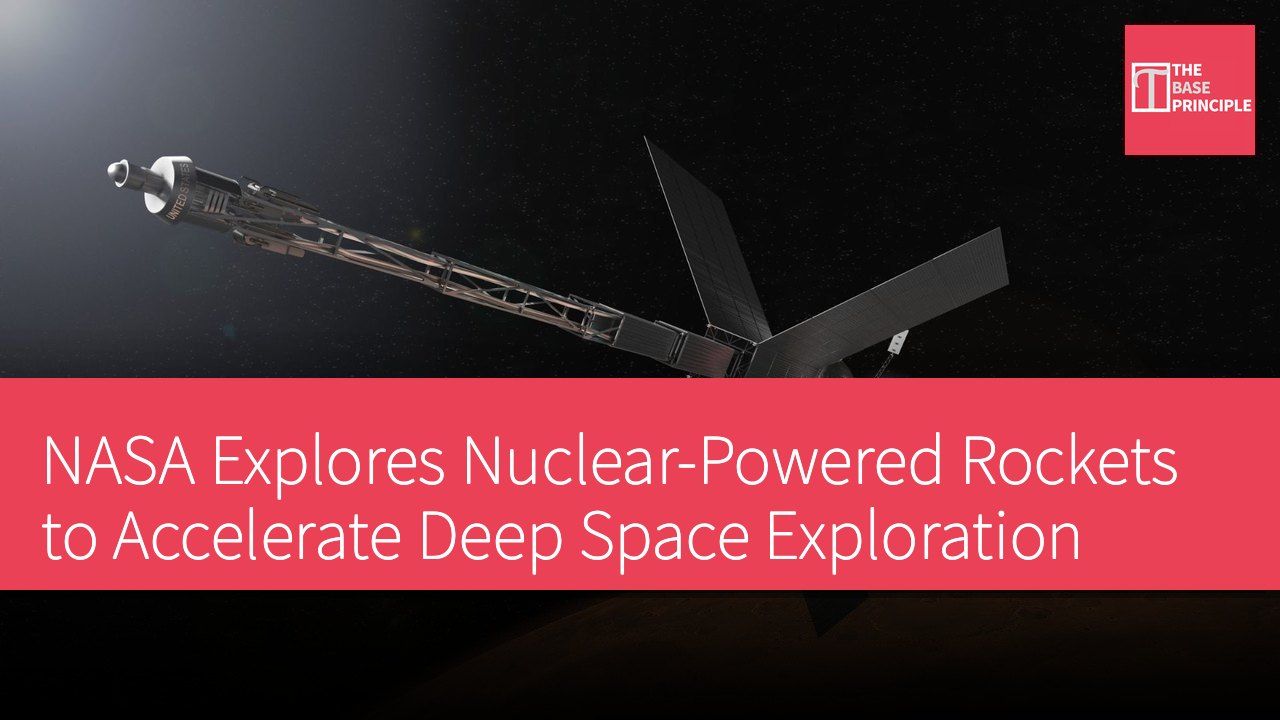
- NASA is exploring nuclear-powered spacecraft to overcome the challenges of deep space travel.
- Nuclear spacecraft can harness energy from atomic reactions, categorized into radioisotope systems and fission systems.
- Nuclear propulsion technology can shorten crewed missions to Mars and explore icy moons.
- Since the 1960s, NASA has deployed over 20 radioisotope systems, demonstrating the maturity of its technology.
It is essential for someone to have grand dreams and boldly take steps to explore life in the vast universe. The National Aeronautics and Space Administration (NASA) has long been at the forefront of this mission, setting its sights on distant destinations within our solar system—from the Moon and the icy outer worlds to far-off asteroids. However, grand dreams require bold ideas to overcome the significant challenges of deep space travel. For a long time, energy from our home planet has powered this journey, fueling countless robotic explorers. Solar panels have provided energy for numerous orbiters, rovers, and satellites.
However, the solar system is vast, and once missions venture beyond Mars, sunlight becomes weak. This is why the focus is shifting toward nuclear-powered spacecraft to reach destinations that were once considered unattainable.
How Nuclear-Powered Spacecraft Work
What are nuclear-powered spacecraft? These vehicles derive energy from atomic reactions rather than burning chemical propellants or capturing sunlight. These technologies fall into two distinct categories. Radioisotope systems use decaying radioactive materials, such as plutonium-238, to produce a steady amount of heat, which solid-state thermoelectrics then convert into electricity. These nuclear batteries have powered legendary long-duration missions like Voyager for nearly fifty years. Fission systems employ a different approach, using controlled nuclear reactors to generate large amounts of electricity or direct thermal energy. This energy can drive efficient electric ion engines or directly heat propellants to produce tremendous thrust.
Currently, NASA is actively working to turn these concepts into hardware. The agency is advancing nuclear propulsion projects and fission surface power designs. Prototypes like SR-1 Freedom aim to demonstrate fission power capabilities beyond Earth orbit. The SR-1 concept plan focuses on building lightweight fission surface units ranging from 10 to 40 kilowatts to provide continuous power for upcoming lunar and Martian bases. Additionally, NASA is researching high-assay low-enriched uranium (HALEU) fuel formulations capable of withstanding the intense operational demands of next-generation engines.
Engineers are also developing advanced radioisotope thermoelectric generators to maximize power output in deep space environments. These hardware tests ensure that future systems can withstand the intense vibrations of rocket launches while reliably operating in a vacuum for decades.
The Exploratory Potential of Nuclear Propulsion
Where could we go? Chemical rockets face severe fuel limitations and lack the sustained power needed to operate complex scientific arrays in deep space, but nuclear propulsion could radically change the boundaries of exploration. Efficient nuclear thermal engines could potentially reduce crewed travel time to Mars to 45 to 60 days, minimizing astronauts' exposure to space radiation and life support hazards. Beyond Mars, icy moons like Europa and Enceladus have become primary targets in the search for subsurface oceans and potential extraterrestrial life. Nuclear-powered spacecraft could carry heavy ice-drilling equipment to these ocean worlds.
Another compelling possibility is that nuclear propulsion could open up missions to interstellar space and the distant Oort Cloud, all achievable within a lifetime.
NASA's Nuclear Record Nuclear energy is not just a theoretical aspiration; NASA has deployed over 20 radioisotope systems since the 1960s. Planetary surface equipment like the Curiosity and Perseverance rovers use multi-mission radioisotope thermoelectric generators fueled by plutonium-238, providing continuous power. Farther out, deep space probes rely on radioactive thermal energy to operate in extreme environments far from sunlight. Launched in 1977, Voyager 1 and 2 continue to transmit data billions of kilometers from the solar layer, while New Horizons successfully powered its 2015 Pluto flyby using nuclear thermal energy.
Nuclear energy provides a practical pathway for high-speed space travel, freeing NASA from the limitations of chemical propulsion and enabling faster exploration of the solar system, reaching farther than ever before.
The Impact of Nuclear Propulsion on Space Exploration
The development of nuclear propulsion technology holds significant implications for space exploration. As chemical rockets face fuel limitations, nuclear energy offers a stable and enduring power source capable of supporting longer-duration deep space missions. This not only shortens crewed travel times to Mars but also makes the exploration of icy moons like Europa and Enceladus possible. With NASA's growing experience in nuclear energy, future space missions will be more challenging and exploratory, unlocking a deeper understanding of the universe for humanity.