
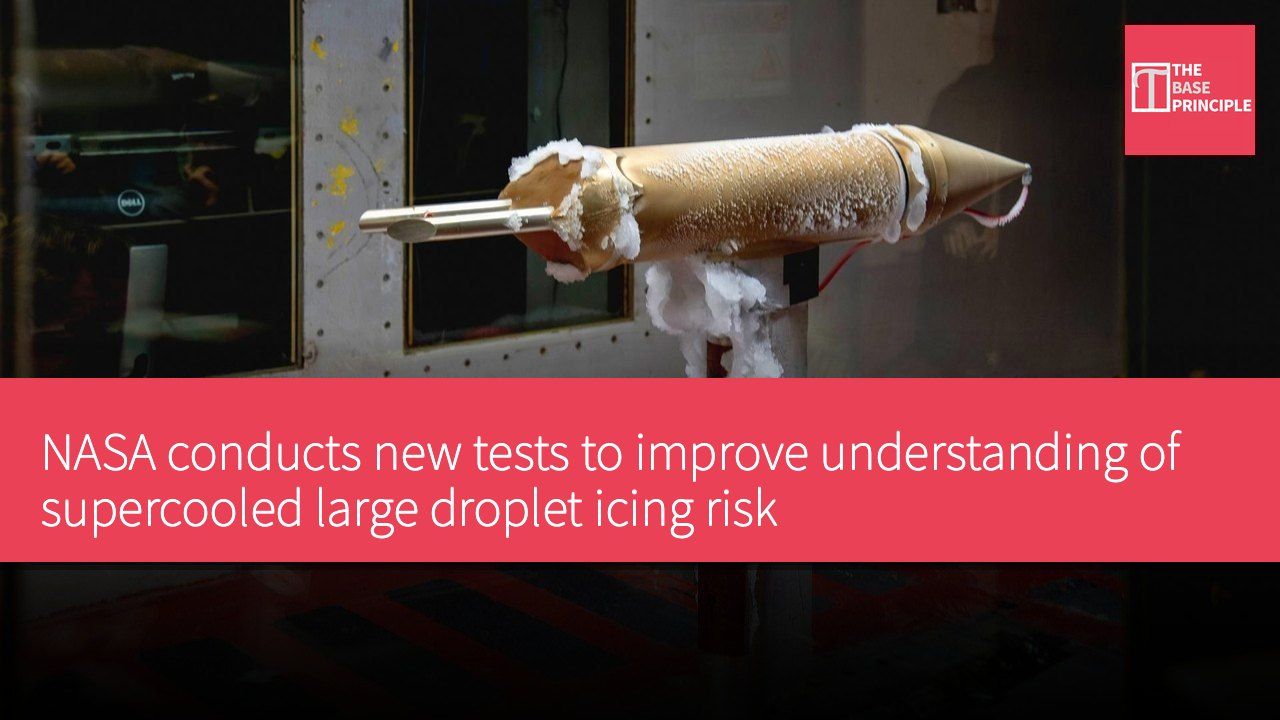
- NASA is conducting new tests to improve understanding of supercooled large droplet icing.
- Supercooled large droplets can reach diameters of 2,000 micrometers, differing from traditional icing clouds.
- New probes can measure droplet size in real time, improving data accuracy.
- These tests will support the design of next-generation commercial aircraft.
Between ordinary clouds and rain lies a hazard that aviation engineers have struggled to fully account for since a 1994 commuter plane crash. NASA's Glenn Research Center is conducting a series of new tests to improve the industry's understanding of this hazard and the tools for designing aircraft capable of withstanding it. This threat is known as "supercooled large droplet icing," which occurs when an aircraft flies through clouds containing unusually large droplets. These droplets are at temperatures well below 32 degrees Fahrenheit but remain unfrozen because they lack the dust or other microscopic particles needed for crystallization.
Once these droplets strike an aircraft surface, they freeze rapidly.
The danger of supercooled large droplets
Size matters because most aircraft are designed and certified for standard icing clouds, where droplets range from about 2 to 100 micrometers in diameter. For reference, a human hair is about 70 micrometers wide. These conditions are well understood, and aviation engineers have mature tools to model them. Supercooled large droplets belong to a different category, with diameters reaching up to 2,000 micrometers — a size more commonly associated with freezing rain on the ground. Their mass and momentum allow them to pass the leading edges of wings and stabilizers into areas farther aft on the aircraft where conventional ice protection systems do not operate.
This means that protections designed for standard icing conditions may leave parts of the aircraft exposed to danger when large droplets are present.
Testing and application of new probes
The NASA tests are part of a test campaign inside the Icing Research Tunnel at the Glenn Research Center in Cleveland. NASA researchers are using new probes intended to provide better real-time measurements of droplet size in the artificially generated cloud inside the tunnel. These new probes can detect droplets larger than 45 micrometers and analyze their size in real time. Researchers will combine these measurements with results from another probe that measures droplets smaller than 45 micrometers to produce a complete picture of the full droplet size range in a real icing cloud.
NASA described a process of cross-validating the new probes against an older, labor-intensive technique that involves post-processing droplet size imagery data after test runs. This comparison will allow the agency to verify the accuracy of the new probes in capturing the larger-droplet end of the droplet size range — precisely where the engineering tools used by the industry face the greatest uncertainty.
This test campaign is a milestone for the Subsonic Flight Demonstration project, which falls under NASA's Integrated Aviation Systems Program within the Research and Technology Mission Directorate. NASA said detailed analysis of the collected data is underway and will be shared with the aerospace community upon completion. The fundamental issue is that the engineering models used by the industry to design aircraft have been well validated for typical icing conditions but face questions in capturing the physics of supercooled large droplets. Better-calibrated measurement systems in the tunnel mean better-calibrated computer models, which will provide manufacturers developing the next generation of commercial aircraft with more reliable design tools and support regulators who set the certification standards these aircraft must meet.
Key tests to enhance aviation safety
Supercooled large droplet icing poses a significant threat to aviation safety, especially when aircraft fly through clouds with unusually large droplets. NASA's new tests not only improve understanding of this hazard but also enhance the effectiveness of existing ice protection systems. Through real-time measurements from the new probes, researchers can more accurately capture droplet size, which is critical for designing aircraft capable of withstanding such hazards. The results of this research will help the aviation industry develop safer aircraft in the future and provide regulators with the necessary data support, thereby raising overall aviation safety standards.