
- Nanyang Technological University is collaborating with Motherson to develop the Spinheat magnetic curing technology.
- Spinheat can achieve strengths comparable to 24-hour oven curing in just one hour.
- The latest technology adjusts the magnetic field based on real-time temperature feedback, enhancing curing efficiency.
- Researchers are still seeking to test the reliability of Spinheat under factory conditions.
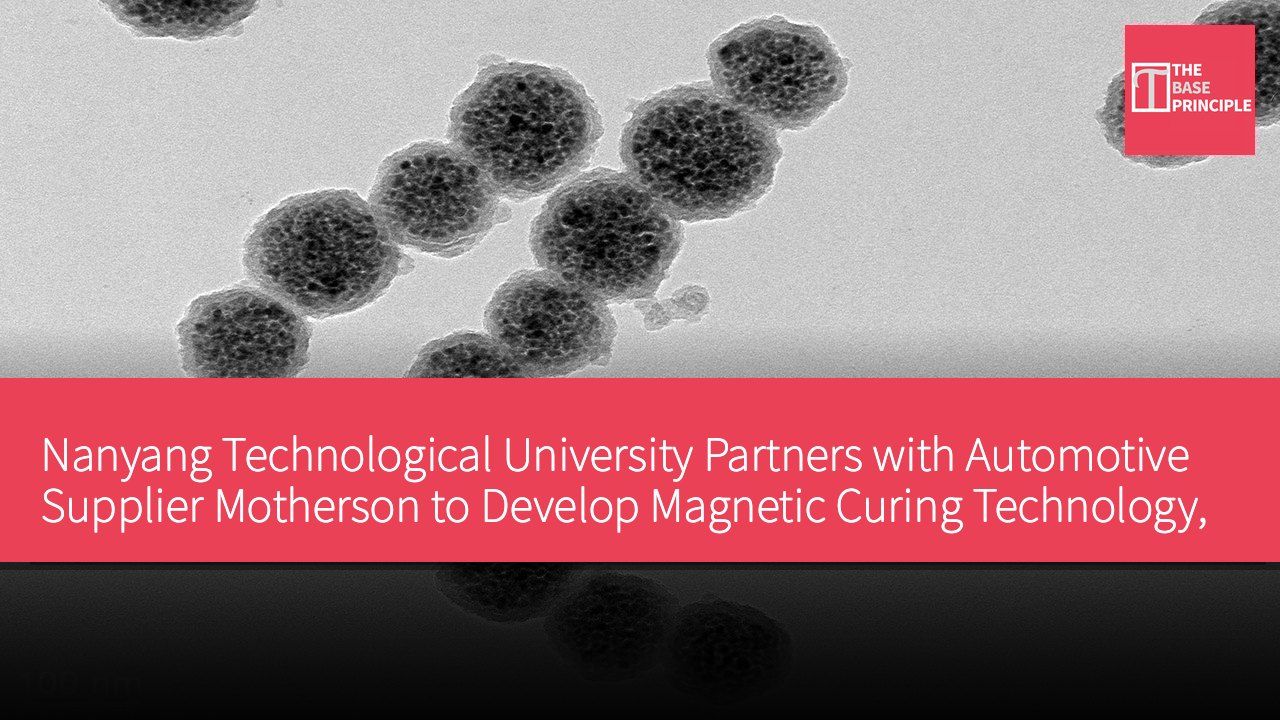
Nanyang Technological University (NTU) is collaborating with automotive supplier Motherson to apply a magnetic curing method called Spinheat in factory production, according to an NTU press release. NTU stated that after one hour of magnetic curing, the strength of the resulting adhesive joints can match that of 24-hour oven curing. Curing is the process that hardens paints, adhesives, and resins. Spinheat incorporates magnetic nanoparticles into the materials. When a rapidly reversing alternating magnetic field is applied, these particles heat the material from within, eliminating the need to heat the entire component in an oven, the press release noted.
The research at NTU is led by Professor Raju V. Ramanujan and Associate Professor Terry Steele from the School of Materials Science and Engineering. The latest version of Spinheat adjusts the magnetic field based on real-time temperature feedback, the press release mentioned. Motherson will assist in testing under conditions closer to industrial production.
Innovation in Spinheat Technology
In terms of feedback control during the curing process, NTU first demonstrated the use of magnetic fields for epoxy curing in 2020 and launched its magnetic curing adhesive, according to the press release. The latest research was published in *Applied Materials Today*. In another experiment, researchers mixed doped ferrite magnetic nanoparticles into thermosetting epoxy resin, a type of plastic that hardens permanently, and heated it using a magnetic field. The paper noted that a microprocessor adjusts the magnetic field strength as the temperature changes. The press release stated that this method also prevents thermal damage to other parts of the component, especially those made from heat-sensitive materials.
Epoxy curing releases heat, which can dissipate. The summary indicated that feedback-controlled heating prevented this dissipation and reduced the volume of voids or gas entrapment from 33.0% to 5.3%, a figure obtained through a three-dimensional X-ray imaging method using nano-computed tomography. The researchers' preprint, an early version published on SSRN, also noted that samples reached the target temperature within 180 seconds.
Motherson noted in the press release that the company supports customers in over 475 facilities across more than 47 countries, bringing automotive engineering and manufacturing capabilities to the collaboration.
Commercial Potential of Curing Technology
The results are based on laboratory samples. The published paper reported a shear strength of 7.2 MPa for one-hour magnetic curing and 7.3 MPa for 24-hour oven curing, with uncertainties of 1.4 and 2.2 MPa, respectively. These ranges overlap, indicating comparable strengths, but do not prove they are identical. The press release did not provide specific energy savings data, so the energy and emissions benefits are projected. Steele noted that the next challenge is to understand "how this reliably works in automotive manufacturing." Researchers are still seeking to test Spinheat under conditions closer to factory settings, particularly for paints and coatings, and will study coating thickness, curing speed, temperature control, and the size and shape of components.
Other teams are also researching curing times, including Toray CMA, which claims its rapid-curing composites can reduce curing times by up to 45%. NTU is exploring commercialization options, including startup possibilities, and has applied for intellectual property through its innovation company NTUitive. The paper is set to be published in the April 2026 issue of *Applied Materials Today*.
Impact of Spinheat Technology on Automotive Manufacturing
The collaboration between Nanyang Technological University and Motherson in developing Spinheat magnetic curing technology demonstrates the potential to enhance production efficiency in automotive manufacturing. This technology not only significantly shortens curing times but also avoids thermal damage to materials during the curing process, which is particularly important for components made from heat-sensitive materials. As the automotive industry increasingly demands rapid production and environmentally friendly solutions, the commercialization of this technology could transform traditional manufacturing processes and further promote sustainability.