
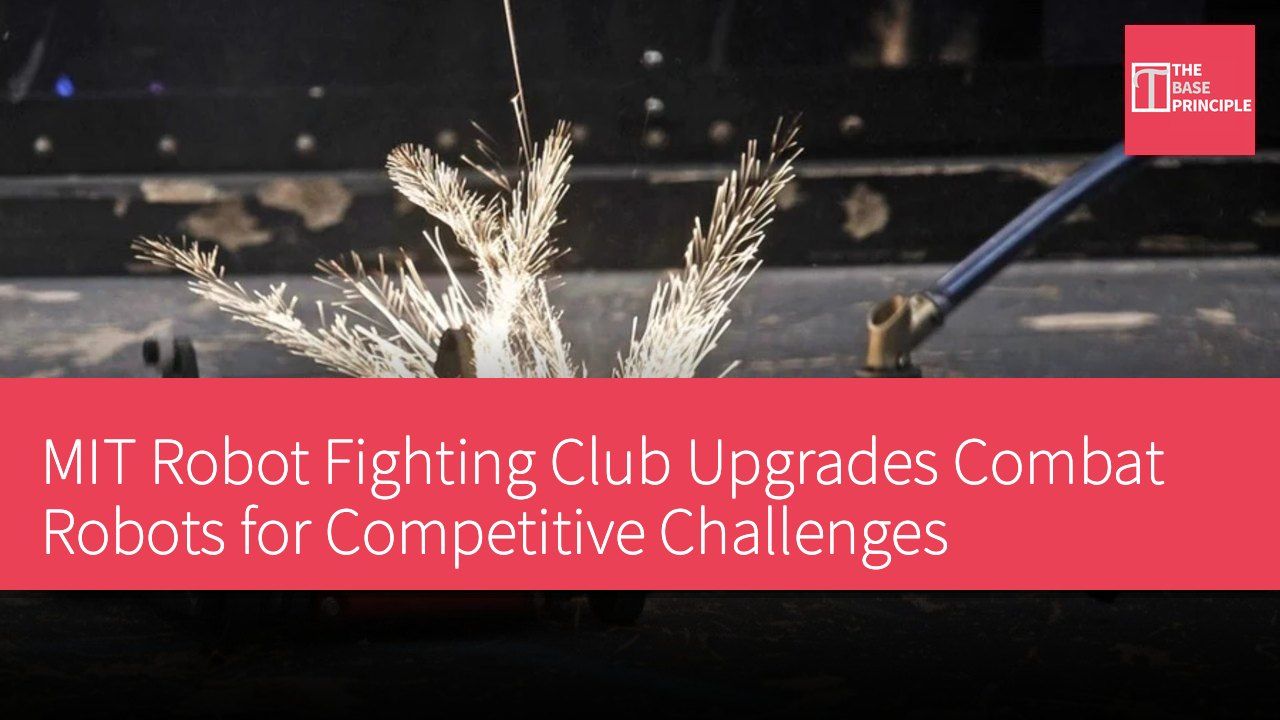
- The MIT combat robot club is upgrading its ARES and KRATOS combat robots.
- ARES is equipped with a vertical spinning weapon designed to deliver a powerful impact to opposing robots.
- The team is using lessons learned from competition losses to strengthen the robot's armor design.
- The club welcomed 54 new members this fall semester, who are starting to build small combat robots.
The combat robot club at MIT is upgrading its ARES and KRATOS combat robots while developing a new generation of competitive robots. ARES is a 30-pound (approximately 13.6 kilograms) combat robot equipped with a vertical spinning weapon, which secured second place in April's competition and third place in October, having previously failed to win at the 2025 National Hurricane Robot League (NHRL) World Championship. The team is leveraging these failures to enhance its armor to withstand similar weapon systems.
Recently, a 44-second video showed internet personality Frankie LaPenna battling a six-foot-tall humanoid robot in an octagonal cage at an event organized by REK.
Upgrades to ARES and KRATOS
The club is upgrading its ARES and KRATOS combat robots while developing a new generation of machines designed for competitive robot fighting. These student-built machines combine high-speed rotating weapons, lightweight structural materials, and compact mechanical systems to withstand repeated impacts while attempting to disable opposing robots. ARES is the club's 30-pound (approximately 13.6 kilograms) combat robot, equipped with a vertical spinning weapon known as a "strike bar." Its weapon system features a compact dual-redundant brushless motor configuration powered by a PVC belt drive.
The robot also features a high-performance brushless four-wheel drive system designed to provide agility and maneuverability on the competition floor. Its chassis combines aluminum, titanium, and ultra-high molecular weight polyethylene (UHMWPE), a lightweight engineering plastic known for its strength and impact and abrasion resistance. This combination allows the team to maintain the robot's weight within specified limits while protecting its structure.
The vertical spinning weapon is designed to deliver a powerful impact to opposing robots. In combat robot competitions, these weapons can damage exposed components, deform armor, and potentially disable an opponent's drive or weapon systems. However, the robot must also be able to withstand similar attacks, making armor design and protection of internal components critical engineering considerations. ARES entered the 2025 NHRL World Championship as a top seed but faced two losses against opponents using similar weapon configurations. These encounters exposed weaknesses in its armor, particularly in resisting attacks from similar vertical spinning weapons.
Since then, the team has been focused on improving the robot's protection and overall performance. ARES subsequently achieved second place in April's competition and third place in October. These results help guide ongoing development work, as the team continues to optimize the existing machine rather than viewing competition losses as the end of the design cycle.
New Members and Small Robots
The club is also upgrading KRATOS while advancing the development of a new generation of combat robots. This parallel development work allows students to experiment with different mechanical configurations, structural designs, and weapon systems. The club is also using small robots to introduce new members to the engineering and manufacturing processes involved in competitive robot development. According to MIT, the club welcomed 54 new members this fall semester, who are working in teams of three to build one-pound combat robots. These machines fall under the antweight category, one of several weight classes in combat robot competitions.
The National Hurricane Robot League also features 3-pound and 12-pound classes, in addition to the 30-pound class in which ARES competes. These small projects provide an opportunity to experience the complete development process, from initial computer-aided design (CAD) and component selection to manufacturing, assembly, and testing. Students can also gain experience with engineering tools and processes such as finite element analysis, computer numerical control (CNC) machining, and welding.
Combat robots have a particular demand for these skills, as components must remain functional under repeated impacts, vibrations, and sudden changes in direction. Weapon systems, drive mechanisms, batteries, and electronic components must also meet strict weight and size constraints. The club was established in 2001 and was relaunched in 2023, welcoming new members and new robot designs. Its teams participate in NHRL events approximately every two months while also organizing smaller competitions on campus.
Item Specifications Weight 30 pounds (approximately 13.6 kilograms) Weapon System Vertical spinning weapon (strike bar) Drive System High-performance brushless four-wheel drive
Challenges and Opportunities in Combat Robot Development
The combat robot club at MIT faces the dual challenge of design and competition. As competitions progress, the team continuously learns and improves the performance of its robots, particularly in armor design, to counter opponents' attacks. The influx of new members not only brings fresh talent to the club but also fosters the development of small robots, which allow students to gain hands-on engineering skills. This experimental nature of development not only enhances the team's competitiveness but also cultivates future engineers by providing them with valuable experience.