
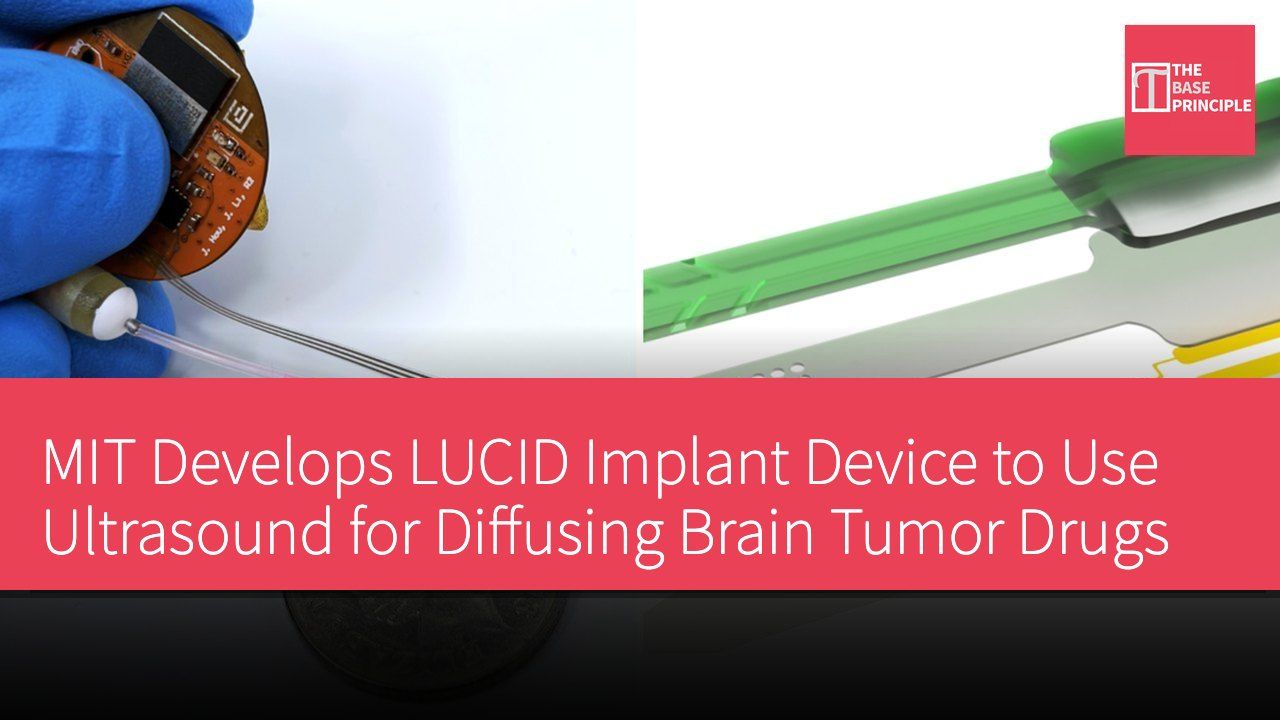
- The LUCID device combines ultrasound technology to diffuse drugs and prevent tumor recurrence.
- The device can be implanted during surgery, gradually releasing drugs to eliminate tumor cells.
- Ultrasound enhances the permeability of the blood-brain barrier, improving drug diffusion effectiveness.
- This technology may be applicable to the treatment of other soft tissues and deep tissues in the future.
Researchers at the Massachusetts Institute of Technology have designed an implantable device that combines a sustained-release drug storage system with a micro-ultrasound transducer, aimed at helping prevent the recurrence of glioblastoma after surgery. This ultrasound technology aids in the further diffusion of drugs within brain tissue and bypasses the blood-brain barrier. Glioblastoma is an aggressive brain tumor that typically requires surgery, but it is difficult to completely remove every cancer cell, leading to frequent recurrences. More than 10,000 cases of this disease are diagnosed annually in the United States, with an average survival time of 12 to 15 months.
This device is called LUCID, which stands for Long-term Ultrasound Enhanced Convection Injection Device. It is a flexible implant about the thickness of cardstock, featuring drug delivery catheters directly 3D printed onto a 24-element micro-ultrasound transducer array. The transducers generate ultrasound at the tip of the needle, helping drug molecules diffuse further into the tissue after release. Doctors can implant the device during surgery, allowing it to gradually release drugs to kill remaining tumor cells. The implant's reservoir can hold approximately 100 microliters of liquid, while a passive diffusion pump provides the injection.
Design and Functionality of the LUCID Device
The ultrasound is wirelessly controlled via Bluetooth, enabling doctors to precisely program the ultrasound dosage after implantation. A small battery can be wirelessly charged.
Existing implantable wafers and hydrogels rely on passive diffusion of drugs, so the MIT team aimed to have more control over the timing of release. Previous studies have shown that ultrasound generates convective flow, allowing drug molecules to diffuse over longer distances. Its mechanical vibrations also temporarily increase the permeability of the blood-brain barrier. The design of LUCID is based on earlier research by Canan Dagdeviren, an associate professor at MIT's Media Arts and Sciences, who is a senior author of the study. Her lab previously designed a thin catheter comparable to human hair for delivering drugs to the brain and developed ImPULS, an implant that uses micro-ultrasound transducers for deep brain stimulation.
Effects of Ultrasound Technology
In a gel-like material simulating human tissue, ultrasound-assisted drug delivery allowed drug molecules to diffuse further than without ultrasound. In mouse experiments, researchers used the device to deliver an MRI contrast agent. When the ultrasound array was activated, the diffusion range of the contrast agent in the brain was greater than when it was turned off. Graduate student Sarah Ornellas stated that using ultrasound to enhance localized programmable distribution could reduce systemic toxicity to non-target organs while allowing therapies to more effectively reach tumor cells in affected areas.
If the technology is developed for patient use, the catheter and ultrasound array would be placed intracranially, while the battery and electronic components could be located extracranially. This technology could also deliver immunotherapies or nucleic acids, including gene therapies, and may work in organs outside the brain. Dagdeviren noted that the team started with the brain as a follow-up to ImPULS, but this approach could ultimately treat other soft tissues and deep tissues. She emphasized that this work demonstrates the team's ability to "distribute any type of payload in a better way." The lead authors of the study include MIT graduate student Sarah Ornellas and Jason Hou PhD ‘26.
The project is funded by the MIT Media Lab Consortium and the National Institutes of Health, with the paper titled "Long-term Ultrasound Enhanced Convection Injection Device for Neurological Drug Delivery." The results were first published in the journal Device.
Item Specification Reservoir Capacity Approximately 100 microliters Control Method Bluetooth wireless control Battery Type Small wireless rechargeable battery
Potential Impact and Future Applications of the LUCID Device
The development of the LUCID implant device represents a significant advancement in the treatment of brain tumors. Through ultrasound technology, this device not only enhances the diffusion range of drugs but also targets tumor cells more effectively, reducing toxicity to other organs. This precise method of drug release could change existing treatment paradigms and improve patient survival rates. Furthermore, the potential applications of this technology are not limited to the brain but may extend to other soft tissues, providing new possibilities for future medical innovations.