
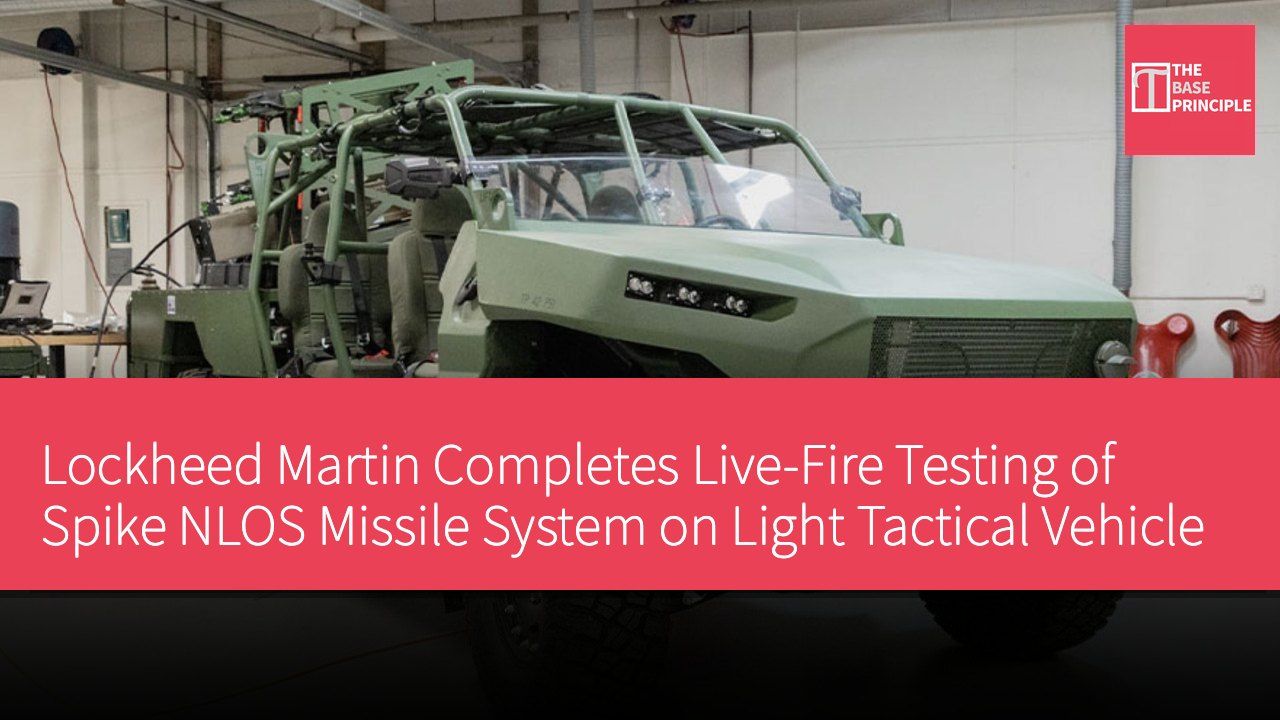
- Lockheed Martin completes live-fire testing of the Spike NLOS missile system, enhancing long-range strike capabilities.
- This test marks the first launch of Spike NLOS from the ISV-U platform, meeting Army requirements.
- Integrating the Spike NLOS system enables infantry units to operate without relying on larger dedicated missile launch vehicles.
- Soldier feedback will guide the Army's future equipment needs and facilitate the early delivery of emerging capabilities.
The missile has a ground launch range of approximately 30 kilometers (19 miles), significantly exceeding the range of standard shoulder-fired Javelin missiles. This test marks the first launch of the Spike NLOS missile from the ISV-U platform and advances the Army's Mobile Long-Range Precision Strike Missile (M-LRPSM) requirement, aimed at providing ground strike capability for mobile brigade combat teams to engage targets beyond the operator's direct line of sight.
Launch Platform for Spike NLOS Missile
Transforming Light Vehicles into Missile Platforms The ISV-U is a variant of the Army's Infantry Squad Vehicle designed to transport soldiers in challenging terrain. Integrating the Spike NLOS system will provide infantry units with a mobile precision strike option while allowing them to operate without relying on larger dedicated missile launch vehicles. The Spike NLOS is designed to engage targets beyond the direct line of sight of the launch platform, enabling operators to strike targets that may be obscured by terrain or difficult to reach with conventional line-of-sight weapons.The system is part of a broader effort to provide ground forces with greater range and flexibility on the battlefield. Mobile launchers allow units to reposition between engagements and support forces operating in dispersed areas, although the specific configuration and operational performance of the ISV-U have not been fully disclosed.
Lockheed Martin stated that the demonstration showed soldiers could safely launch missiles from vehicles and complete training and live-fire missions within the same week. The company did not disclose specific engagement distances or provide detailed breakdowns of the targets used in the testing.Impact of Soldier Feedback on Equipment Needs
Soldier feedback will help shape the Army's requirements. This demonstration is also part of the Army's Touchpoint Integration Capability (TIC) program, which aims to deliver emerging capabilities to soldiers early so their feedback can guide future equipment needs. According to Lockheed Martin, TIC units were the first soldiers to engage with the system during this demonstration. Their observations, combined with live-fire data, will assist the Army in refining the M-LRPSM requirements and determining how to integrate this capability into its forces.
Lockheed Martin's Multi-Domain Missile Systems Program Director, Casey Walsh, stated, "This demonstration marks a key milestone for Spike NLOS, showing that our infantry partners can confidently employ long-range precision missiles." He added that the test data and soldier feedback will support the development of final requirements and the eventual deployment process. The company noted that this demonstration builds on earlier first and second phase milestones, with further validation testing planned within the next year, followed by the initiation of preliminary operational production and delivery of the final system prototype to the Army.For the Army, the value of the system lies in combining long-range precision weapons with relatively light ground platforms. Such capabilities will provide mobile brigade combat teams with more options for striking high-value targets without bringing heavier launchers close to combat.
Impact of the Spike NLOS System on Army Operations
The successful testing of the Spike NLOS missile system demonstrates the U.S. Army's need for long-range precision strike capabilities in modern warfare. By integrating the missile system into light tactical vehicles, units can respond flexibly to changing battlefield environments without relying on heavier launch platforms. Soldier feedback will be crucial in guiding future equipment development, ensuring that new technologies meet real operational needs and further enhance the efficiency and survivability of the forces.