
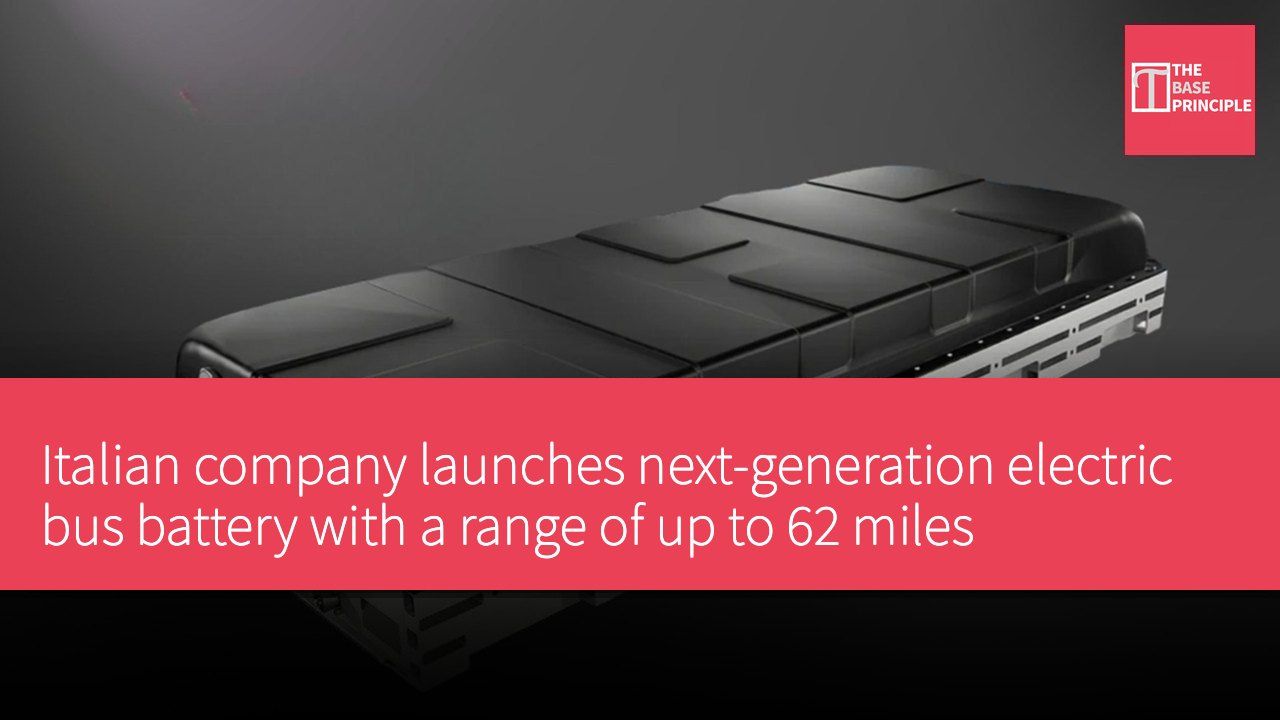
- The new generation battery can extend the range of electric buses to 62 miles.
- The battery's energy density is 15% higher than the previous generation.
- Transport operators can choose to extend the battery warranty to 15 years.
- The modular design allows operators to flexibly select battery configurations.
An Italian company has recently introduced a next-generation nickel manganese cobalt (NMC) battery that can extend the range of electric buses by up to 62 miles (approximately 100 kilometers). This battery was developed by the Turin-based bus manufacturer Iveco Bus, formerly known as Irisbus. According to reports, the battery's energy density has increased by 15% compared to its predecessor and will be applied to all of the company's heavy-duty electric urban and intercity bus models. Iveco Bus states that these batteries offer enhanced safety, featuring an integrated fire suppression system and a thermal runaway alarm system that remains operational even when the vehicle is in standby mode.
Additionally, transport operators can choose to extend the battery warranty period to 15 years. The company stated, "Extending the battery warranty to 15 years allows operators to have better long-term forecasts of vehicle operating costs, helping them manage total cost of ownership (TCO)."
Battery Performance and Design Optimization
The new NMC battery features an improved design and optimized modules that allow it to store more energy. Each battery pack can store 80 kilowatt-hours (kWh) of energy, an increase from the previous 69 kWh. Despite the increased capacity, the physical dimensions of these batteries remain the same as the previous generation. Iveco Bus points out that its E-Way electric city bus can accommodate four to nine battery packs, with total energy storage capacity ranging from 320 to 720 kWh. Furthermore, the upgraded battery enables the 39-foot (approximately 12 meters) version to achieve a range increase of up to 62 miles.
Meanwhile, the Crossway Low Entry ELEC, an all-electric low-entry bus designed for urban (Class I) and intercity (Class II) transport, can also accommodate four to seven battery packs, with total capacity ranging from 320 to 560 kWh, achieving the same range of up to 62 miles. The Crossway ELEC can be configured with three to six battery packs, with total energy storage capacity ranging from 240 to 480 kWh.
Safety and Warranty Options
According to the company, the modular design allows public transport operators to flexibly select battery configurations based on vehicle mileage and the requirements of different routes. In some cases, operators may even reduce the number of battery packs while achieving the same range, which could also increase the bus's passenger capacity. Additionally, in conjunction with enhancing energy density and storage capacity, the company has also added safety features. These batteries comply with the United Nations Economic Commission for Europe (UNECE) R100.4 safety regulations and can issue alarms when thermal runaway is detected. Furthermore, each battery module is equipped with a dedicated fire extinguisher that can release extinguishing agents in the event of a fire.
The optional 15-year battery warranty also helps businesses better predict long-term costs. Iveco Bus states that reducing the number of battery packs and eliminating the need for mid-term battery replacements could lower the total cost of ownership for the GX 337 ELEC model by up to 17% over 15 years of operation.
The company stated in a press release, "The first deliveries are expected in the second quarter of 2027. By providing greater flexibility in battery configurations, the new generation product enables operators to balance range, passenger capacity, and total ownership costs based on the specific operational needs of each route."
Item Specification Battery Capacity 80 kWh Previous Generation Battery Capacity 69 kWh E-Way Electric Bus Total Capacity 320 - 720 kWh Crossway Low Entry ELEC Total Capacity 320 - 560 kWh Crossway ELEC Total Capacity 240 - 480 kWh
What is the range capability of the new generation battery?
The range capability of the new generation battery can be extended by up to 62 miles (approximately 100 kilometers).
How much has the energy density of the new battery improved compared to the previous generation?
The energy density of the new battery is 15% higher than its predecessor.
How long can the warranty period for this battery be extended to?
The warranty period for this battery can be extended to 15 years.
What is the capacity of the new battery?
Each battery pack can store 80 kilowatt-hours (kWh) of energy, an increase from the previous 69 kWh.
What safety features does this battery have?
These batteries include a fire suppression system and a thermal runaway alarm system, complying with the United Nations Economic Commission for Europe (UNECE) R100.4 safety regulations.
Impact of New Battery Technology on Public Transport
The launch of the new generation battery marks a significant advancement in electric bus technology, particularly in terms of range and safety. With improved energy density and modular design, operators can adjust battery configurations based on actual needs, thereby enhancing operational efficiency. Additionally, the extended warranty not only helps reduce long-term operating costs but also boosts confidence in investments. These improvements will contribute to the transition of public transport towards more environmentally friendly and economically viable solutions, aligning with global demands for sustainable transportation.