
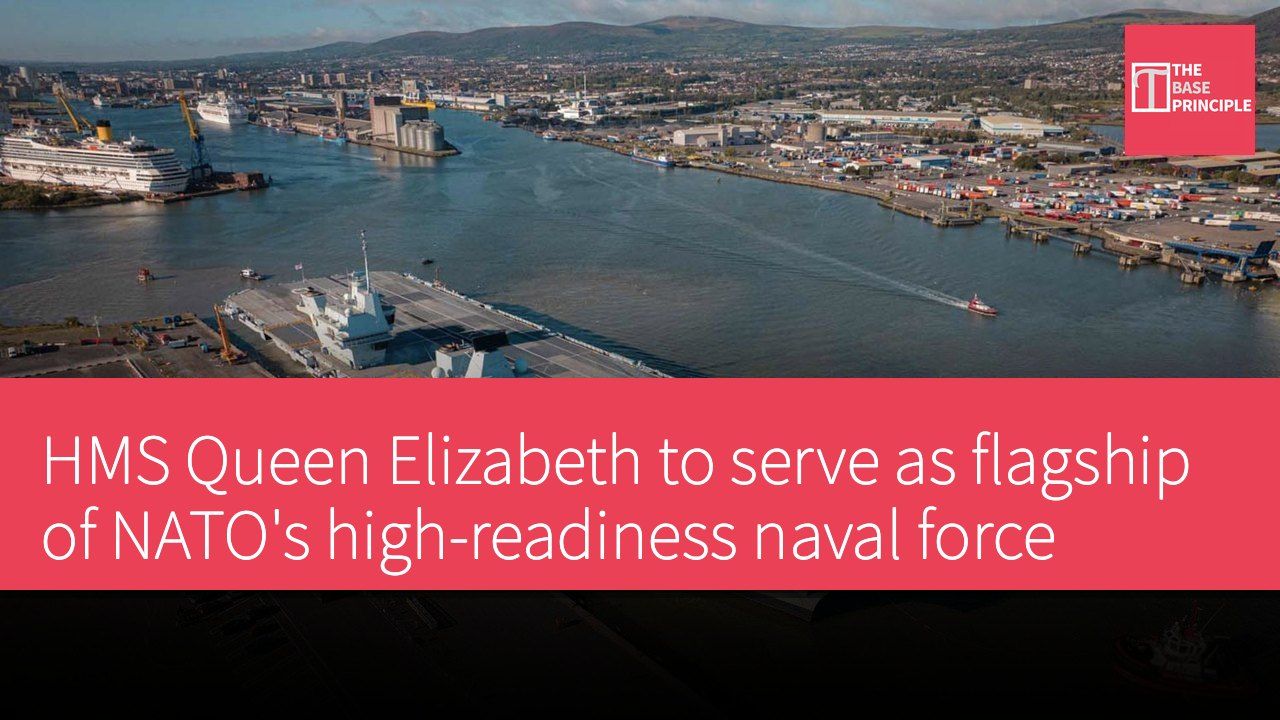
- HMS Queen Elizabeth will serve as the flagship of NATO's high-readiness naval force.
- The ship will be responsible for leading multinational naval forces until mid-2027.
- This visit to Belfast underscores the Royal Navy's strong ties with the local community.
- HMS Queen Elizabeth is a key air power projection platform for the British Navy.
A powerful aircraft carrier displacing 80,000 tonnes will serve as the flagship of NATO's high-readiness naval force. HMS Queen Elizabeth is returning to the front line, this time for the ship's first re-certification at Rosyth, and will replace its sister ship HMS Prince of Wales as flagship, assuming a primary command role in NATO's Allied Reaction Force. This development marks an important step in the vessel's return to operational readiness following its recent re-certification. The ship has been certified for daytime helicopter operations and has completed a series of training activities to demonstrate its readiness to support maritime aviation missions.
The significance of HMS Queen Elizabeth
The carrier is expected to assume the responsibilities of NATO command ship until mid-2027, and if activated during an international crisis, will lead multinational naval forces. HMS Queen Elizabeth departed Belfast today, becoming the first Royal Navy aircraft carrier to visit the Northern Irish capital in 60 years. HMS Queen Elizabeth's commanding officer, Captain Claire Thompson, said: "We are honoured to be the first Queen Elizabeth-class carrier to visit Belfast, providing a genuine proof of concept for future visits.
Our visit highlights the strong maritime heritage between the Royal Navy and the local community and industry, and also provided many of my sailors with their first port visit opportunity since joining the ship. The city's response to our arrival was enthusiastic and very welcoming, and we are extremely grateful."
In summer 1965, HMS Centaur was the last aircraft carrier to berth in Belfast, a city that built the World War II aircraft carriers HMS Eagle and HMS Glorious, as well as the namesake warship HMS Belfast. These traditions continue to this day, with the historic Harland & Wolff shipyard playing a core role in building new vessels for the Royal Fleet Auxiliary. This autumn's training will be distributed across UK waters and the eastern Atlantic, laying the groundwork for more complex training in 2027, including NATO's Steadfast Defender exercise.
Crew training and preparation
The carrier is NATO's command ship, with allied insignia displayed on its forward island structure until mid-2027, and will lead multinational naval forces in a global crisis; over recent weeks a staff team has embarked to familiarise themselves with life on board and determine operating procedures for activation. For the crew, the key autumn task is to transform 80,000 tonnes of military hardware into an operational aircraft carrier, first by restoring air operations. However, before the ship considers embarking any air power, the crew must prove they can handle emergencies: including deck crashes and pilot rescue, as well as fires in the ship's engine rooms with casualties.
HMS Queen Elizabeth was formally commissioned on 7 December 2017 as the first of the Queen Elizabeth-class aircraft carriers. Its construction involved multiple UK shipyards and was assembled at Rosyth Dockyard. The carrier is approximately 280 metres long with a flight deck 73 metres wide, designed to support an air group of up to approximately 40 aircraft, including F-35B fighters and helicopters, depending on operational configuration. The UK currently operates two carriers of this class: HMS Queen Elizabeth and HMS Prince of Wales, which together provide the Royal Navy with a powerful air power projection platform, supporting allied operations and responding to emerging security challenges.
These vessels also represent a significant investment in the UK's maritime industrial base, absorbing expertise in naval engineering, aviation support, and complex warship construction.
HMS Queen Elizabeth's strategic significance for NATO
As NATO's flagship, HMS Queen Elizabeth not only enhances the UK's influence in naval power but also strengthens cooperation with allies. This aircraft carrier's re-certification and upcoming training demonstrate the UK's commitment to maintaining international security. Its visit to Belfast is not only a continuation of history but also support for the local community, symbolising the close relationship between the Royal Navy and the region. As global security challenges increase, HMS Queen Elizabeth's role will become increasingly important, providing a solid foundation for future multinational joint operations.