
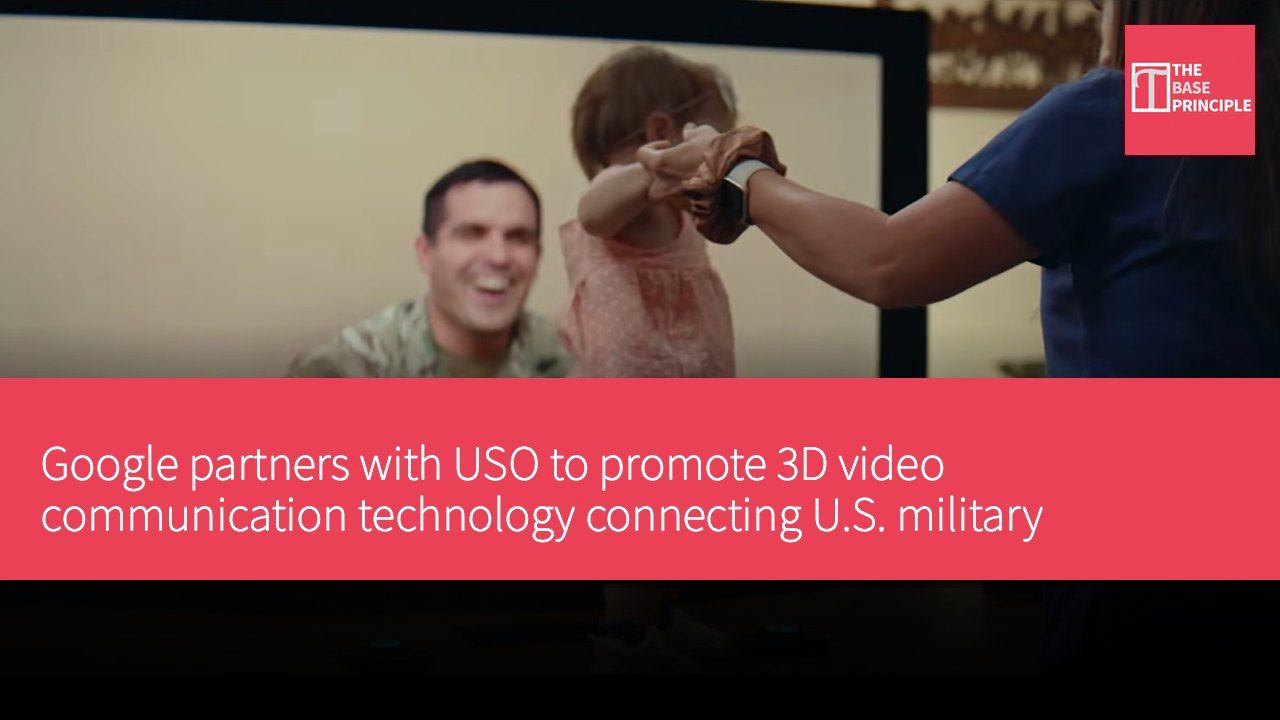
- Google partners with USO to promote 3D video communication technology, connecting U.S. military personnel with their families.
- The Beam system requires no wearable devices, providing a realistic conversation experience.
- A documentary showcases how soldiers use Beam to reconnect with their families.
- This expansion to 20 locations enhances opportunities for family communication.
Google is collaborating with the United Service Organizations (USO) to expand its Google Beam 3D video communication technology to 20 USO locations worldwide, helping service members share precious moments with their families. This initiative will utilize HP Dimension and Google Beam systems to create a realistic conversation experience without the need for glasses or headphones. Earlier this year, a pilot program connected Trzebień in Poland with Fort Bliss in Texas, and the program has now expanded to include Grafenwöhr in Germany and Fort Hood in Texas.
Google has also released a documentary series directed by military veteran Kyle Hausmann-Stokes, telling the stories of four soldiers from the 2nd Battalion, 37th Armor Regiment during their deployment in Poland, showcasing how they reconnect with their families using Beam.
Technical Principles of the Beam System
Google Beam was initially developed as Project Starline, utilizing artificial intelligence and specialized display technology to give remote conversations a physical presence. The HP Dimension system features a 65-inch display and six built-in cameras that capture participants' images from multiple angles, while an AI model uses these images to construct a three-dimensional representation in real time. The display sends different images to each eye, creating a sense of depth without the need for wearable devices. Head-tracking technology adjusts the perspective as participants move, and spatial audio helps locate sound on the screen.
These features aim to preserve eye contact, gestures, and other non-verbal cues, helping people communicate naturally.
For Sergeant Amoy Brown and his wife, aviation logistics specialist Tiyanna Orane, the eight-hour time difference complicates opportunities for shared celebrations. During their Beam communication session, Brown congratulated Orane on her promotion and interacted with their young son Azeal. Army chaplain Roland Kassales spent 15 months deployed during his first two years of service, listening to his daughter Blythe read a story she wrote.
Kassales stated, "Being able to integrate emotion and body language—all the things that make communication meaningful—will have a significant impact on the overall well-being of soldiers." Kassales' comments reflect the program's focus on helping families communicate through expressions and body movements, providing opportunities to share daily activities and important milestones beyond just verbal communication.
Emotional Connections for Soldier Families
Master Sergeant Matthew Jennings uses Beam to see his newborn daughter Lilly grow and to watch one of his sisters play guitar. His wife Mayra manages the daily life of their family of seven during her 12-hour shifts. For Major Michael Rodriguez, an armored battalion operations officer with 12 years of service, this connection provided an opportunity to watch his one-year-old daughter Kathryn practice walking. His wife Jessica works as a pediatric physical therapist while caring for their four young children.
This expansion to 20 USO locations will extend the program beyond the initial connections between Poland and Texas. The accompanying documentary series from Google documents the content that these calls have enabled four deployed soldiers and their families to share.
Item Specifications Display Size 65 inches Number of Built-in Cameras 6
Impact of 3D Video Technology on Military Families
The promotion of Google Beam is not only a technological innovation but also an important contribution to emotional support for military families. Through 3D video communication that requires no wearable devices, soldiers can interact more naturally with their families, preserving important elements of non-verbal communication. This can effectively reduce emotional distance for service members on long deployments. Additionally, the release of the documentary series further emphasizes the practical applications of this technology, raising awareness of the challenges and needs faced by service members and their families.