
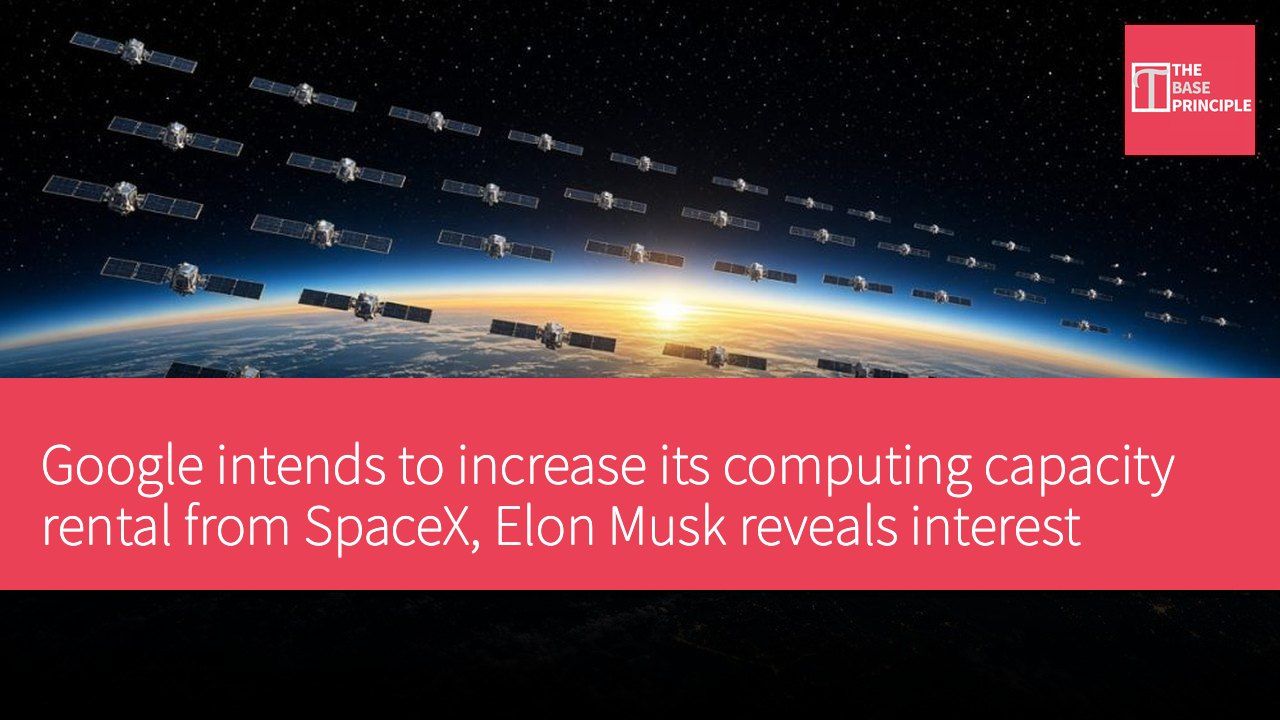
- Elon Musk stated that Google is looking to increase its computing capacity sourced from SpaceX.
- Google pays SpaceX $920 million per month to rent approximately 110,000 Nvidia GPUs.
- Musk noted that rental prices for large computing blocks are rising, while prices for smaller-scale computing are falling.
- SpaceX expects to reach 2.5 to 3 GW of computing capacity by the end of 2026.
Elon Musk stated that Google is looking to increase its computing capacity sourced from SpaceX, a comment made days after reports indicated that the company's largest artificial intelligence client might be preparing to reduce demand. "I’m not sure who will buy more, but Google has expressed a desire to rent more computing resources," Musk responded on X on Friday night to a post suggesting that Google might ultimately rent more computing capacity from SpaceX than Anthropic.
Musk did not disclose how much additional computing capacity Google hopes to acquire or when an expansion deal might be signed. According to Reuters, Google currently pays SpaceX $920 million per month to rent approximately 110,000 Nvidia GPUs and related hardware, with the agreement running from October 2029 to June 2029. In contrast, Anthropic's agreement is larger. That deal began in May and covers all of Colossus 1, with monthly payments reaching up to $1.25 billion, and is expected to reach approximately $3.1 billion per month after all contract capacity is completed in December, according to Teslarati.
Google Seeks to Increase Computing Capacity
Anthropic is facing increasing revenue pressure. Reports indicate that Anthropic executives told analysts earlier this month that the deal would not be extended beyond the second quarter of 2027, while this week's SemiAnalysis report noted that the AI lab might not renew a cluster of about 50,000 H200 GPUs. Anthropic accounted for nearly one-third of SpaceX's revenue in the third quarter. Musk responded that Anthropic told him the company is "very likely" to continue renting and hopes to "significantly increase" its capacity.
Musk also responded to reports of SpaceX lowering prices. The same SemiAnalysis report indicated that SpaceX reduced the on-demand pricing for its small cluster Blackwell from approximately $15 per GPU per hour (about HK$117 / approximately NT$468) to between $10 and $12 (about HK$94 / approximately NT$376). Musk stated that this is only part of the overall situation. "Rental prices for large, coherent computing blocks configured for high-bandwidth training are rising, sometimes significantly, while prices for smaller-scale computing (under 5,000 GPUs) are falling," he wrote.
"Overall, the average rental price per GPU for SpaceX computing is rising."
He later made a sarcastic remark about traditional cloud service providers: "People have no idea what happens when a super-powerful hardware company enters a sluggish market. Low-standardized companies are a more accurate description." Speed is a point Musk has repeatedly emphasized. Earlier this month, he stated that SpaceX could launch a data center in eight to nine months, while competitors would take about two and a half years, although he also acknowledged that the 90-day termination clause in its computing contracts affects both parties. SpaceX is currently pursuing a $50 billion supercomputing campus in Cochise County, Arizona, as well as a $24 billion natural gas power plant and supercomputing facility at Starbase.
Both projects are facing a public hearing on December 9.
The computing capacity required for the large Google agreement has mostly yet to be built. SpaceX had 1.7 GW of rated computing capacity at the end of the third quarter, with expectations to reach 2.5 to 3 GW by the end of 2026, and plans to add approximately 10 GW in 2027.
Why does Google want to increase its computing capacity sourced from SpaceX?
Google's desire to increase computing capacity stems from the possibility that its largest artificial intelligence client may be preparing to reduce demand, as Musk stated that Google has expressed a desire to rent more computing resources.
How much is Google currently paying SpaceX per month?
According to reports, Google currently pays SpaceX $920 million per month to rent approximately 110,000 Nvidia GPUs and related hardware.
Changes in Computing Rental Prices
What changes have occurred in SpaceX's computing capacity rental prices?
Musk stated that rental prices for large computing blocks are rising, while prices for smaller-scale computing are falling; overall, the average rental price per GPU for SpaceX computing is rising.
What are SpaceX's future plans for computing capacity?
SpaceX expects to reach 2.5 to 3 GW of computing capacity by the end of 2026 and plans to add approximately 10 GW in 2027.
How do Anthropic's agreements differ from Google's agreements?
Anthropic's agreement is larger, beginning in May with monthly payments reaching up to $1.25 billion, and is expected to reach approximately $3.1 billion per month after all contract capacity is completed in December.
Prospects for Google and SpaceX's Computing Capacity Collaboration
Google's intention to increase its computing capacity sourced from SpaceX is primarily driven by the potential reduction in demand from its largest artificial intelligence client. This reflects the growing competition for computing resources in the market. The rental price changes mentioned by Musk also indicate that the cost structure of computing resources is adjusting in response to changing demand. SpaceX's future plans demonstrate its commitment to expanding computing capacity, which will further enhance its competitiveness in the fields of artificial intelligence and high-performance computing.