
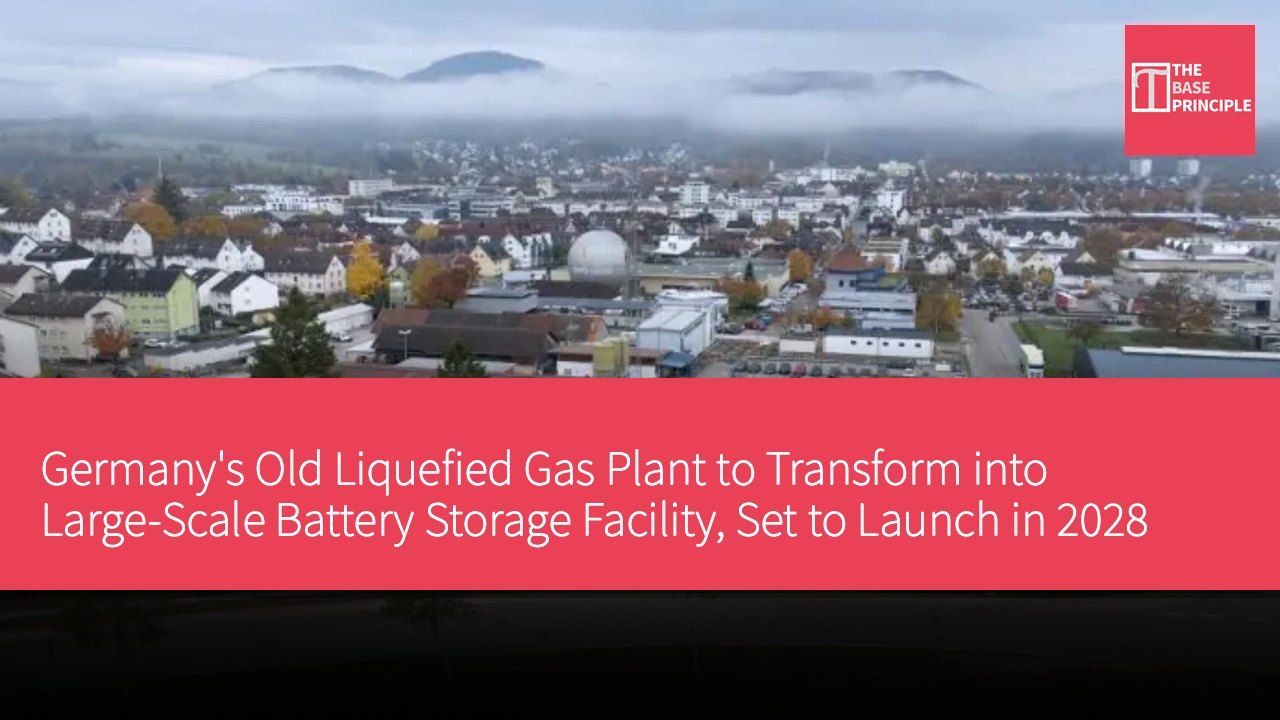
- The old liquefied gas plant in Germany will be transformed into a large battery storage facility.
- The facility will utilize diversified battery technology from Eos Energy.
- The battery design features good safety characteristics with no risk of thermal runaway.
- European energy companies are seeking diversified solutions beyond lithium-ion batteries.
An old liquefied gas plant in southwestern Germany will be converted into a large-scale battery storage facility. Local utility company Stadtwerke Gaggenau is collaborating with energy infrastructure firm Capac AG to build a 7.5 megawatt system. The facility will be capable of storing 30 megawatt-hours of energy. The project's budget is set at $16.8 million (approximately HK$123,840,000), with operations planned to commence in 2028 and related construction to begin in 2027. Capac will be responsible for all aspects of the project, including engineering design, procurement, integration, construction, and commissioning.
The battery will be co-funded by Stadtwerke Gaggenau and JP Holding, the parent company of Capac. Once operational, the battery will store electricity during periods of surplus energy and return it to the grid during peak demand or pricing periods. The facility will participate in day-ahead and intraday market trading and will receive compensation for providing grid services.
Utilizing Diversified Battery Technology
The facility will employ diversified battery technology from Eos Energy, based in the United States. The battery design, known as Intensity, features a modular structure that allows for horizontal placement and vertical stacking within a steel support framework, accommodating larger storage systems. The batteries are produced in Pennsylvania and utilize zinc bromide, conductive plastics, and graphite blankets as materials. Their chemical properties enable the use of a water-based, non-flammable electrolyte. Benjamin Henecka, CEO of Capac Energy, stated in an interview with ESS News that the battery technology possesses good safety characteristics due to the absence of fire risk.
He explained that, unlike lithium-ion batteries, this system does not face thermal runaway issues. The design life of these units is 25 years, with an expected degradation rate of about 3.6% over that period. When considering the economic factors related to utilities, maintenance costs, financing costs, energy required for supporting equipment, and potential replacement costs must be taken into account. Henecka emphasized the importance of considering these factors.
European Energy Companies Seek Diversification
This installation in Gaggenau also reflects a growing concern for diversifying away from lithium-ion batteries. The production and supply of lithium-ion batteries are largely concentrated in China, prompting European energy companies to seek alternative solutions. Capac and Eos aim to provide alternatives using zinc bromide battery technology. However, Henecka clearly pointed out that this does not mean utilities will rely entirely on foreign suppliers, but rather hope to offer more options to customers purchasing batteries. The two companies previously announced another project in Germany, revealing plans to install a 5MW/22MWh zinc bromide system in Bruchsal in June.
They also announced plans to provide 2GWh of storage across Germany, Austria, and Switzerland by 2031. The Gaggenau system will demonstrate the performance of this technology in real-world conditions, which is crucial for assessing its long-term value. The costs associated with operating the system will be an important consideration, including the retention of its storage capacity and the revenue generated from trading and grid services.
Item Specification Battery Capacity 30 megawatt-hours Design Life 25 years Degradation Rate Approximately 3.6% System Power 7.5 megawatts System Capacity 5MW/22MWh
Strategic Significance of Large-Scale Battery Storage Facilities
As demand for renewable energy grows, the development of battery storage facilities becomes increasingly important. The transformation of the old liquefied gas plant in Germany not only showcases technological innovation but also reflects a commitment to energy security, particularly in the context of global supply chain instability. Utilizing zinc bromide battery technology from Eos Energy reduces fire risks and extends lifespan, demonstrating a commitment to safety and sustainability. Furthermore, this project helps reduce reliance on Chinese lithium-ion batteries, promoting European autonomy in energy technology.