
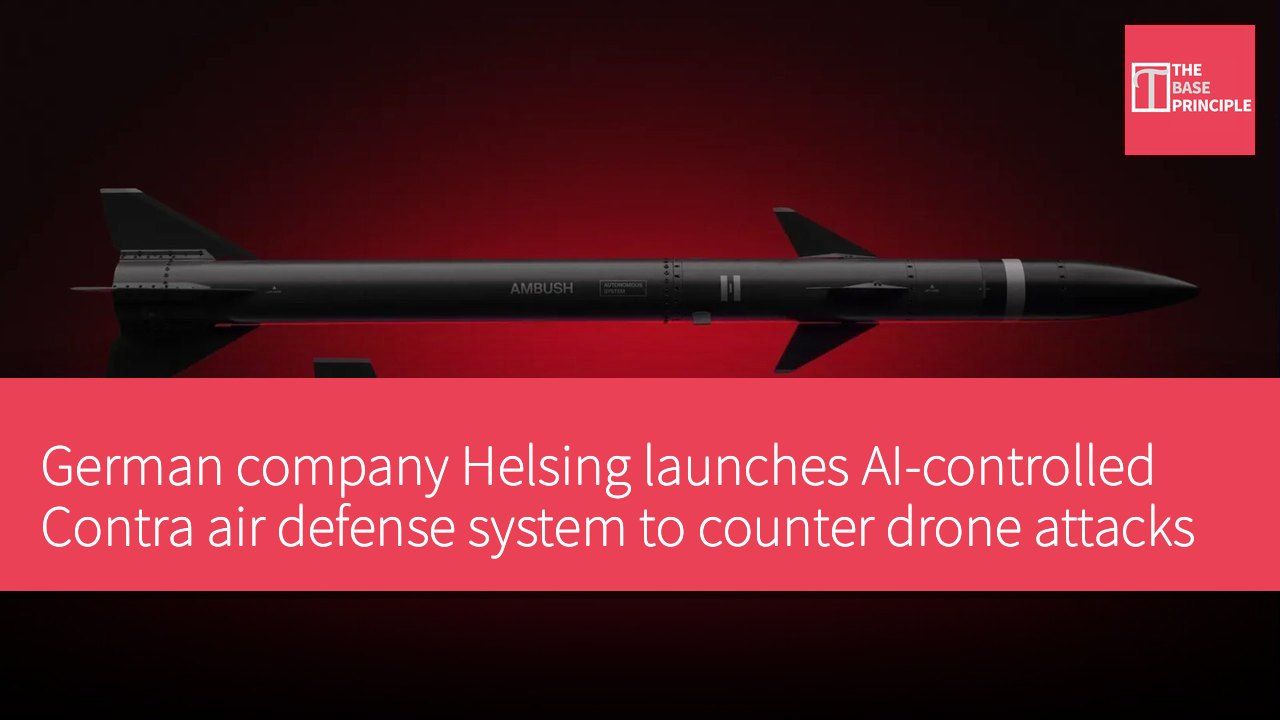
- Helsing launches AI-controlled Contra air defense system to counter drone attacks.
- The Contra system integrates multiple sensors and weapons to enhance defensive capabilities.
- New interceptors AD-1 Inferno and AD-2 Ambush target fast aerial threats.
- The Contra system is still under development and needs to demonstrate its performance and production capacity.
German defense technology company Helsing has announced the launch of Contra, an AI-controlled air defense system designed to coordinate responses to large-scale drone and missile attacks. The system combines sensor data, automated command and control software, and various weapons, equipped with two new interceptors specifically designed to combat faster aerial threats. The Contra system was officially unveiled on October 26 and is built on Helsing's Altra command and control platform. The company stated that the system can detect and simultaneously respond to hundreds or thousands of incoming threats by integrating information from different sensors into a unified aerial picture.
According to Helsing, human operators still retain control over decision-making and target prioritization.
Addressing the Need for Drone Attack Countermeasures
This launch comes as European militaries seek more cost-effective ways to counter large-scale drone attacks, particularly with the emergence of new jet-powered attack drones, making it increasingly difficult to intercept using traditional low-cost defense systems. Contra coordinates multiple air defense systems, aiming to connect radar, electro-optical, infrared, and acoustic sensors, and integrate with various defensive weapons. The platform no longer relies on a single interceptor but can coordinate a mix of existing and new systems, allowing defenses to respond to different threats within a network. Helsing stated that the system can integrate third-party equipment, including intercept missiles, anti-drone lasers, artillery, and net systems.
Although the company claims it can integrate hardware within days, the announcement did not provide independent test results demonstrating this capability on a large scale.
New Interceptor Design Features
The first new interceptor, AD-1 Inferno, uses a jet engine designed to tackle fast-moving aerial threats, including jet-powered attack drones. Helsing stated that this interceptor can exceed speeds of 700 kilometers per hour (435 miles per hour) and has a range of at least 20 kilometers (12.4 miles). Unlike traditional interceptors that must immediately engage targets, Inferno is designed to loiter in the air, operate in swarms, and attempt multiple intercepts. It receives mid-course guidance from ground radar stations, while terminal guidance is provided by an onboard radar seeker during the final interception phase.
These features are intended to assist defenses against targets that are too fast for slower intercept drones but do not warrant the high costs associated with traditional high-end air defense missiles.
The second interceptor, AD-2 Ambush, employs a solid rocket engine to quickly respond to high-speed, high-altitude threats. Helsing stated that this interceptor can reach speeds exceeding Mach 2 and has a range of at least 20 kilometers (12.4 miles). The company positions Ambush as a supplementary system targeting threats beyond the interception range designed for Inferno, including fast attack drones and subsonic cruise missiles. Similar to Inferno, Ambush also uses ground mid-course guidance and an onboard radar seeker for terminal guidance to address different climatic conditions.
Both interceptors are designed for containerized launch and will be mass-produced at Helsing's Resilience Factory. The company claims that their unit costs will be significantly lower than existing missile interceptors, although specific prices have not yet been disclosed.
Addressing the Cost Imbalance Between Attacks and Interceptions
Helsing stated that Contra and its interceptors aim to address the growing imbalance between the low-cost attack drones and interception costs. The company cited intelligence reports estimating that Russia produces 4,000 Geran-4 and Geran-5 jet-powered drones each month. However, the system is still under development and testing. If the company can deliver the promised performance and production volume, Contra could provide European militaries with another means to coordinate air defense against large-scale hybrid attacks.
Strategic Significance of the Helsing Contra System
Helsing's Contra system reflects the urgent need for current European militaries to counter drone threats. With the rapid advancement of drone technology, traditional defense systems face challenges, particularly in terms of cost and efficiency. The diversified interceptor design of the Contra system not only addresses fast-moving threats but also integrates various defensive resources, enhancing overall defensive capabilities. If it can successfully achieve its promised performance, it will help improve European military strategies in responding to large-scale hybrid attacks and could potentially change the future defense landscape.