
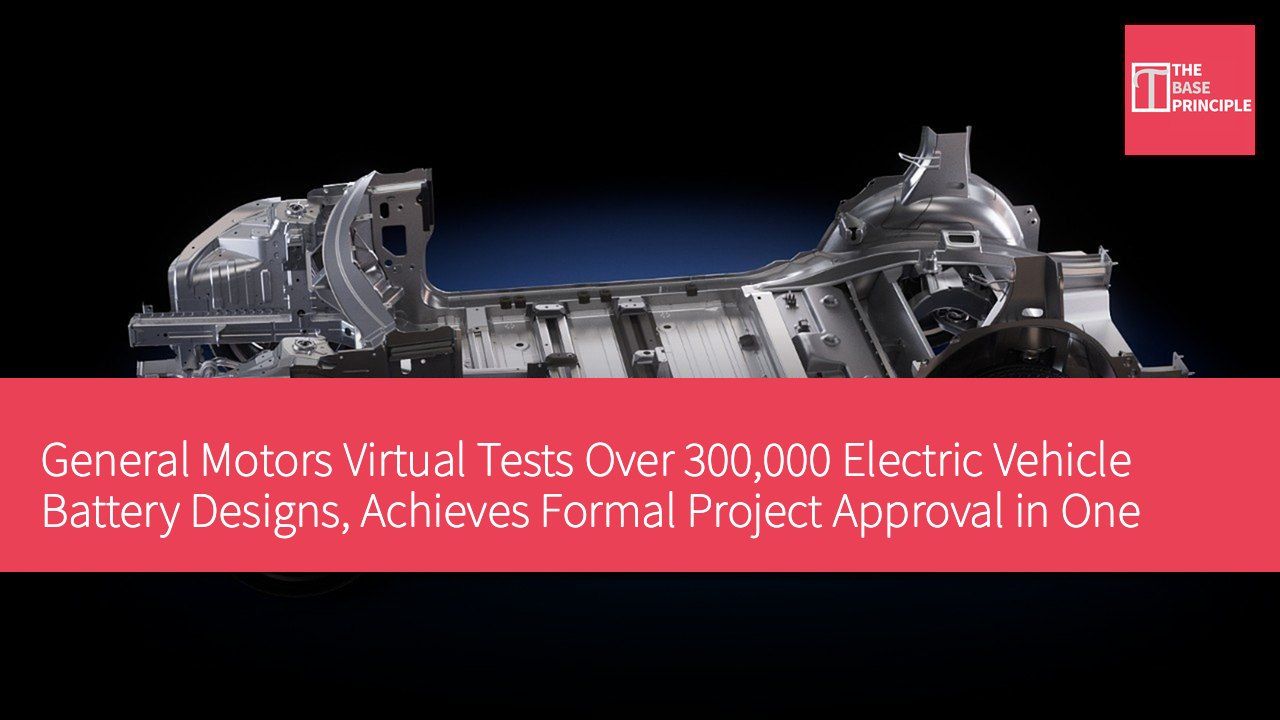
- General Motors virtually tested over 300,000 battery designs, quickly entering the project approval phase.
- The LMR battery technology of the new platform offers higher energy density, enhancing driving range.
- GM's electric drive unit part count is reduced by 40%, expected to lower manufacturing costs.
- Digital simulation technology improves production efficiency, aiding a 30% increase in battery pack assembly speed.
General Motors (GM) stated that it has virtually tested over 300,000 electric vehicle battery designs before building physical prototypes, which helped the U.S. automaker move from the initial battery pack concept to formal project approval in just one month. This achievement is part of GM's development of its fourth-generation electric vehicle platform, designed to provide longer driving ranges, lower manufacturing costs, and simpler vehicle designs. The company utilized computer simulations and a new engineering approach, allowing design, manufacturing, and engineering teams to work concurrently rather than sequentially completing their tasks.
GM anticipates that this approach will reduce its traditional five-year vehicle development timeline by half.
At the core of the new platform is the lithium manganese rich (LMR) battery technology, which GM is developing for its high-volume electric vehicles. Engineers did not manufacture and physically test hundreds of battery designs; instead, they used computer models to evaluate over 300,000 possible configurations before producing prototypes. According to GM, this helped its engineering team move from the initial LMR battery pack concept to formal project approval in just one month. These batteries will utilize prismatic cells produced by Ultium Cells, a joint venture between GM and LG Energy Solution, located in Spring Hill, Tennessee.
Advantages of LMR Battery Technology
GM stated that its LMR chemical formulation is designed to provide 33% higher energy density compared to lithium iron phosphate (LFP) batteries, which are a widely used low-cost alternative. The higher energy density could enable automakers to achieve longer driving ranges without increasing battery size or weight.
GM estimates that its fourth-generation electric vehicle platform, combined with LMR batteries, improved electric motors, and aerodynamics, will achieve approximately 20% more driving range per kilowatt-hour of energy compared to current vehicles. These improvements remain targets for the upcoming platform and have not yet been independently verified.
Improvements in Electric Drive Unit Design
In addition to the batteries, GM is also redesigning the motors, electronics, and electrical systems used in its next-generation electric vehicles. The company stated that the new electric drive unit has a 40% reduction in part count, making it smaller and lighter while potentially lowering manufacturing costs. Its updated electrical architecture also uses 30% fewer cables and fewer control modules compared to current GM electric vehicles. The central computing system is designed to provide 40 times the processing power, supporting software updates, energy management, and driver assistance features such as Super Cruise.
GM is also expanding digital simulation into vehicle manufacturing. Engineers can use virtual models to examine assembly processes, equipment placement, and potential safety issues before installing production equipment. Once manufacturing begins, GM's PlantBrAIn system will combine factory floor information with computer models to identify ways to improve production. The automaker stated that similar methods have already helped increase processing speeds at its battery pack assembly facilities by 30%. Future vehicles will also be able to check their electrical connections during the assembly process, potentially eliminating the final electrical verification step.
GM has not specified when its fourth-generation electric vehicle platform will enter production. The company stated that these changes aim to make electric vehicles more affordable while accelerating development and manufacturing timelines.
How Virtual Testing is Changing the Automotive Development Process
General Motors is using virtual testing technology to significantly shorten electric vehicle development times, which is crucial in a rapidly changing market environment. As demand for electric vehicles rises, traditional development processes can no longer meet market needs. GM's new approach not only enhances design efficiency but also allows for the early detection of potential issues, thereby reducing risks. This innovation not only boosts the competitiveness of its products but could also transform the research and development model of the entire automotive industry, prompting other automakers to follow suit.