
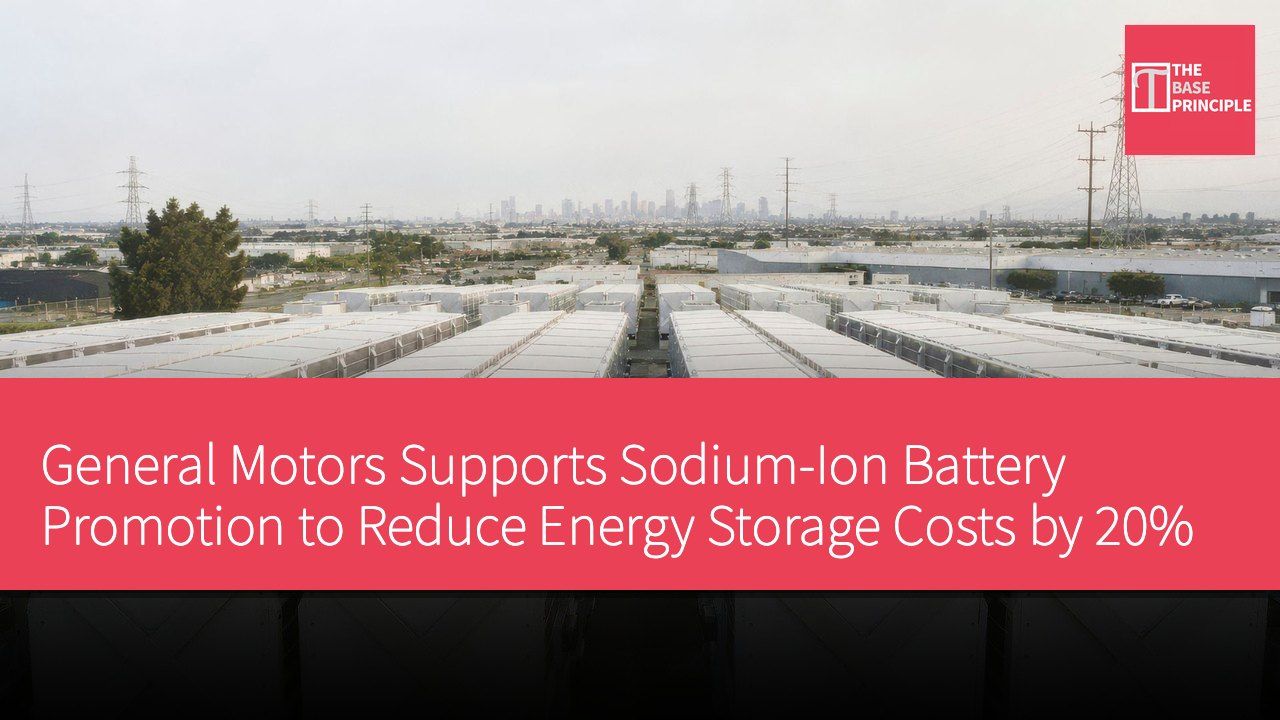
- General Motors supports sodium-ion batteries to reduce energy storage costs.
- Peak Energy plans to ramp up production to meet orders exceeding $1 billion.
- The materials for sodium-ion batteries are more abundant, potentially lowering costs.
- Peak Energy's passive cooling system can reduce storage costs by 20%.
General Motors is actively advancing the development of sodium-ion batteries, aiming to lower energy storage costs for utilities and data centers. The sodium-ion battery startup Peak Energy, supported by GM Ventures, announced on October 23 that it has raised $108 million in an oversubscribed Series B funding round. GM Ventures led the financing, attracting participation from LG Technology Ventures and other investors to support the company's energy storage expansion plans for the grid and data centers.
The startup plans to ramp up production to meet existing customer orders exceeding $1 billion while pushing its passive cooling battery storage system into the data center market. Its platform eliminates the need for active cooling equipment, which the company claims can reduce storage costs and energy waste.
General Motors and Peak Energy Collaboration
This funding builds on a partnership announced on June 10. General Motors will develop the next generation of sodium-ion batteries at its battery lab in Michigan, retaining exclusive production rights, while Peak Energy will integrate these batteries into its static storage systems. The collaboration focuses on grid storage rather than electric vehicles. The demand for static batteries differs from vehicle batteries, with cost reduction, reliability, and safety being more important than packing maximum energy into small, lightweight devices. Currently, lithium iron phosphate (LFP) batteries dominate the static storage market.
Peak Energy is pursuing sodium-ion as an alternative because the materials used are more abundant and potentially lower in cost. Kurt Kelty, Vice President of Battery and Sustainability at General Motors, stated that this chemistry is well-suited for this application.
Kelty remarked, "At General Motors, we know that applications should dictate the battery. For grid-scale static storage, sodium-ion is the right solution. Peak Energy has already demonstrated the value of sodium-ion through its innovative energy storage platform, and we are working together to further drive these advantages with our next-generation batteries, helping to provide more reliable and cost-effective energy storage for the U.S. grid."
Advantages of Sodium-Ion Batteries
Peak Energy's approach extends beyond battery chemistry to include the equipment surrounding the batteries. Traditional LFP storage systems use active cooling to manage operating temperatures. These systems add components, consume power, and increase system complexity. The company states that its sodium-ion platform operates with passive cooling, eliminating the need for these systems. According to the company's reports, this platform can reduce energy storage costs by 20% compared to traditional systems while ensuring over 99% uptime. These figures are reported by the company and have not been independently verified.
Peak Energy also estimates that replacing traditional LFP storage with its technology could reduce annual battery storage energy waste in the U.S. by up to two terawatt-hours. This forecast involves potential savings from broader deployment rather than energy savings from installed systems. The new funding will support Peak in ramping up production as utilities increase storage capacity alongside the growth of renewable energy generation, with rising electricity demand. Data centers are another target, especially in the context of increased power demands from AI infrastructure.
Peak Energy plans to push its passive cooling storage platform into this market while addressing its existing customer orders.
Item Specification Funding Amount $108 million (approximately HK$841,440,000) Expected Cost Reduction in Storage 20% Uptime Over 99%
How Sodium-Ion Batteries Are Changing the Energy Storage Market
The collaboration between General Motors and Peak Energy marks the significance of sodium-ion batteries in the energy storage sector. As demand for renewable energy rises, traditional lithium iron phosphate batteries face challenges related to cost and efficiency. Sodium-ion batteries, with their abundant materials and potential for lower costs, present a viable alternative. Peak Energy's passive cooling technology further reduces system complexity and operating costs, which is crucial for utilities and data centers. This innovation not only enhances the reliability of energy storage but also helps reduce energy waste, providing new possibilities for future energy infrastructure.