
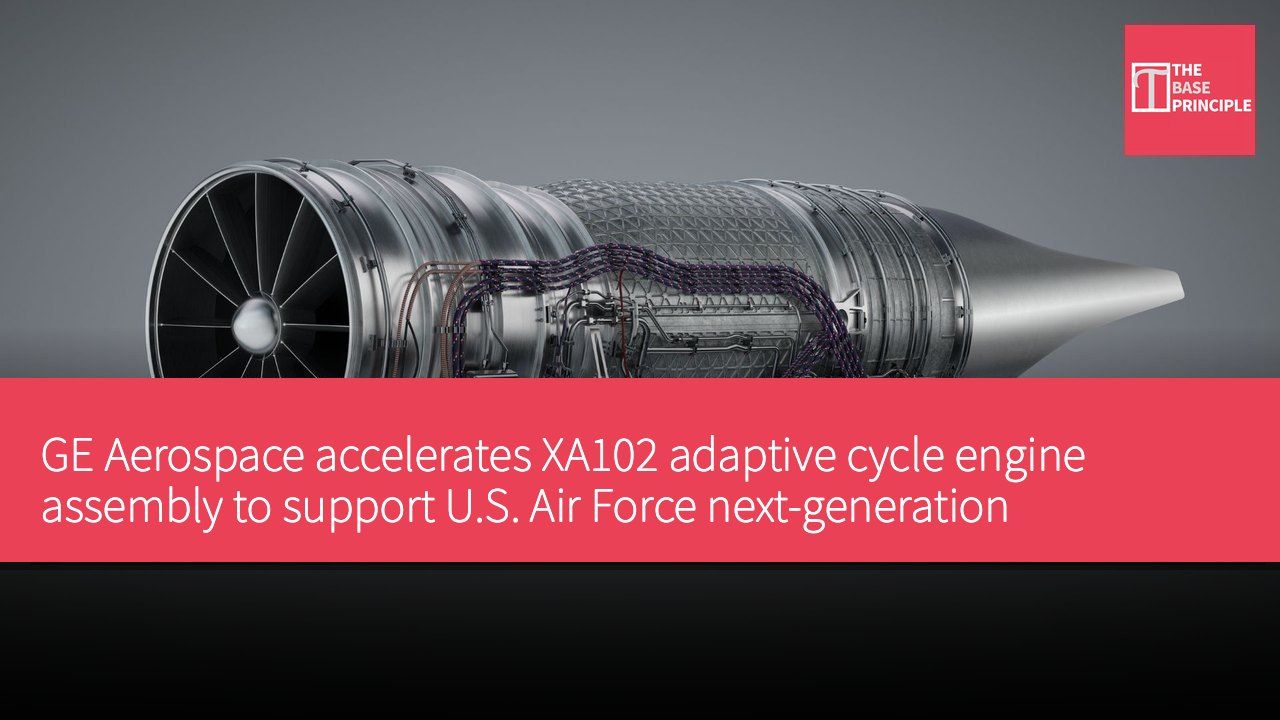
- GE Aerospace is assembling the XA102 adaptive cycle engine in support of a U.S. Air Force program.
- The XA102 uses a model-based definition approach to improve design and manufacturing efficiency.
- The technology can alter its operating mode based on mission and conditions, enhancing range and thermal management.
- The XA102 competes with Pratt & Whitney's XA103 to meet future fighter jet requirements.
GE Aerospace is moving closer to assembling its XA102 adaptive cycle engine, a key development for the U.S. Air Force's Next Generation Adaptive Propulsion (NGAP) program. The company said it is working with suppliers to procure hardware and test individual components in preparation for assembling the first XA102 test article. The effort builds on GE's earlier XA100 adaptive cycle engine program while introducing more digitized design and manufacturing methods.
XA102's Innovative Design Approach
A notable feature of the XA102 program lies not only in the engine architecture but also in how GE plans to build it. The company is using model-based definition (MBD) to replace traditional two-dimensional engineering drawings. The machine-readable digital model contains the product definition and can be transferred directly into downstream manufacturing and inspection processes. GE said the XA102 is its first engine to use this approach from design through assembly. The idea is to link engineering, manufacturing and inspection through the same digital model, potentially reducing errors and shortening the time from design to hardware.
The company is also working with suppliers to ensure they can manufacture and inspect using the same model-based data. GE previously demonstrated these model-based engineering processes during the program's first phase. Given the complex components and relatively small-scale production involved, this approach may become increasingly important for advanced military engines, where traditional manufacturing processes can be time-consuming and costly.
Advantages of Adaptive Cycle Engines
The XA102 is not GE's first attempt at an adaptive cycle engine. Its predecessor, the XA100, underwent extensive testing under the Air Force's Adaptive Engine Transition Program. GE said the data generated by that test program on adaptive propulsion applications is now being applied to the XA102, including lessons learned in thermal management, fuel efficiency and engine design. Adaptive cycle engines are designed to alter how they operate based on the aircraft's mission and flight conditions. GE said the technology can provide future fighters with greater range and stronger thermal management capabilities than today's advanced combat engines.
The XA102 is being developed under NGAP, competing against Pratt & Whitney's XA103. The Air Force program is intended to mature adaptive propulsion technologies for future air dominance aircraft. Air Force budget documents describe NGAP as an effort to develop adaptive engine technologies that meet the needs of next-generation fighter aircraft.
GE's latest announcement does not mean the XA102 is entering operational service. The company is still preparing the first test engine, with hardware procurement and component testing to take place before assembly and final testing. Nonetheless, the program marks a transition from primarily digital development to physical engine hardware. GE's broader goal is to combine the lessons learned from the XA100 with a manufacturing system capable of converting advanced propulsion designs into hardware more quickly. If the approach works as intended, the digital thread linking the XA102's design, manufacturing and inspection will also help the aerospace industry respond more quickly to future propulsion needs.
XA102's Impact on Future Aviation Propulsion Technology
The development of the XA102 adaptive cycle engine represents a significant advance in aviation propulsion technology, particularly in digitized design and manufacturing. Through model-based definition, GE Aerospace can more effectively link the design, manufacturing and inspection processes, which is especially important for complex military engines. The capabilities of adaptive cycle engines can not only improve fighter jet performance but also address the varied mission requirements of the future, making the success of the XA102 critical to the U.S. Air Force's future strategy.