
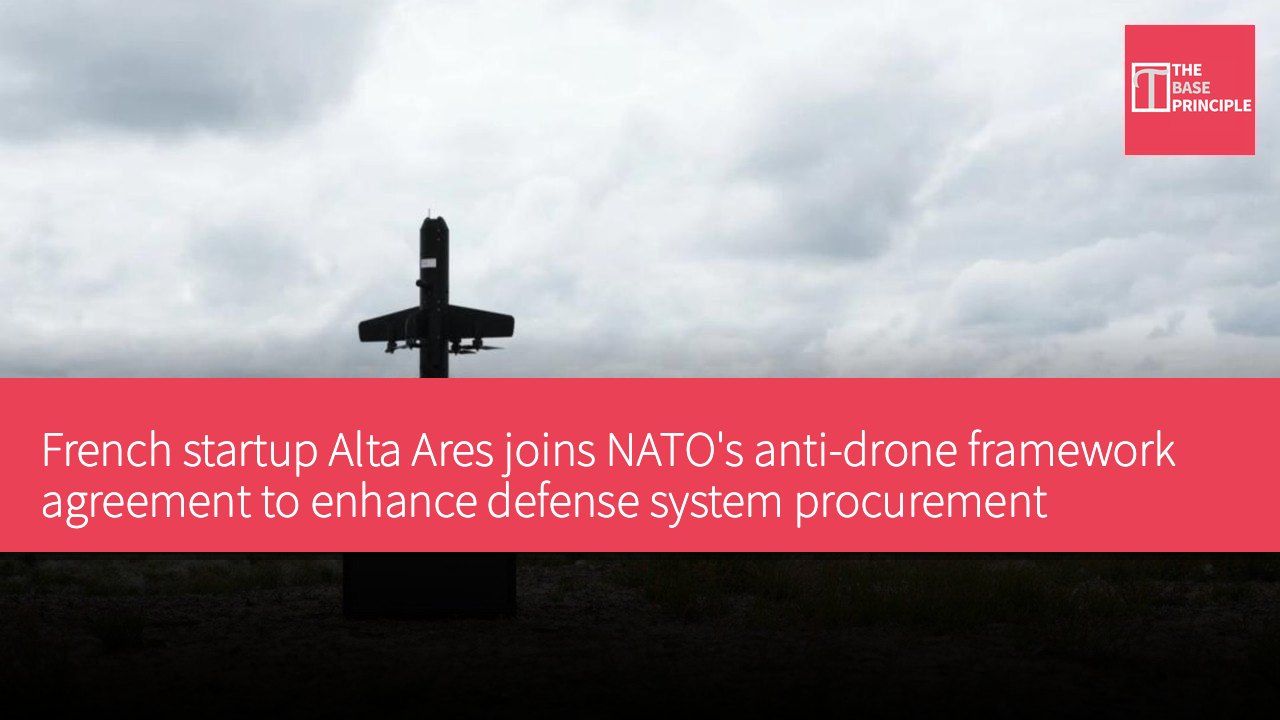
- French startup Alta Ares joins NATO's anti-drone framework agreement.
- The agreement shortens procurement cycles, allowing member countries to flexibly acquire defense systems.
- Alta Ares offers static, transportable, and mobile area defense solutions.
- Its anti-drone technology has been deployed in Ukraine and has received real-world feedback.
French startup Alta Ares has joined the North Atlantic Treaty Organization (NATO) anti-drone framework agreement. This development was disclosed on November 5, and the agreement allows member countries to procure protective systems against aerial threats directly from French defense manufacturers without the need for re-tendering. The company secured 16 awarded projects in the contract, making it the company with the most awards among the five participating in NATO's procurement catalog. Other parties in this new international military alliance agreement include Northrop Grumman and Axon Enterprise from the United States, Quantum Systems from Germany, and OSL from the United Kingdom.
Purpose and Impact of the Framework Agreement
The framework contract for counter-unmanned aerial systems (C-UAS) is further expanded, with the company stating that the agreement aims to shorten procurement cycles through a pre-selected catalog of systems, enabling member countries to purchase or lease defense systems. The company stated, "This new procurement model allows member countries to gain speed and flexibility in the face of rapidly evolving threats." While specific details about the weapon systems were not disclosed, the company noted that six awarded projects cover area defense and border protection. "We are the only selected provider to offer three levels of mobility for area defense: static, transportable, and mobile."
The company stated in a release.
This category covers various military needs, including the protection of ammunition depots and air bases, and may extend to deploying temporary defense positions or assisting military units near conflict areas. The French company emphasized that its "kill systems" have been battle-tested, with software based on operational data collected in Ukraine and the Gulf region. "Our systems are built against threats, not just tested against them." The company has deployed its anti-drone technology in Ukraine since 2024 and has received direct feedback from operational units combating Shahed-type one-way attack drones and loitering munitions.
Technical Advantages of Alta Ares
"Anti-drone systems must operate throughout the entire process, from detecting threats to intercepting them. We built Alta Ares around this need, inspired by data from the Ukrainian battlefield," said Hadrien Canter, CEO and founder of Alta Ares.
The interceptor technologies developed by the company include Pixel Lock, a computer vision solution for target detection and tracking, and Cyclop C2, which utilizes information from connected sensors and command systems to support interceptor guidance. Another interceptor weapon system built by the French startup is the X-Lock interceptor, which claims a range of over 9 miles (approximately 15 kilometers) and a maximum speed approaching 200 miles per hour (approximately 310 kilometers per hour). The Black Bird is a turbojet-powered interceptor project that reaches speeds of 435 miles per hour (approximately 700 kilometers per hour) with a range of 19 miles (approximately 30 kilometers), making it one of the company's responses to drone threats in modern warfare.
The company has not disclosed which of the above configurations entered the NATO framework. However, following the selection, the company is strengthening production with its industrial partners and establishing dedicated teams to support contract implementation. "We are committed to providing member countries with affordable next-generation air defense capabilities," Canter added. For larger orders, the company is considering production arrangements in customer countries while expanding its European supply chain.
The Importance of Anti-Drone Technology in Modern Warfare
With the rapid development of drone technology, the demand for anti-drone systems is increasing. Alta Ares's inclusion not only enhances NATO's defensive capabilities but also promotes cooperation among member countries. The company's technology, developed based on battlefield data, can respond more effectively to current aerial threats, demonstrating its competitiveness in military procurement. The implementation of these technologies will help enhance the operational flexibility of member countries and strengthen their rapid response capabilities against potential threats.