
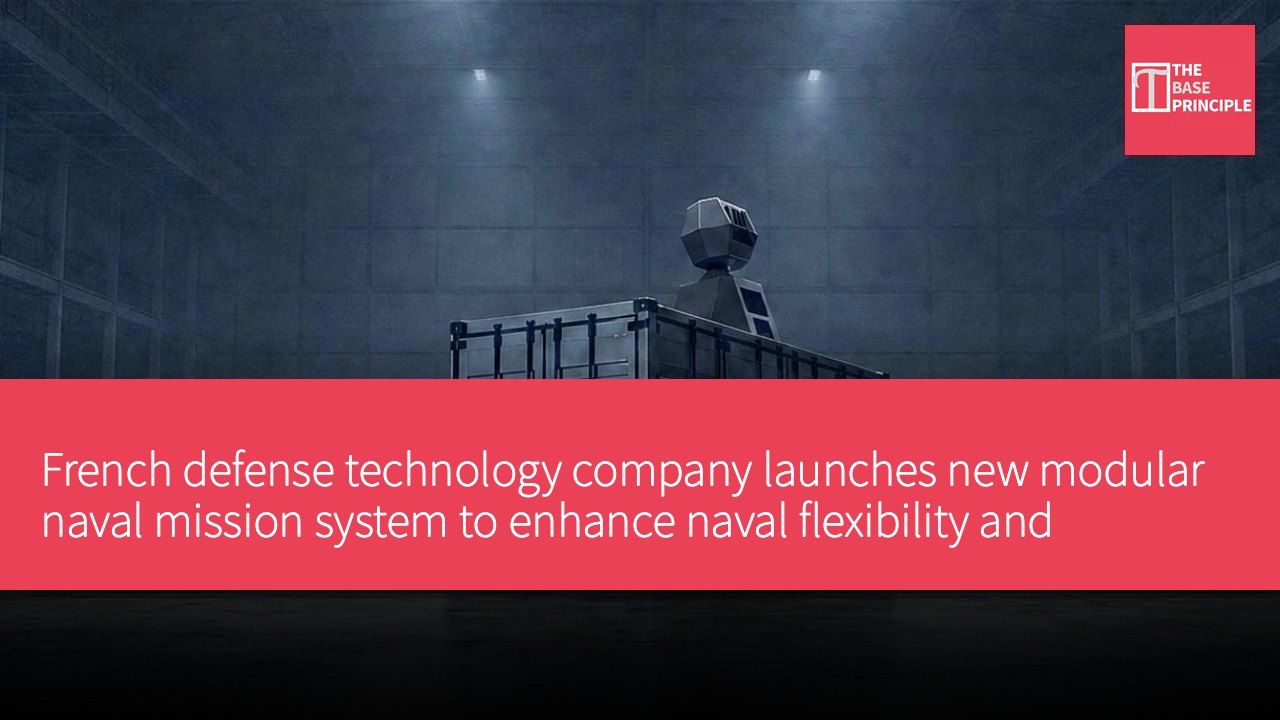
- Thales introduces a new modular naval mission system to enhance flexibility and adaptability.
- The system integrates multiple functions into a single 20-foot container, quickly adapting to maritime needs.
- The modular capability allows the navy to efficiently deploy, reconfigure, and upgrade mission capabilities.
- The new system addresses the integration needs of traditional vessels and unmanned systems in modern naval warfare.
A French defense technology company has recently unveiled its new containerized naval mission system, aimed at providing modern naval forces with greater flexibility, mobility, and operational adaptability. Thales' new maritime modular capability integrates functions such as surveillance, reconnaissance, fire control, navigation, and communication into a single 20-foot container, providing the navy with a flexible solution to quickly adapt to the evolving maritime security demands. The system was showcased at the Euronaval 2026 exhibition in Paris, reflecting an increasing emphasis on modular naval technologies that can be rapidly deployed, upgraded, and reconfigured.
The maritime modular capability will provide this flexibility. "Navies increasingly need to integrate and update capabilities throughout the lifecycle of their vessels. Thales' maritime modular capability will enable this flexibility," said Erik-Jan Raatgerink, Thales' Director of Surface Systems Strategy. The system acts as a force multiplier, allowing navies to expand their capabilities through rapid and efficient deployment, reconfiguration, and upgrading of mission capabilities. Thales contributes to the development of "hybrid naval" fleets, where modular and adaptable systems redefine naval operations.
Flexibility of Modular Systems
This flexibility is particularly valuable for navies operating traditional warships, small vessels, and unmanned maritime systems simultaneously.
The system integrates advanced sensors for optimal coverage, including radar, sonar, and electronic warfare systems. The launch of the maritime modular capability also highlights the growing importance of the hybrid naval concept. Modern naval warfare increasingly shifts towards the combination of traditional manned warships and unmanned or remotely operated platforms. These platforms can perform complementary roles, providing greater operational flexibility and extending the reach of naval forces. The modular mission system could become a crucial component in this transition, allowing different platforms to integrate specialized capabilities as needed.
Solutions to Maritime Threats
This development comes as global navies increasingly seek cost-effective and adaptable solutions to address evolving maritime threats. Traditional naval platforms often require significant time, investment, and technical modifications to integrate new mission capabilities. Thales aims to address this challenge through a modular architecture that allows multiple mission-critical technologies to be integrated into a deployable container. Thales designed the system to meet customer needs, meaning that the initial configuration can be expanded or modified based on different mission profiles and operational requirements. This approach addresses a significant challenge in naval procurement, as warships typically serve for decades while sensors, communication technologies, and mission requirements continually evolve.
The new system provides naval forces with an integrated and readily deployable solution capable of adapting to various operational environments.
The Importance of Modular Technology in the Navy
As the maritime environment continues to change, the demand for flexible and rapidly deployable solutions among navies is increasing. Thales' new modular naval mission system not only integrates various advanced technologies but also effectively addresses the collaborative operational needs of traditional warships and unmanned systems. The launch of this technology reflects the urgency for modern navies to enhance operational efficiency, reduce costs, and adapt to new threats. Through a modular architecture, navies can flexibly adjust to different mission requirements, which is crucial for the future development of naval strategies.