
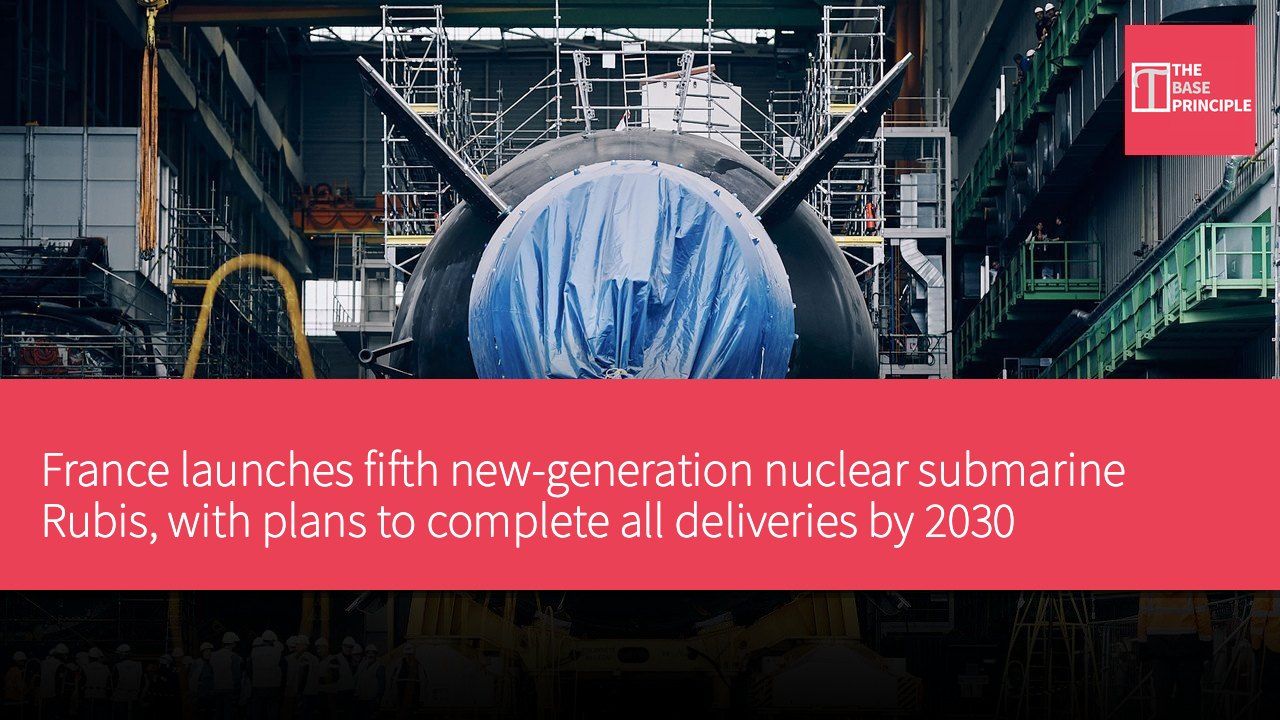
- The Rubis submarine is the fifth in France's new generation of nuclear submarines, currently undergoing final assembly and testing.
- The Rubis submarine is scheduled for sea trials in 2027, and if successful, will be accepted by the French Navy.
- The new-generation Suffren-class submarines feature substantial upgrades compared to the Rubis-class, enhancing the French Navy's attack submarine capabilities.
- The French Navy plans to upgrade the Suffren-class submarines during their service life to maintain modernization.
France has just launched its fifth new-generation nuclear attack submarine (SSN), preparing for final assembly and testing. The submarine, named Rubis (S639), is the latest in a planned fleet of six Suffren-class submarines. These submarines are intended to replace the Rubis-class SSNs that have been in service with the French Navy since the 1980s. The replacement plan aims to complete the construction of all six new SSNs before 2030. Designed and built by French shipbuilder Naval Group, Rubis measures 326 feet (approximately 99 meters) and left the construction yard in Cherbourg on October 16, 2026, with its main structure now largely complete.
Testing and Acceptance of the Rubis Submarine
The submarine now requires some finishing touches, such as the integration and testing of onboard systems, final adjustments to the propulsion system, and the installation of electrical and combat systems. After completing these tasks, Rubis will begin sea trials, expected to take place in 2027, although a formal date has not yet been announced.
If Rubis passes the sea trials, it will be formally accepted by the French Navy, anticipated to occur by the end of 2027. The sixth and final submarine, Casabianca (S640), will join its sister ships in the coming years. The new-generation Suffren-class submarines, developed under the Barracuda program, feature substantial upgrades compared to the Rubis-class, enabling the French Navy to maintain its attack submarine capabilities well into the middle of this century. Key features include an X-shaped stern and control systems, as well as a pump-jet propulsion system.
Upgrades and Future Plans for the Suffren-Class Submarines
The latter provides significant noise reduction capabilities for this class of submarines, enhancing their underwater stealth. These SSNs are designed for conventional warfare but can also be used for intelligence gathering and fleet protection. They are capable of covertly tracking and destroying enemy submarines and can attack surface vessels without detection. Additionally, they possess land-attack capabilities and can be utilized for other specialized missions, such as covert operations, including inserting combat divers into contested areas. Their nuclear reactors grant them exceptional endurance without the need to surface or use diesel engines for power.
However, food supply, crew requirements, and maintenance are generally more limiting than fuel.
The French Navy plans to upgrade the Suffren-class submarines during their service life rather than allow them to become outdated, as part of its "Evol SNA" program, which will enable modernization as needed. Additionally, the French Defense Procurement Agency (DGA) has a plan called SNA3G, which is a preliminary outline for potential future replacements for the Suffren-class submarines. This has not yet become a formal plan.
Strategic Significance of France's Nuclear Submarine Program
The launch of the Rubis submarine marks a significant advancement for the French Navy in nuclear submarine technology, serving not only as a replacement for the older Rubis-class but also as a crucial step in enhancing its naval capabilities. The design of the new-generation Suffren-class submarines takes into account modern operational requirements, featuring better stealth and operational flexibility, which are essential for addressing current security challenges. Furthermore, the ongoing upgrade plans demonstrate the French Navy's commitment to maintaining a technological edge, ensuring future competitiveness in naval warfare.