
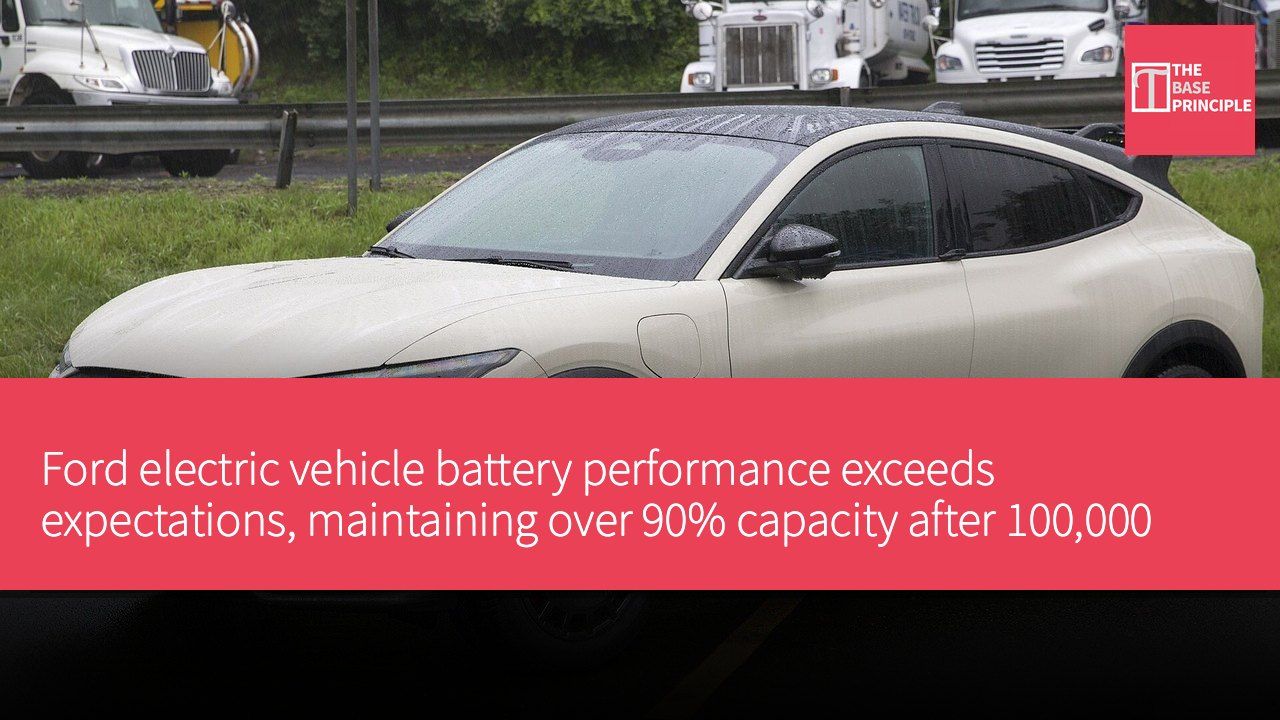
- Ford electric vehicle batteries maintain over 90% capacity after driving 100,000 miles.
- The average battery health of the Mustang Mach-E model is 92%.
- Battery degradation remains rare under various climates and driving conditions.
- Regular charging to 80% or 90% can reduce chemical and voltage stress on the battery.
The engineers' conclusions are based on the 2021 Mustang Mach-E, Ford's first crossover SUV designed specifically for electric vehicles. Over five years, more than 36,000 of these vehicles have been driven in the United States and Canada, accumulating approximately 2 billion miles. Across this entire fleet, the average battery health is 92%. For researchers, the performance differences between individual vehicles are minimal. Ford found that 95% of the fleet's health is within a narrow range of 87% to 97%.
This stability indicates that extreme degradation remains rare, even under varying climates and driving conditions.
Battery Performance Stability
Predictable aging curves continue this trend among high-mileage drivers. Over 2,000 early owners with factory-installed batteries have driven more than 100,000 miles. The average usable capacity for this specific group remains above 91%. Another small subset of about 30 drivers has exceeded 200,000 miles, maintaining an average capacity of 88%. Fleet data explains some unusual personal milestones, including one driver who drove 400,000 miles in a 2022 model without replacing the battery pack.Although this distance remains an exception, Ford stated it aligns with a clear and predictable aging curve rather than a statistical anomaly. In its broader North American electric vehicle lineup, Ford designs its power units for a lifespan of at least ten years. Five years of data confirm that modern battery management software can prevent early chemical depletion. How drivers maintain their vehicles depends on the underlying battery chemistry. The 2021 Mach-E model relies on nickel-cobalt-manganese (NCM) batteries. In daily commuting, when owners avoid charging the battery to 100%, these units degrade at a slower rate.
Regularly charging to 80% or 90% can reduce chemical and voltage stress on the battery.
In contrast, several new Ford models equipped with lithium iron phosphate (LFP) batteries are tailored for frequent full charges without rapid wear. In fact, regularly charging to 100% helps the onboard computer recalibrate and calculate accurate driving range data. Ford now sends customized charging recommendations directly through its smartphone app based on the specific battery pack installed in the vehicle.The Importance of Battery Durability
For the automotive industry, real-world data of this scale confirms a changing reality. The durability of electric battery packs has exceeded early expectations, alleviating long-term ownership concerns during the transition to new energy. Ford stated, "These rigorous quality tests are designed to help us understand battery system performance across various climates, charging behaviors, and driving conditions, providing customers with this information before they drive."
Item Specification Battery Type Nickel-Cobalt-Manganese (NCM)/Lithium Iron Phosphate (LFP) Average Usable Capacity 92% Average Mileage of Early Owners Over 100,000 miles
Reasons for Electric Vehicle Battery Performance Exceeding Expectations
Ford's data shows that the durability of electric vehicle batteries exceeds expectations, which is crucial for consumer purchasing confidence. As battery technology advances, drivers' concerns about battery degradation are gradually diminishing, making electric vehicles a more attractive option. Ford's research emphasizes the role of battery management software and provides charging recommendations tailored to different battery types, all of which help extend battery life. This real-world data not only enhances brand image but may also promote market growth for electric vehicles.