
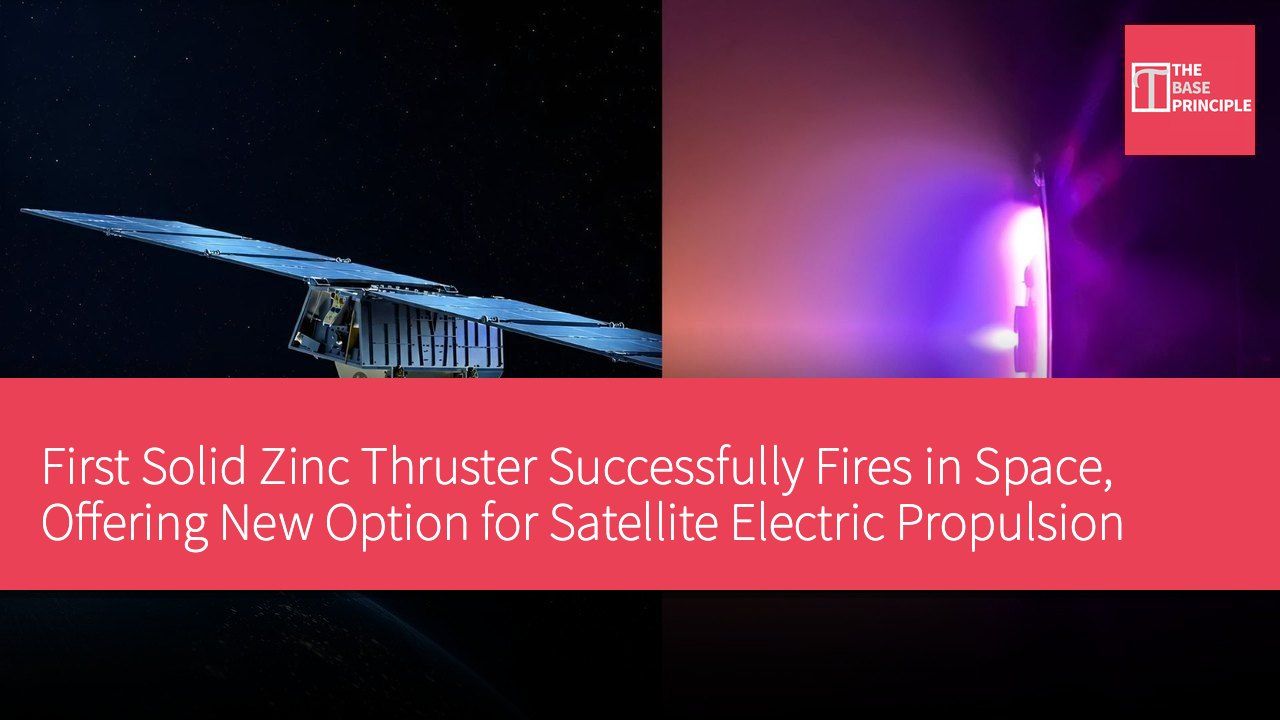
- Muon Space successfully tested a solid zinc thruster on the SERT-III satellite.
- The Starlight system uses solid zinc, eliminating the need for high-pressure storage and simplifying design.
- The thruster fed zinc steadily during firing, confirming expected thrust levels.
- Solid metal propellants could become a new option for commercial spacecraft.
A satellite has for the first time used solid zinc as fuel to ignite a Hall-effect thruster in orbit, providing spacecraft designers with a novel electric propulsion option. Muon Space completed the test on July 1 aboard the SERT-III satellite, which was specifically designed for propulsion testing. The mission tested the company's Starlight propulsion system under actual orbital conditions. The thruster successfully ignited on the first attempt, with telemetry data matching ground test predictions, and orbital tracking detected a measurable change in the spacecraft's trajectory.
Hall-effect thrusters using xenon as fuel have become the standard choice for efficient satellite propulsion. Most systems use xenon or krypton, which requires high-pressure storage and increases spacecraft design complexity. Starlight takes a different approach, with solid zinc as its propellant, which remains stable at room temperature and eliminates the need for pressurized tanks, simplifying spacecraft integration and ground operations. Zinc is less expensive than traditional noble gas propellants and has a more abundant supply. These factors are particularly important for satellite operators deploying larger constellations, as reducing propulsion hardware and propellant costs becomes significant when operating multiple spacecraft with the same system.
The Advantages of Solid Zinc Thrusters
Muon states that Starlight can support small and medium-sized satellites for orbit raising, station keeping, and controlled deorbiting. The system also addresses a practical challenge that electric propulsion has faced for years. Satellite operators need efficient thrusters, but propulsion hardware must adapt to the compact spacecraft mass and integration constraints. Muon specifically designed SERT-III to test the propulsion system's performance in space. The spacecraft is equipped with sensors to measure performance, spacecraft interactions, and the material deposited by the thruster plume. Ground testing has established expected performance at different throttle levels and operating conditions, while orbital testing provides an opportunity to verify whether these results still hold in microgravity.
The results confirmed these predictions. According to Muon's report, the thruster fed and vaporized zinc steadily during firing. Tracking data also confirmed that the spacecraft experienced the expected thrust. Engineers simultaneously monitored unwanted zinc deposition around the spacecraft. A thermoelectric quartz crystal microbalance sensor detected deposition levels near the thruster that were lower than conservative pre-flight model predictions. This result provides engineers with more data to understand zinc's behavior after leaving the thruster and should help refine future spacecraft plume and contamination models.
Muon CEO Jonny Dyer called the orbital ignition an important milestone for electric propulsion. He stated that the company chose to acquire Starlight Propulsion because zinc can solve a persistent problem in the propulsion supply chain. The test also avoided placing experimental hardware on primary customer missions, with SERT-III providing engineers with a spacecraft dedicated to collecting propulsion data without risking other missions.
Future Development Plans
Muon now plans to incorporate flight data into the further development of Starlight. Engineers will focus on system reliability, manufacturing, and plume management to advance the system to the production stage. The company expects its current generation of thrusters to reach customer spacecraft by the end of 2026. Muon is also developing a larger second-generation system and plans to conduct orbital testing of the second generation in the first quarter of 2027. This version will target larger spacecraft and may extend zinc-based Hall propulsion to a broader satellite market.
If upcoming tests confirm early results, solid metal propellants could become a practical alternative for more commercial spacecraft.
The Potential and Challenges of Solid Zinc Propulsion Technology
The successful test of the solid zinc thruster marks a significant advancement in spacecraft propulsion technology, particularly in terms of reducing costs and simplifying design. Traditional propulsion systems rely on pressurized gases, which increase spacecraft complexity, while the use of solid zinc helps mitigate these challenges. Additionally, this propulsion method shows good potential in the application of small and medium-sized satellites, and future development plans will further promote its commercialization. However, issues such as the reliability of the thruster and plume management still need to be addressed to ensure its effectiveness across various missions.