
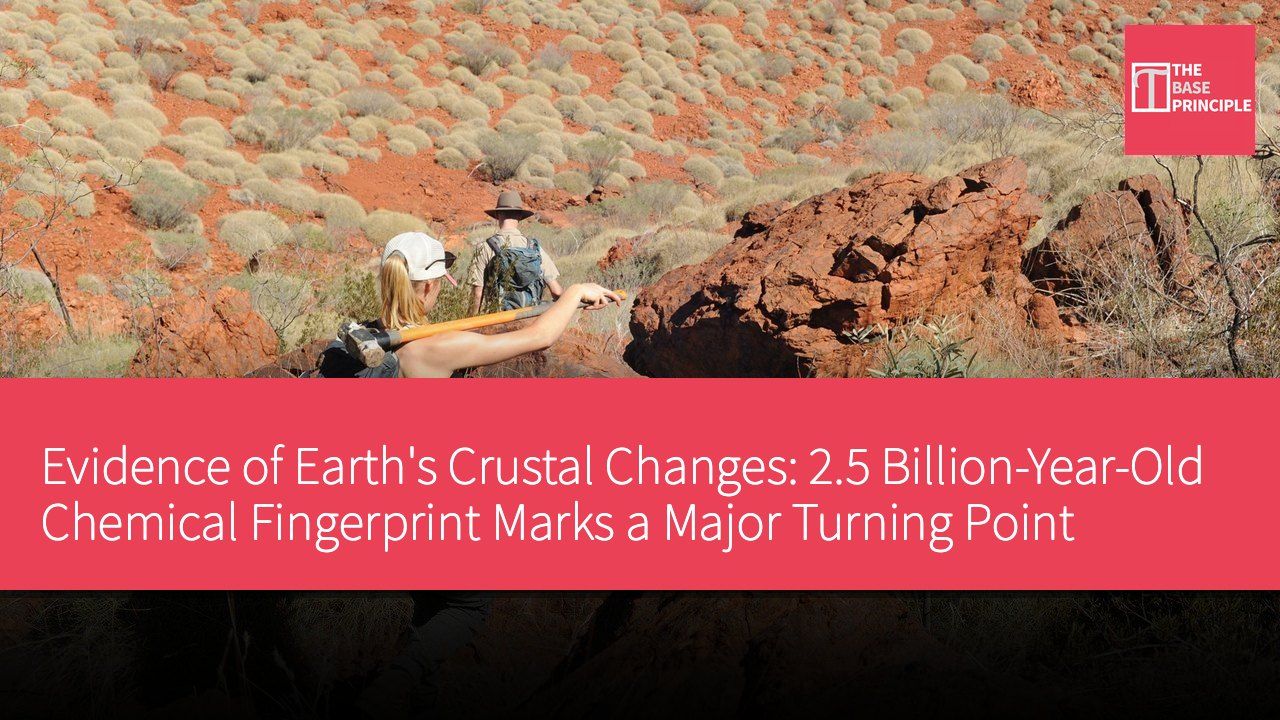
- 2.5 billion years ago, a fundamental change occurred in the construction of Earth's crust.
- Researchers found that a chemical fingerprint disappeared from ancient rocks, marking the evolution of the crust.
- This change shifted Earth towards a dynamic system, affecting the formation of continents and oceans.
- The study provides rare insights into the earliest crustal evolution of Earth.
The starting date remains contentious, with other studies of ancient mineral crystals suggesting some form of tectonic activity may have originated even earlier.
The Significance of the Disappearing Chemical Fingerprint
The team sought a marker left behind when new crust formed through the melting of old rocks. They searched for this fingerprint in thousands of rocks from around the globe, some dating back nearly 4 billion years, said Janne Liebmann, lead author from Curtin University's Mineral Systems Time Scale team. "We consistently found it in ancient rocks from 2.5 billion years ago, indicating they originated from ancient crustal pools formed about 4 billion years ago," she said. After 2.5 billion years ago, this fingerprint disappeared."Despite examining thousands of rocks, we never saw it again," Liebmann pointed out, indicating that the way Earth's crust forms and transforms underwent a fundamental change, shifting to the dynamic system we see today. Professor Chris Kirkland, a co-author from Curtin University's School of Earth and Planetary Sciences, described this change as a transition from the early Earth's ancient crust, which could melt and reprocess in place multiple times, to a system capable of moving and recycling crust on a larger scale. He stated, "Seeing the ancient fingerprint disappear at such a specific time is precisely what makes this result remarkable."
The Key Role of Plate Tectonics
This result also helps explain when Earth acquired features that distinguish it from tectonically inactive planets like Venus and Mars. Kirkland noted that plate tectonics is crucial to Earth's evolution, continually reshaping continents and oceans and influencing the atmosphere and climate. He referred to this finding as the clearest geological evidence of when the "tectonic engine" of contemporary Earth was "turned on." The publication did not disclose which chemical markers the research team used or how many rocks were ultimately included in the dataset, only mentioning "thousands." Liebmann stated that this fingerprint provides rare insights into the earliest crustal evolution of Earth.The paper, titled "The Disappearance of Ancient Crustal Storage Marks a Transition in Earth's Geodynamic System," has been published in the Royal Society A journal.
The Importance of Crustal Changes for Earth's Evolution
The changes in Earth's crust mark a critical evolutionary period that not only affected the formation and structure of the crust but also transformed Earth's dynamic systems. The emergence of plate tectonics enabled large-scale crustal movements, which are vital for reshaping continents and oceans as well as regulating climate. The findings of this study provide significant geological evidence for understanding Earth's evolutionary history and help explain the distinctions between Earth and other planets.