
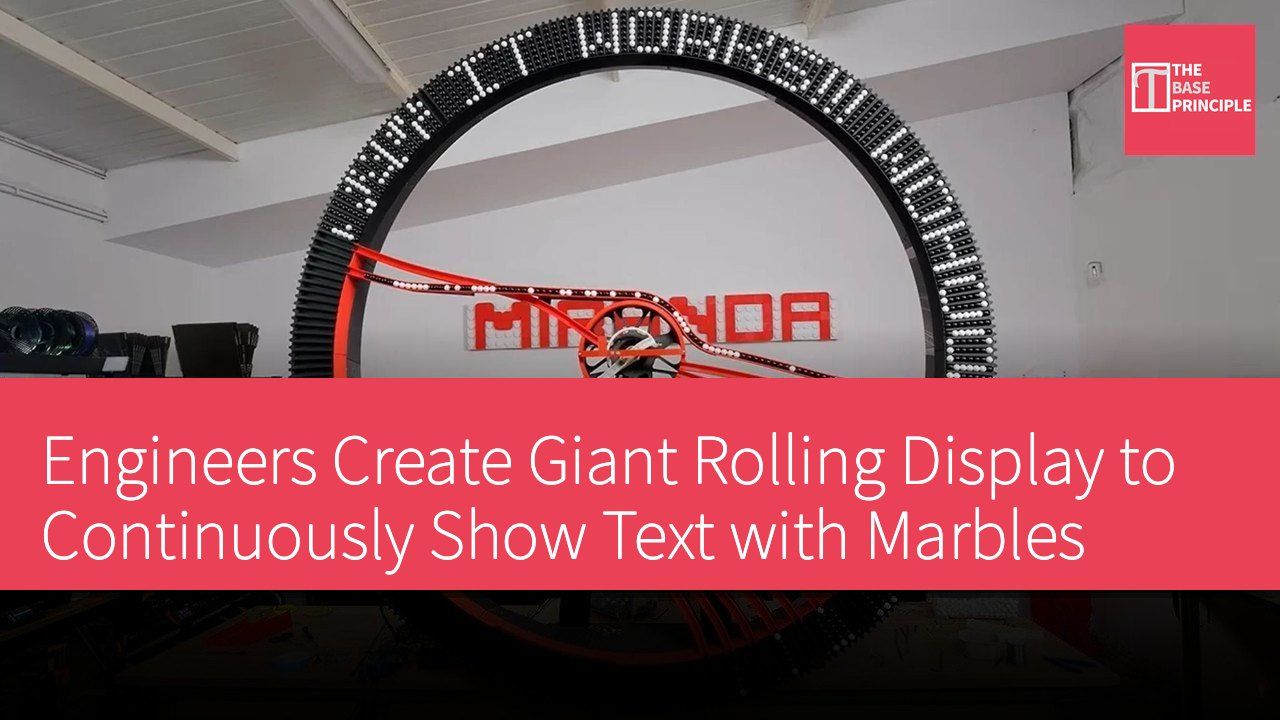
- Engineer Ivan Miranda created a giant rolling display that uses black and white marbles to show text.
- The device is designed in a large circular shape, capable of continuously displaying messages and long letters.
- Miranda is known for making marble clocks, and this work surpasses his previous achievements.
- The device consists of 3D printed parts and operates using stepper motors and infrared sensors.
Engineer Ivan Miranda once again showcases his creative talent. This 3D printing enthusiast has produced many impressive creations in the past, and his latest work is a rolling device that uses black and white marbles to display text. Miranda designed it in a large circular shape to ensure continuous text display. Whether it's a short message or a long letter, this rolling device can show it. If we had unlimited 3D printers, what would we want to print? Action figures? Musical instruments? Perhaps even scale models of a bicycle, car, airplane, or rocket.
However, the mindset of a YouTuber is different. They do not consider what can be done in an afternoon or a weekend; their vision extends over weeks or even months, and the final video is merely a glimpse of the work behind it.
Engineering websites of interest have reported on Miranda's creations, including motorcycles, mini go-karts, and even treadmills. These works are functional rather than scale models. While these creations are impressive, Miranda is known online for making marble clocks, and this time he has surpassed his previous achievements.
Design and Operation of the Device
In his latest work, Miranda replaced the digits of a digital clock with letters. Theoretically, if digits can be made, then letters can also be produced. However, the main difference lies in how these letters are displayed and positioned. Digital clocks and their variants must handle changing numbers, all occurring in a relatively small space. For this rolling device, Miranda opted for a massive circular design, which, while providing a broad canvas for displaying text, also increases operational complexity. For a professional like Miranda, who has been creating digital content for over five years, complexity is precisely what makes it engaging.
The approach to tackling the complexity challenge involves multiple iterations, using more 3D printed parts than we can imagine, which can easily integrate into the overall plan to make the device operational. This rolling device consists of a massive ring structure made from 3D printed parts, with letters displayed on it. A few components in the structure that are not 3D printed include steel ball bearings and the stepper motors that move the wheels. A key part of the entire assembly is the selecting arm, which determines whether to send a black marble or a white marble in a specific direction to form a letter.
This arm is also driven by a stepper motor, while infrared sensors help it distinguish the colors of the marbles.
Challenges and Solutions of the System
The device is also equipped with a marble collector that can return fallen marbles back into the system. Although the entire setup is made entirely of 3D printed parts, the overall assembly is large and occupies Miranda's studio. Like any engineering project, issues occasionally arise during operation, and the display of letters may be slightly misaligned. However, with the creator's assistance, the system can restore its ability to continuously display large blocks of text.
How Miranda's Innovative Design Influences the Engineering Field
Ivan Miranda's giant rolling display demonstrates the potential of 3D printing technology in innovative design. This device not only breaks the limitations of traditional display technology but also introduces the use of marbles, enhancing the fun and interactivity of the display. As technology advances, such creations may inspire more engineers to explore new design ideas and drive progress in the engineering field. Miranda's work reminds us that innovation comes not only from technology but also from a unique understanding of design and a spirit of experimentation.