
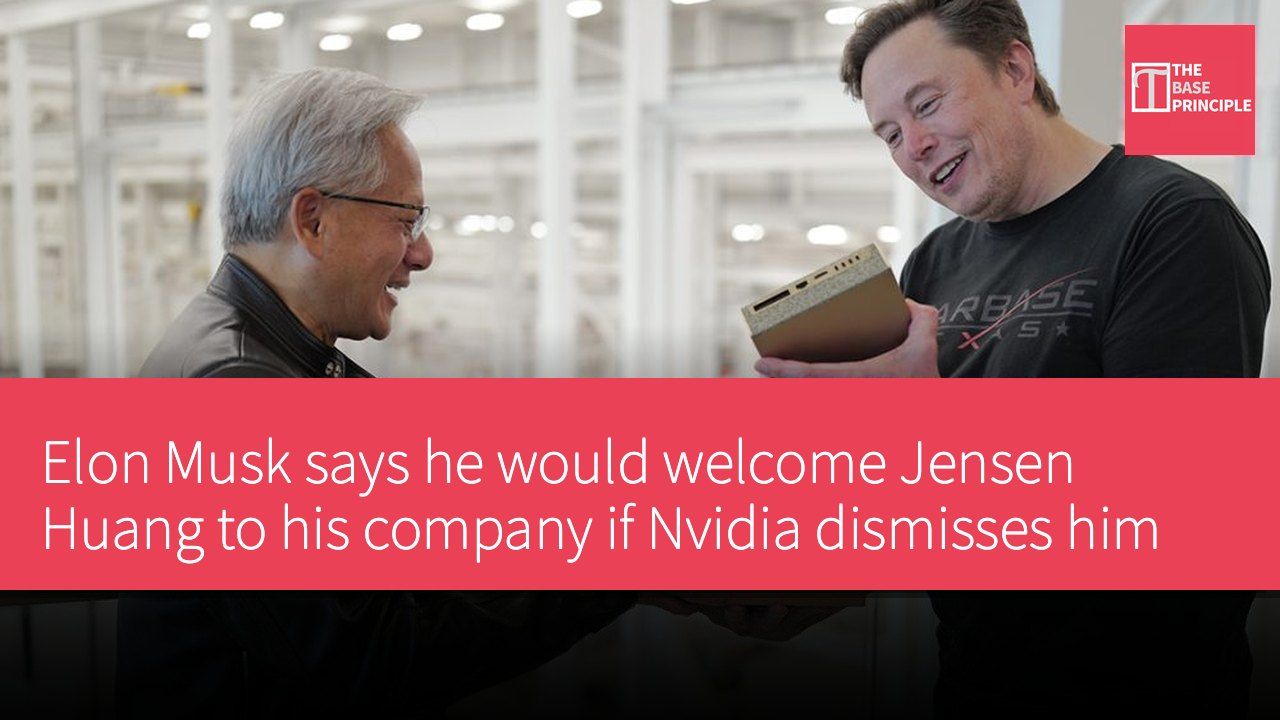
- Elon Musk expressed willingness to hire Huang if Nvidia dismisses him.
- Nvidia's board is considering dismissing Huang due to reports of extramarital affairs.
- Huang has acknowledged infidelity but did not provide details, and the board is seeking alternatives.
- SpaceX relies on Nvidia hardware to build its AI infrastructure and plans to scale significantly.
Elon Musk stated that he would welcome Huang to his company if Nvidia's board decides to dismiss its long-time CEO, Jensen Huang. On Wednesday evening, financial media outlet ZeroHedge posted on the X platform, "Elon, please hire Jensen," to which Musk replied about two hours later, "It would be my honor." As of Wednesday night, neither Huang nor Nvidia had publicly responded. Musk's reply came during a board meeting where Huang's future was being discussed.
Nvidia's Board Considers Dismissing Huang
According to The Wall Street Journal, board members are preparing to dismiss him due to reports of two extramarital affairs. One of the affairs involves Singaporean businessman Alice Huang, who U.S. intelligence officials believe has ties to China's Ministry of State Security. The New York Times also reported on Huang's relationship with Kimberly Powell, vice president of Nvidia's health care division. In a memo to employees on Sunday, Huang acknowledged infidelity but did not provide details.
Nvidia's bylaws stipulate that a majority of the 11 directors can dismiss the CEO with or without cause. According to Bloomberg, the board has been working with external firms to find potential replacements and may appoint an interim CEO, with current CFO Colette Kress seen as the most likely candidate. According to CNBC, Nvidia's stock fell more than 8% in after-hours trading, as the company plans to report quarterly earnings on November 17. Musk's reliance on Nvidia's leadership exceeds that of many tech executives.
SpaceX's Collaboration with Nvidia
This August, during SpaceX's first earnings call since becoming a public company, he told investors that the company would build its AI infrastructure specifically on Nvidia hardware, calling Vera Rubin the "best architecture." SpaceX is also collaborating with Nvidia to provide computational load for its planned orbital AI constellation, Starmind.
In October, SpaceX announced it had reached a binding agreement for the lease of approximately $40 billion worth of Vera Rubin GPUs and related equipment, with the lease expected to commence in the first half of 2027. The scale of this dependency is already substantial. During the third-quarter earnings call, SpaceX stated it would bring online about 200,000 to 220,000 Nvidia GB300 GPUs per month, anticipating a nominal computing capacity of 2.5 to 3 GW by the end of the year. This expansion plan is now moving into new locations, such as the proposed $24 billion power plant and supercomputer campus at Starbase.
The relationship between the two executives dates back nearly a decade. Huang has recounted multiple times the story of personally delivering Nvidia's first DGX-1 AI supercomputer to Musk in 2016, when no other customers were willing to take it. "No one wanted to get involved except Elon," Huang said during an episode of the Joe Rogan Experience last December.
Musk did not specify the role Huang might take, and his response did not constitute a formal invitation. Huang co-founded Nvidia in 1993 and still holds about 3.6% of the shares, so whether he leaves the chipmaker, which has been operating for over thirty years, and how he departs will determine his ability to join Musk's company.
Potential Implications of Musk and Huang's Collaboration
Elon Musk's support for Jensen Huang may reflect his high regard for Nvidia's technology. Huang's long experience at Nvidia and his good relationship with Musk could make him a key figure in further developing SpaceX's AI infrastructure. As SpaceX deepens its reliance on Nvidia hardware, Huang's potential joining could accelerate the implementation and innovation of its AI projects. Additionally, if Nvidia's board dismisses Huang, it could impact the company's future direction and technological development, which holds significant implications for the entire tech industry.