
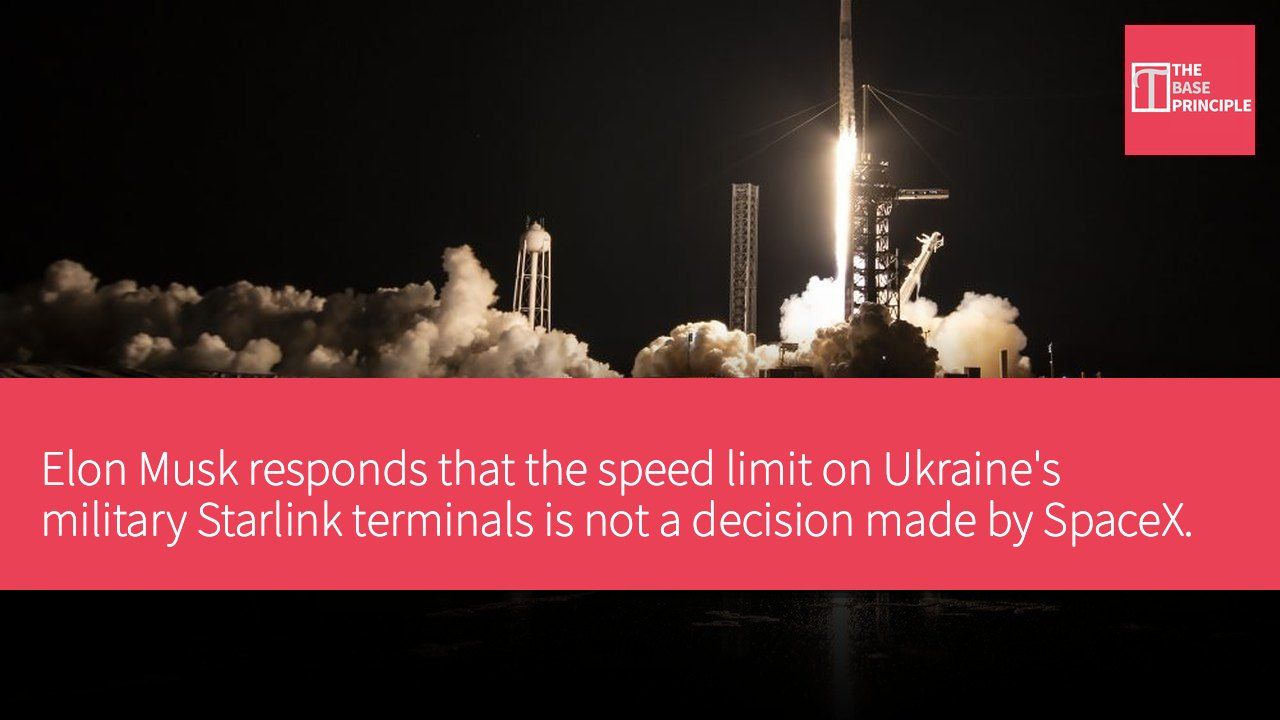
- Musk emphasized that the speed limitations of Starlink are not a decision by SpaceX, but are controlled by the U.S. military.
- Ukrainian officials expressed concerns about the speed limits affecting military operations.
- Starshield is the government version of Starlink, focusing on military applications.
- Musk pointed out that Starlink should not be used for offensive military actions, emphasizing its commercial nature.
Elon Musk stated that the speed restrictions on Ukraine's military Starlink terminals are not determined by SpaceX. Musk posted on the X platform, saying, "The Starshield system is owned and controlled by the U.S. government, and any speed or usage limitations are determined by the U.S. military, ultimately decided by the President." He added that Starlink is a commercial service, limited to civilian or defensive activities, and "should not be used for offensive military actions, as that would be inappropriate for a commercial company."
This statement was in response to a thank you from former Ukrainian Defense Minister Mykhailo Fedorov, who noted that Musk had restored connectivity, with speeds reaching 160 kilometers per hour, and pointed out that fully lifting the Starshield restrictions is crucial for Ukraine's defense.
Ukraine's Reaction to Speed Restrictions
The complaint began on Tuesday night, when Ukrainian officials reported that military terminals started losing service at speeds exceeding approximately 100 miles per hour. Presidential advisor Serhiy Beskrestnov noted that the defense forces had not received any warnings, and multiple missions were disrupted. According to earlier reports from Teslarati, the 7th Rapid Reaction Brigade told Reuters that connections would drop for 10 to 20 seconds even at speeds well below the limit, making it more difficult to control drones. Polish Foreign Minister Radoslaw Sikorski asked Musk on X whether he was "playing politics with the product again."
This highlights the importance of the distinction between Starlink and Starshield.
The Role and Impact of Starshield
SpaceX launched Starshield in 2022 as the government version of Starlink, initially focusing on Earth observation, communications, and hosting payloads. It won a contract worth up to $70 million from the Space Force in 2023. In December 2024, the Pentagon will transition Ukraine's terminals to Starshield, covering approximately 3,000 units. As a result, the Ukrainian military's connectivity will now operate through a service that Musk believes is controlled by Washington.
While Musk's post clarified who holds authority, it did not imply that anyone ordered the restrictions, and neither SpaceX nor the U.S. government has confirmed who set the limits. Ukrainian officials pointed out that the timing raised concerns, as it coincided with President Trump's push for an energy ceasefire, and Musk stated in a post on Saturday that "Zelensky went too far." The BBC noted that Trump denied threatening to limit intelligence sharing with Kyiv, and there is no evidence that Washington requested the imposition of limits. This incident also rekindled discussions about commitments made in 2025.
When Poland accused him of threatening Ukraine's access, Musk stated that Starlink "will never turn off its terminals" and will not be used as a bargaining chip. Since then, Poland has provided over 29,000 terminals to Ukraine. Teslarati also reported on Kyiv's search for alternatives to Starlink in 2025, and the latest controversy has added new urgency to this search.
Impact of Starlink Restrictions on Ukrainian Military Operations
Musk's comments highlight the distinction between Starlink and Starshield and reveal the role of the U.S. government in this matter. The Ukrainian military's concerns about the speed restrictions reflect a reliance on real-time communication during wartime, where any technological limitations could significantly impact military operations. As Ukraine seeks alternatives, this incident also underscores the political complexities surrounding the use of military technology, especially amid global geopolitical tensions.