
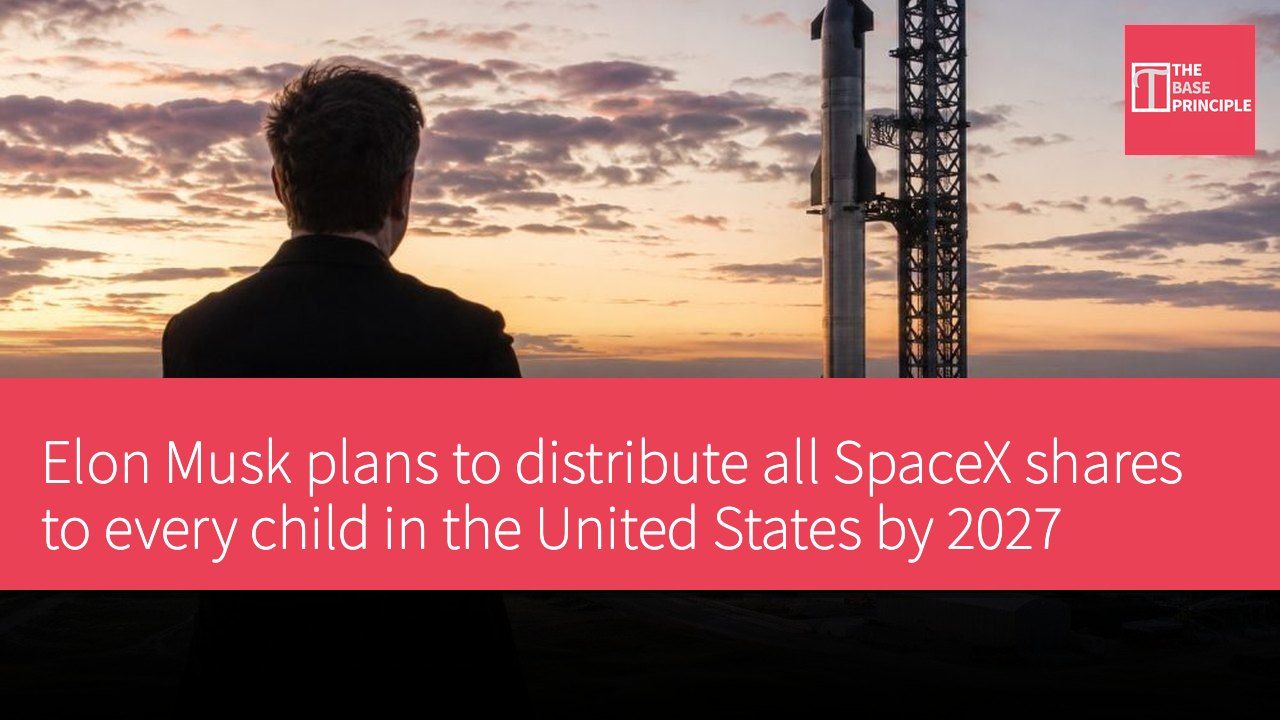
- Elon Musk plans to distribute all SpaceX shares to every child in the United States by 2027.
- The long-term goal of this initiative is to support the future generation of young Americans.
- Musk owns approximately 849 million Class A shares, with total assets involved exceeding $10 billion.
- This event has sparked widespread discussion about the social responsibility of tech companies.
Elon Musk has announced plans to distribute "all my SpaceX shares" to every child in the United States by 2027, marking this action as the first step, with more similar distributions to follow. According to him, the long-term goal of this arrangement is to support the future generation of young Americans, with total assets involved expected to exceed $10 billion; SpaceX has already gone public this year, and at current prices, this gift is estimated to be worth several billion dollars. Consequently, this topic has quickly sparked widespread discussion in society.
According to figures from the Federal Interagency Forum on Child and Family Statistics, there are approximately 70 million minors in the United States. In this context, Musk's ownership of about 849 million Class A shares of SpaceX, as indicated in filings with the U.S. Securities and Exchange Commission (SEC), represents a substantial asset in the market. These figures provide a direct reference for understanding the scale of this gift and highlight the significant long-term impacts on the stock market, insurance, and taxation if an actual transfer occurs.
Potential Impacts of the Share Distribution
Additionally, CNMO notes that the policy framework established by President Trump for "accounts designed for children" provides another comparative case in discussions of social welfare. Furthermore, Anthropic's "Public Benefit Fund," as a newly established wholly-owned subsidiary, aims to operate in the public interest, developments that could influence the social responsibility and donation structures of tech companies, providing background for understanding Musk's initiative.
Moreover, Musk also stated on Twitter on October 19 that he suggests "directly transferring shares to the public," specifically to every child in the United States. The practicality, management, and regulatory challenges of this action require more details, such as the timeline for share distribution, regulatory mechanisms, the manner in which minors would benefit, and the potential financial risks involved, all of which are issues that will need close attention in the future.
Social Responsibility of Tech Companies
According to information provided by CNMO, the share structure of SpaceX and the background of the company's public listing are also factors worth noting. Whether SpaceX will face changes in shareholder structure, liquidity management, and long-term capital allocation due to this large-scale share transfer could affect investor confidence and stock price stability. Online resources indicate that SpaceX's current market price remains relatively stable, which is related to its long-term development plans. For a deeper understanding, relevant reports may be referenced.
Additionally, a recent environmental impact assessment (PEIS) published by the FAA regarding the expansion of launch frequency, although a different topic, provides practical context for the development of high-tech companies in the U.S. regarding government regulation and public participation. These processes reflect that significant technological and capital actions often require inter-agency collaboration and undergo public review and comment phases, which may guide future similar asset transfers and public interest projects. For the latest details, interested parties can refer to the following source. https://www.techritual.com/2026/10/10/589566.
In terms of monetary and value assessment, based on current stock prices and board announcements, this gift, if calculated at current prices, involves an amount exceeding $10 billion. However, the actual transfer must comply with U.S. tax laws, trust arrangements, and complete beneficiary terms for minors. This issue also involves the roles of charitable and public benefit funds, leading to various stakeholders presenting differing viewpoints. Overall, this matter reflects the increasing focus on social responsibility among tech giants in public discussions.
In conclusion, this event reveals not only a philanthropist's vision but also the complexities of global corporate value transfer, arrangements for minor beneficiaries, the role of public benefit funds, and government regulatory processes. Future developments will warrant close attention to how policies and mechanisms are established between government and corporations to enhance transparency and protect beneficiary rights.
Social and Economic Impacts of Musk's Share Distribution
Elon Musk's plan is not just a distribution of shares; it represents a rethinking of future social responsibility. As tech companies play an increasingly important role in the economy, such a large-scale asset transfer could change how minors access wealth and prompt a review of related legal and regulatory frameworks. This event also reflects the potential and challenges of corporations in promoting public interest, making the balance between commercial interests and social responsibility a key issue for the future.