
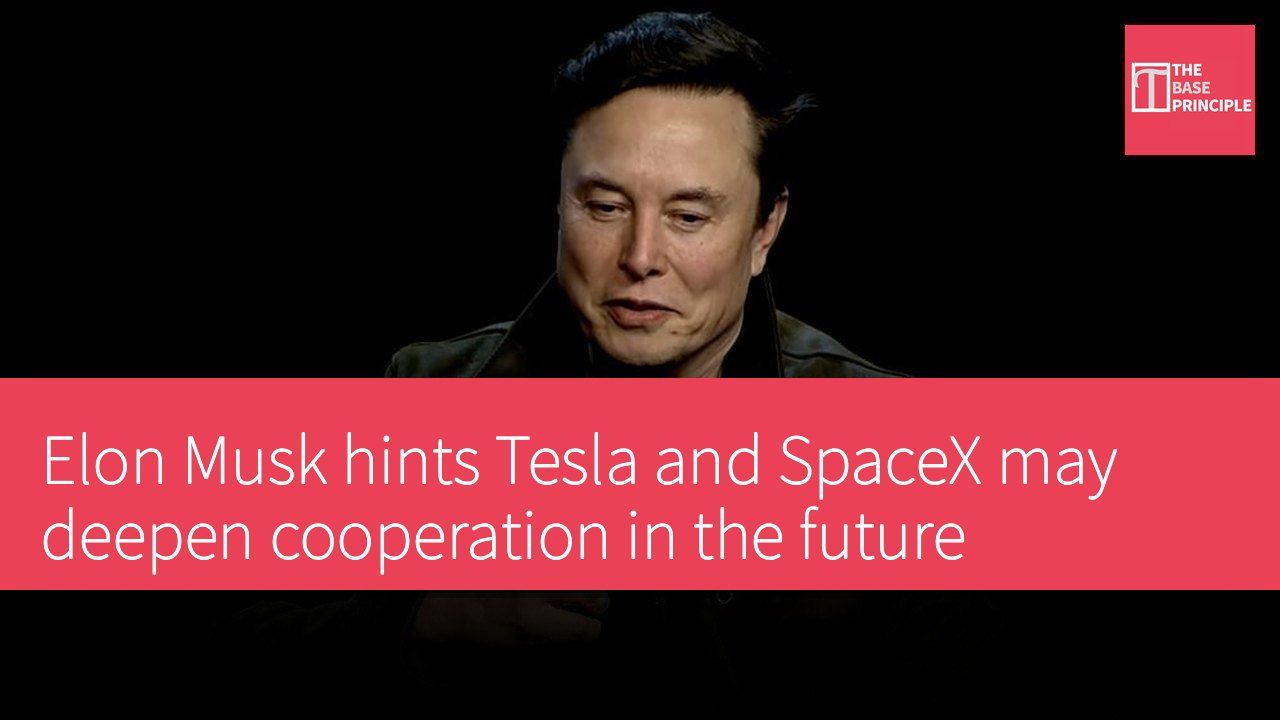
- Elon Musk mentioned that cooperation between Tesla and SpaceX could go deeper.
- Market expectations for a merger are heating up, with analysts divided.
- Tesla holds less than 1% of SpaceX, but the two companies are working more closely together.
- The Roadster unveiling is seen as a benchmark for measuring corporate progress.
Speaking publicly at the All-In Summit in Los Angeles, Elon Musk openly hinted that Tesla and SpaceX could become more closely intertwined in the future, noting that "so many layers of cooperation and tight collaboration between them make you curious what the next steps will be." SpaceX President Gwynne Shotwell, sharing the stage with him, added that SpaceX personnel have already moved into xAI to fill leadership and engineering gaps, and said "the integration is moving faster than expected, though it is not yet a full formal consolidation."
Market expectations for a merger heat up
According to a teslarati report, merger rumors have long circulated on the market, and Wall Street has been mapping out possible structures and their implications. JP Morgan considers a merger "strategically coherent" on paper, noting the alignment of overlapping ambitions in AI, robotics, energy, transportation and space; Jefferies has calculated that under a no-premium structure, Musk could still retain roughly 55.3% of voting power, offering a certain advantage to Tesla shareholders. Traders on Kalshi put the probability of a merger before 2028 at 66%.
Notably, Tesla still holds less than 1% of SpaceX. That stake originally stemmed from an earlier investment in xAI; after xAI was converted into SpaceX equity, the two companies also jointly developed Terafab, a chip facility in Austin serving Tesla's AI computing needs and SpaceX's satellite programs. Market analyst Dan Ives has for months backed a 2027 merger timeline; investors at ARK Invest have floated a similar idea, though Musk did not directly respond at the time. Based on current speculation, the question of SpaceX and Tesla integration continues to gain momentum, pushing its plausibility higher.
Meanwhile, Tesla plans to unveil the next-generation Roadster on October 1 at an event in Waco, Texas, further raising expectations among the public and pre-order holders. Musk has repeatedly said the reveal is worth waiting for, telling Joe Rogan on his show that "if necessary, this will be the most memorable product launch." He emphasized that integration of the Roadster with the existing autonomous-driving and safety strategy will be part of the company's long-term architecture; with the event now roughly two weeks away, the market expects Tesla's Roadster to deliver fresh technology demonstrations and a surge of buzz.
In terms of both official and market signals, the Roadster launch is seen as a benchmark for testing the company's progress on highly complex projects. Musk has said that if the Roadster can be delivered with disruptive speed and capability, it will have a significant impact on vehicle systems and autonomous-driving safety; at the same time, he has acknowledged development delays, reflecting the trade-offs the company must make across multiple programs. As for merger talk, a combination of Tesla and SpaceX, if realized, would create cross-industry integration spanning AI, satellite communications and clean energy — areas the market is watching closely. According to a teslarati roundup, investors and analysts remain divided, but they share a common thread: the long-term synergy potential and cross-application of technical resources between the two companies. For a deeper look at the reporting, see related coverage on teslarati.com.
Execution of cross-company integration strengthens
Drawing on multiple sources, the market's view of Tesla and SpaceX's future cooperation has moved beyond simple technical collaboration and is now developing at the level of capital and organizational structure. With SpaceX personnel currently embedded at xAI and growing linkage between the two companies in artificial intelligence, machine learning and aerospace technology, the execution of "cross-company integration" is being strengthened. If this path can advance steadily, the likelihood of tighter equity or management coordination within the next few years is also gradually rising. Although the market remains calm about the absence of an immediate consolidation, expectations for the long-term strategy continue to heat up.
On another front, the Roadster unveiling will provide an important real-world validation of Tesla's brand strategy. If the new car can deliver on the promised 0–60 mph time of just 1.1 seconds while incorporating advanced autonomous-driving and safety technology, it will raise the technology bar for competitors. Musk's public remarks and social-media interactions suggest the company is in no rush to give every answer immediately, but the Roadster's core technology and design direction are already under the spotlight. In terms of concrete figures, the Roadster's acceleration capability has been emphasized repeatedly and may become an important reference for balancing future electric supercars against mass-market models.
Implications of the merger and Roadster launch
From an investor perspective, the divergence in market views on merger probability and the expectation swings caused by the Roadster launch are not contradictory, because both point to transformative effects on the long-term outlook. Financial analysts and institutional observers broadly believe that if structural adjustments can be completed without materially diluting existing shareholder value, Tesla's long-term autonomy and SpaceX's global footprint will both benefit under a new framework; at the same time, high-risk investors are wary of the capital and labor costs, regulatory risks and demand volatility that integration would entail. Together these factors constitute the current tension between "the future and reality."
In sum, the cooperation potential between Tesla and SpaceX and the signal sent by the Roadster unveiling form a twin-engine force driving innovation and cross-domain integration. Industry observers indicate that if the two companies can maintain steady coordination in organizational structure and technology development over the long term, long-term investors may see significant growth in enterprise value. Sentiment on a merger remains uncertain, but for technology and energy innovation this model of cross-company integration offers a new reference template.
For more original material and primary reporting, please refer to the latest articles on teslarati.com.
Potential synergies between Tesla and SpaceX
Tesla and SpaceX's cooperation extends beyond the technical layer to encompass capital and organizational-structure integration. With SpaceX personnel embedded at xAI, the two companies' linkage in artificial intelligence and aerospace technology has strengthened, pointing to the possibility of tighter equity or management coordination in the future. Market expectations for a merger continue to mount; although no consolidation has materialized yet, over the long term this model of cross-company integration could deliver significant growth potential for both firms and have a profound impact on technology and energy innovation.