
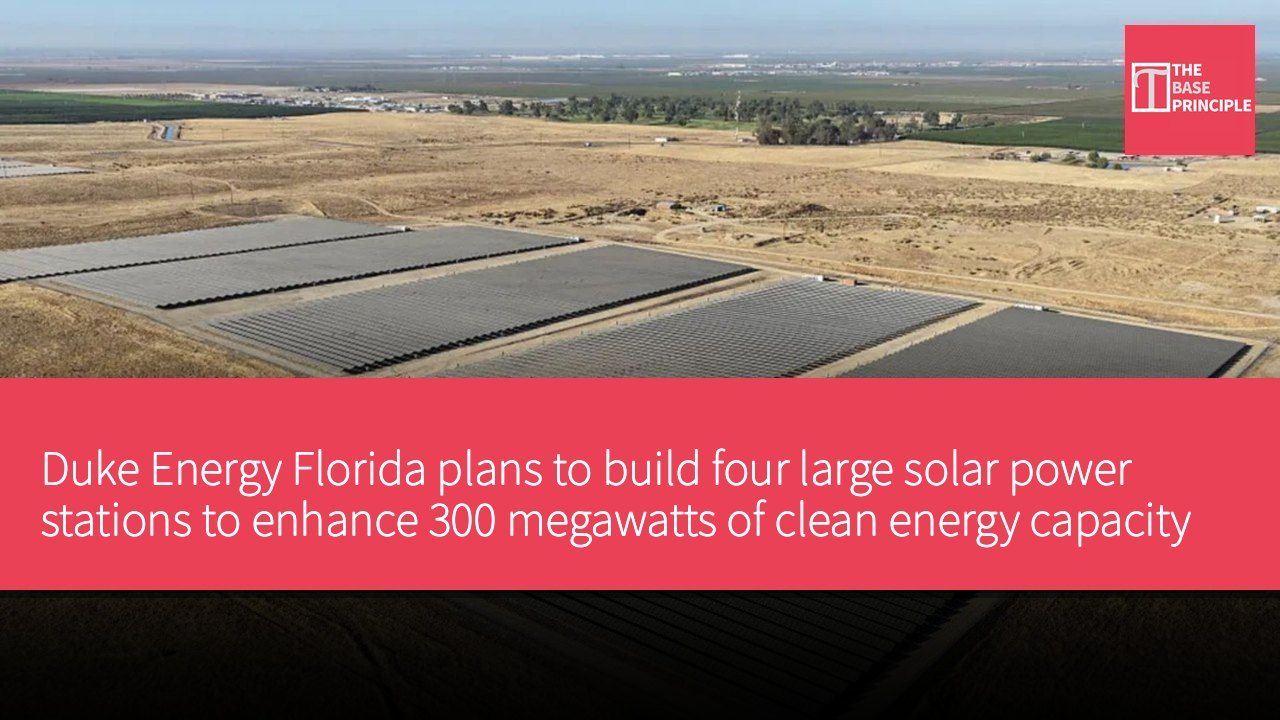
- Duke Energy Florida has proposed four new solar power plant projects with a total generating capacity of 300 MW.
- These facilities are expected to be operational by mid-2028, enhancing Florida's renewable energy mix.
- The planned facilities include multiple solar power plants located in Orange County and Sumter County.
- The new projects are anticipated to save customers approximately $1 billion and provide emission-free energy.
Duke Energy Florida has proposed four new utility-scale solar power plants with a total generating capacity of 300 megawatts (MW) to expand the state's renewable energy portfolio. The plan was announced on November 10 (Tuesday), as the demand for electricity in the state continues to grow. The American energy company has submitted plans to the Florida Public Service Commission (PSC) to construct these four solar facilities, which are expected to be operational by mid-2028. These projects will add 300 MW of emission-free power generation capacity to Florida's grid.
The planned facilities include solar power plants located in Orange County and Sumter County, expected to come online in June 2028. The facilities in Orange County include the Nova Renewable Energy Center, Bull Creek Renewable Energy Center, and Wewahootee Renewable Energy Center. Construction of the first two is expected to begin early next year, while the third is scheduled to start construction in May 2027.
The Hogeye Renewable Energy Center is the only facility planned for construction in Sumter County.
Locations of New Solar Facilities
According to Duke Energy Florida, these new projects are part of its long-term strategy to meet the rising demand for electricity while increasing the share of renewable energy in its generation mix. Duke Energy Florida President Melissa Seixas stated in a press release, "Our strategy is centered around providing cleaner energy while maintaining reliable and affordable service for our customers." Each facility will generate power using photovoltaic solar panels and will be connected to Duke Energy Florida's transmission network.
Once operational, these projects will collectively provide enough renewable generation to strengthen the company's solar portfolio.
Long-Term Impact and Savings
However, the company has not disclosed the individual capacities of the four proposed solar power plants. The latest application is part of the company's plan to expand battery systems in the state to store excess energy during low electricity demand. Through these new systems, the company aims to provide clean solar energy to customers even during periods without sunlight. Seixas added, "These solar power plants are just one example of our planning for the future and strengthening our system to continue providing safe, reliable power at the lowest cost for many years to come."
Over the next decade, the company plans to build more than 1 gigawatt of battery storage systems and has expanded on the long-term impacts of the proposed solar utility facilities in a statement. The company noted that these four projects are expected to save customers approximately $1 billion over their operational lifetimes, primarily through reduced fuel costs, although the main focus of the proposal is to add new renewable generation capacity to Florida's grid. In addition to providing cost-effective fuel for the U.S. grid, these new facilities will also deliver emission-free energy to American households.
According to the company's data, each solar power plant can save approximately 1.1 million cubic feet of natural gas, 12,000 barrels of fuel oil, and 9,000 tons of coal annually. The company currently owns, operates, and maintains 25 solar power plants, contributing 1,850 MW to the grid, with each plant's capacity sufficient to power nearly 15,000 households.
Project Specifications Total Generating Capacity 300 megawatts (MW) Expected Service Date Mid-2028 Battery Storage System Capacity Over 1 gigawatt Natural Gas Savings 1.1 million cubic feet/year Fuel Oil Savings 12,000 barrels/year Coal Savings 9,000 tons/year
Strategic Significance of Expanding Renewable Energy
Duke Energy Florida's new solar power plant plans reflect the company's strategy to address the growing demand for electricity. As the importance of renewable energy increases in the global energy transition, these facilities will not only enhance the stability of Florida's grid but also help reduce fuel costs, alleviating the economic burden on customers. Furthermore, these projects will further promote the use of emission-free energy, positively impacting environmental protection and aligning with current global sustainability trends.