
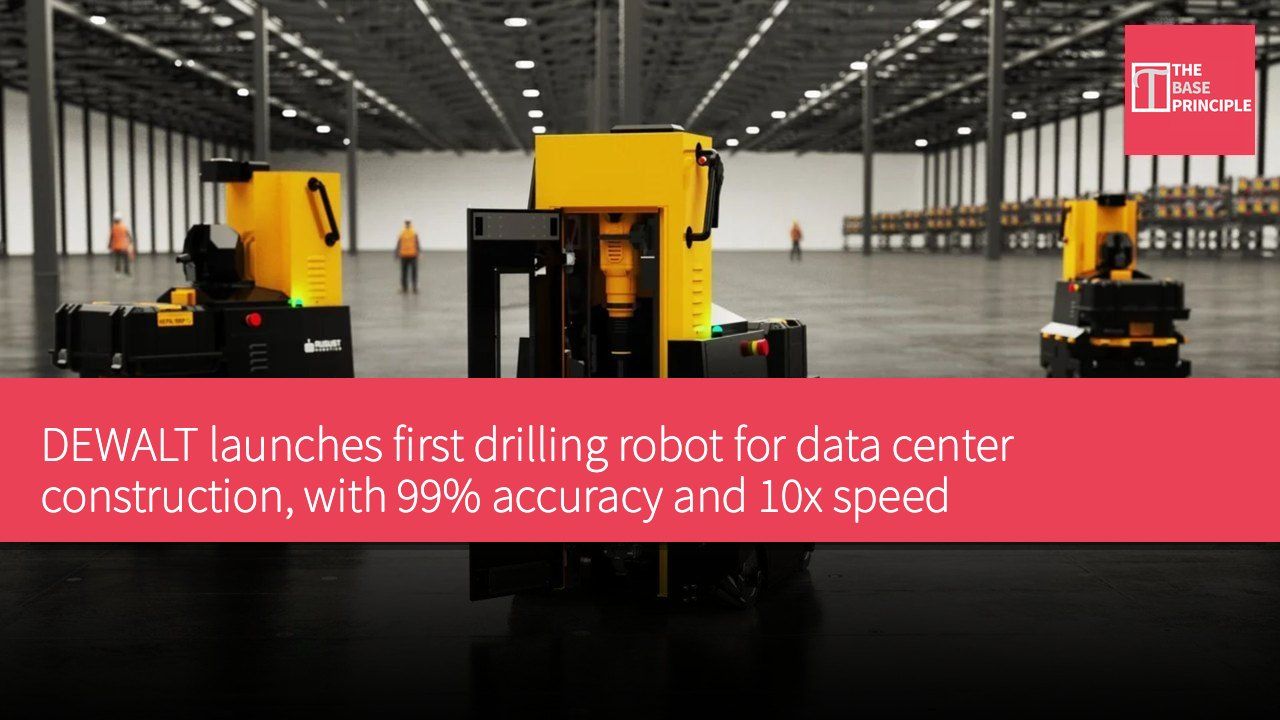
- DALE drilling robot achieves over 99% accuracy, designed specifically for data center construction.
- The machine's speed reaches 10 times traditional methods, significantly shortening construction schedules.
- DALE can automatically position and drill, reducing labor requirements.
- The machine received Fast Company recognition, becoming a significant tech innovation.
A drilling robot designed specifically for data center construction has bored more than 385,000 holes in concrete, and DEWALT says it achieves over 99% accuracy. Named DALE, the robot was developed in collaboration with mobile robotics company August Robotics to handle the repetitive drilling work required to install server racks and mechanical, electrical, and plumbing systems. Unlike machines designed for a single work area, DALE is engineered to operate as part of a robot fleet.
The machine's drilling speed reaches 10 times that of traditional methods. According to DEWALT data, its initial deployments also helped cut more than 300 weeks from the schedules of 44 data center construction phases.
DALE's design and capabilities
Repetitive robotic drilling isn't the most eye-catching part of building a data center, but it is one of the most labor-intensive tasks when a project requires boring holes across thousands of square feet. DALE is designed to free construction crews from that repetitive work. The robot navigates the work area, positions itself, and drills according to the required layout. Remote monitoring lets operators oversee the work without standing beside every hole. A quick-swap battery design also allows the robot to return to work without lengthy downtime.
During drilling, a dust extraction system operates automatically. In addition, the system uses AI-based quality assurance to inspect the work, providing construction crews with an extra layer of verification to ensure accuracy before subsequent installation work begins.
Advantages of an automated fleet
Where DALE gets more interesting is its ability to operate as a fleet. Large data center projects typically span vast construction sites with multiple work fronts running simultaneously. An automated machine fleet gives contractors a way to scale drilling capacity without simply adding more workers to the same repetitive task. August Robotics developed the autonomous mobile platform behind DALE, while DEWALT adapted it for the concrete drilling demands of data center sites. Results from pilot programs provide some hard numbers for the concept.
Stanley Black & Decker Tools & Outdoor President Bill Beck said the goal isn't just faster drilling. "Our team set out to solve a major challenge facing large infrastructure projects: how to help crews move faster without compromising consistency, safety, or control," he said. That distinction matters on projects where drilling delays can push back downstream work. Completing and verifying holes early clears the way for mechanical, electrical, and plumbing installation and other construction activities.
DALE has now earned recognition from Fast Company, winning a 2026 Next Big Things in Tech award. The robot took the "Enduring Impact" category for companies with more than 15 years in business. DEWALT was the only tool manufacturer represented in the program, which drew more than 1,000 entrants across over 30 categories. The recognition follows DALE's public debut earlier this year at World of Concrete.
As demand for speed and productivity in data center construction grows, DEWALT is bringing the system to market.
Automation trend in data center construction
As data center construction demand increases, DEWALT's DALE drilling robot demonstrates the importance of automation technology in this field. The robot not only improves drilling speed and accuracy but also effectively reduces labor costs, freeing up construction crews' time and energy. The automated fleet concept further boosts overall construction efficiency, allowing contractors to respond more flexibly to challenges on large-scale projects. As market demands for speed and productivity continue to rise, such innovations will become a key trend in the future construction industry.