
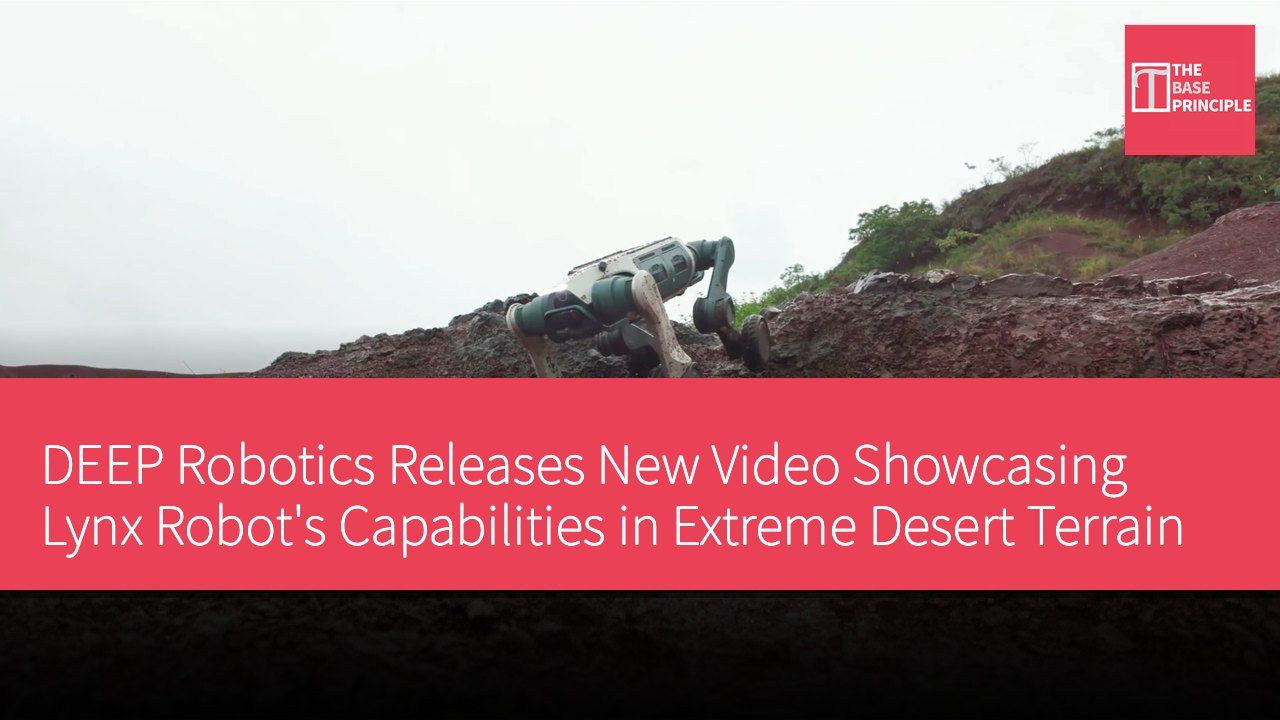
- The Lynx robot demonstrates its operational capabilities in extreme desert terrain.
- The robot combines wheels and articulated legs to tackle complex terrain.
- The platform maintains functionality in dusty and high-temperature environments.
- The Lynx series has begun commercialization, targeting industrial applications.
DEEP Robotics has released a video showcasing the operational capabilities of its Lynx series of wheel-legged robots in harsh desert terrain, highlighting their potential for applications in challenging environments. The demonstration focuses on the robot's off-road mobility, tackling uneven and demanding terrains that might pose difficulties for traditional wheeled robots. Developed by Hangzhou-based DEEP Robotics, the Lynx series is designed to meet industrial application needs, particularly in scenarios where robots must operate in dangerous or hard-to-reach areas.
Development of Multifunctional Robotic Systems
The latest video underscores the company's commitment to developing multifunctional robotic systems capable of handling complex terrains, applicable in industrial, exploratory, and emergency operations. The Lynx M20 series featured in the video is an industrial-grade wheel-legged robot designed for use in hazardous and hard-to-access environments. Unlike traditional fully legged quadruped robots, Lynx combines wheels and articulated legs, offering different modes of mobility depending on the terrain.
This demonstration, titled 'Conquering the Red Desert,' shows how the company's industrial quadruped robot can handle conditions that are difficult for traditional wheeled robots to overcome. In the video, the robot traverses sand and uneven surfaces while dealing with changes in ground height and conditions. Its hybrid mobility system allows it to roll on relatively flat areas and use its articulated legs to adapt to more challenging terrain. This design aims to combine the efficiency and speed of wheeled mobility with the obstacle-clearing capabilities of legged robots.
Performance in Extreme Environments
The demonstration also highlights the Lynx platform's ability to maintain mobility in dusty and high-temperature environments. DEEP states that the system is designed to withstand temperatures up to 55 degrees Celsius (131 degrees Fahrenheit), a capability relevant to operations in some of the world's harshest industrial environments. The company is positioning the Lynx M20 series for tasks where personnel may face significant safety challenges, with potential applications including power facility inspections, emergency response, firefighting, search and rescue, and scientific exploration.
Desert operations are just one part of the platform's testing. DEEP has also demonstrated Lynx's performance in extremely cold environments, with tests conducted at temperatures as low as -30 degrees Celsius (-22 degrees Fahrenheit). The robot has also traversed icy waters up to 80 centimeters deep, showcasing the company's focus on developing machines capable of operating in diverse environments. Lynx's wheel-legged configuration is central to this strategy, with wheels providing faster and more energy-efficient movement on suitable surfaces, while legs help the robot adjust its body position and tackle obstacles when rolling alone becomes impractical.
DEEP Robotics describes the Lynx M20 series as the world's first industrial-grade wheel-legged robot built specifically for challenging terrains and hazardous industrial environments. The company's approach reflects a broader trend in the robotics industry to develop machines capable of performing inspection, response, and exploration tasks without the need for direct human entry into dangerous areas. The Lynx series has begun commercialization for industrial clients, with a price tag of approximately US$17,999 (approximately HK$140,000). With the latest desert demonstration, DEEP Robotics continues to emphasize practical deployment, aiming to establish wheel-legged robots as practical tools for demanding field operations.
Item Specifications Operating Temperature Up to 55 degrees Celsius (131 degrees Fahrenheit) Cold Test Temperature As low as -30 degrees Celsius (-22 degrees Fahrenheit) Water Crossing Depth Up to 80 centimeters
Market Potential and Challenges for Lynx Robots
DEEP Robotics' Lynx M20 series robots, designed to tackle challenging terrains and hazardous environments, align with current trends in robotics technology. As the demand for industrial automation increases, robots capable of operating in harsh environments will become a market focus. These machines can not only improve operational efficiency but also reduce the risk of human exposure to danger. However, challenges in market acceptance and practical application remain, particularly concerning high costs and technological maturity.