
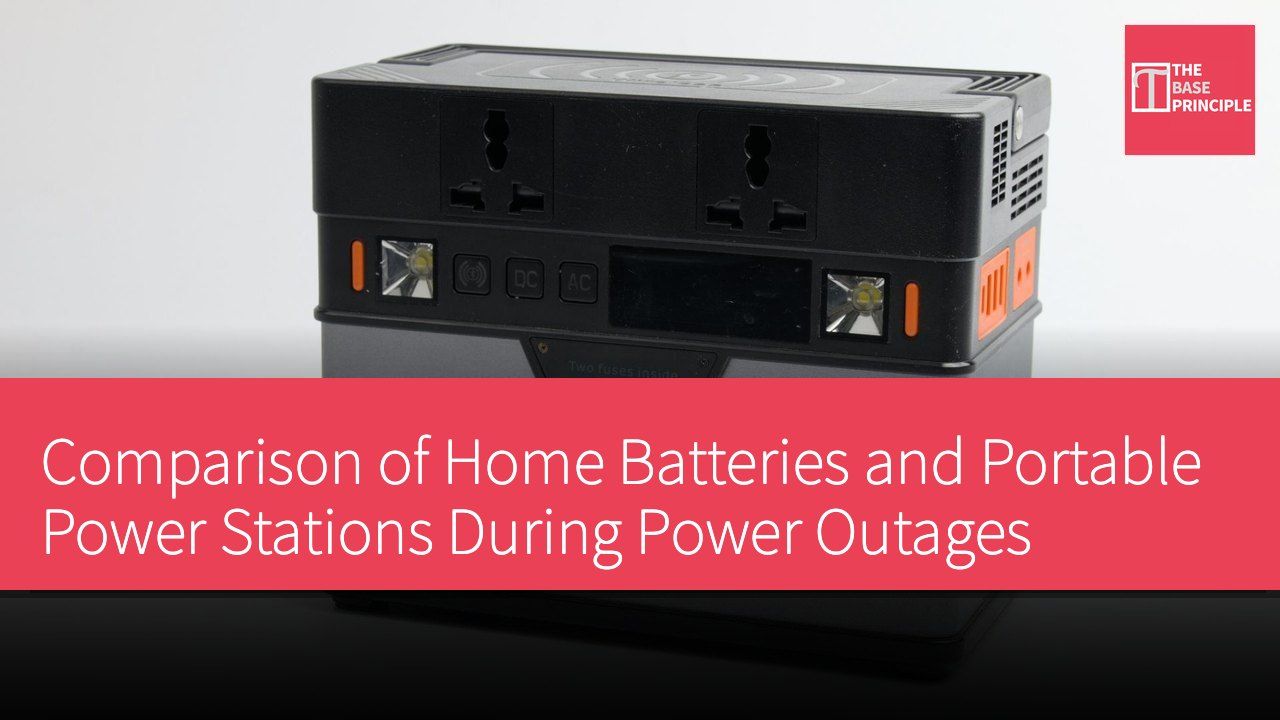
- Home batteries and portable power stations each have their pros and cons, and the choice should depend on specific needs.
- Portable power stations are suitable for individual devices, while home batteries can support the entire household circuit.
- Run time is affected by conversion losses and device demands, requiring careful assessment.
- During prolonged outages, the ability to recharge and compatibility with solar panels is crucial.
Power outages force households to prioritize which devices to power, including refrigerators, a few lights, or heating systems. Both home batteries and portable power stations can provide stored energy, but they differ in how they supply power and their installation requirements. For families choosing backup power, decisions depend on which devices must operate, the duration of the outage, and whether the system needs to run automatically. Portable power stations are suitable for specific devices, while installed home batteries can support the entire household circuit based on configuration.
How Home Batteries Work
Home batteries connect to the household electrical system through inverters and related control equipment. In installations with backup functionality, the device disconnects the home from the grid during a power outage and supplies power to designated circuits from the battery. Depending on system design, the power range can include selected critical loads or the entire household. Portable power stations, on the other hand, package battery storage, inverters, and outlets into a single unit, providing power to devices that are directly plugged in. This makes them suitable for powering individual devices without the need for a permanent battery system installation. However, the distinction between these two systems is becoming increasingly blurred.
Some larger portable power stations support expandable batteries and can connect to household circuits through compatible conversion devices. Therefore, buyers need to compare actual configurations.
The equipment and installation requirements for connecting portable units to household electrical panels differ from those used solely for charging mobile phones. Two specifications are crucial: energy capacity and power output. Capacity is measured in watt-hours or kilowatt-hours, indicating the energy the battery can store. Output is measured in watts or kilowatts, determining the load that can be run simultaneously by the devices. The California Air Resources Board emphasizes that backup batteries must be sized according to demand and run time. Consider a simplified example: a battery providing 1 kilowatt-hour (1,000 watt-hours) of energy can support a continuous load of 100 watts for 10 hours.
Actual run time depends on conversion losses, available energy, and the operating cycles of the devices. Starting demands are also important. Refrigerators or water pumps may briefly require more power during startup. Check whether the continuous and surge ratings of the backup system meet the requirements of the devices that must operate.
When to Use Portable Power Stations
A larger battery does not mean that all devices can run simultaneously. Tesla advises Powerwall owners to manage high-consumption devices during power outages, as combined demands may exceed the system's power rating. Reducing these loads can also extend run time. For renters or households that occasionally face short outages, a portable power station is a practical starting point when prioritizing a few essential plugged-in devices. Compare its purchase price, available capacity, output, weight, and charging options. When automatic backup and hardwired devices are priorities, installed home batteries warrant closer consideration.
Compare complete installation quotes that include electrical work and backup controls, not just the battery price.
For prolonged outages, the ability to recharge becomes critical. Regardless of the choice, stored energy will eventually be depleted unless there are other sources to replenish it. Compatible solar panels can help, but production depends on sunlight and system capabilities. Existing rooftop solar systems do not automatically provide power during outages. The U.S. Department of Energy explains that traditional grid-connected solar systems typically shut down during power outages; continuous operation requires appropriately configured inverters and storage systems. First, list the devices and realistic outage durations. If a few outlets can meet these needs, portability may be sufficient.
If the demand extends to automatic circuit-level backup, installing a system may prove to be worthwhile additional work.
Item Specifications Energy Capacity 1 kilowatt-hour (1,000 watt-hours) Power Output 100 watts Weight Varies by specific model
Choosing the Right Backup Power System
During power outages, households need to select the appropriate backup power system based on actual needs. Home batteries provide stable long-term power, suitable for families that require multiple devices to run continuously, while portable power stations offer more flexibility for devices used occasionally. As technology advances, the boundaries between the two are gradually blurring, and consumers should consider installation requirements, run time, and potential for future expansion when making a choice. Additionally, compatibility with solar panels has become an important consideration, especially during prolonged outages, as it can effectively replenish power.