
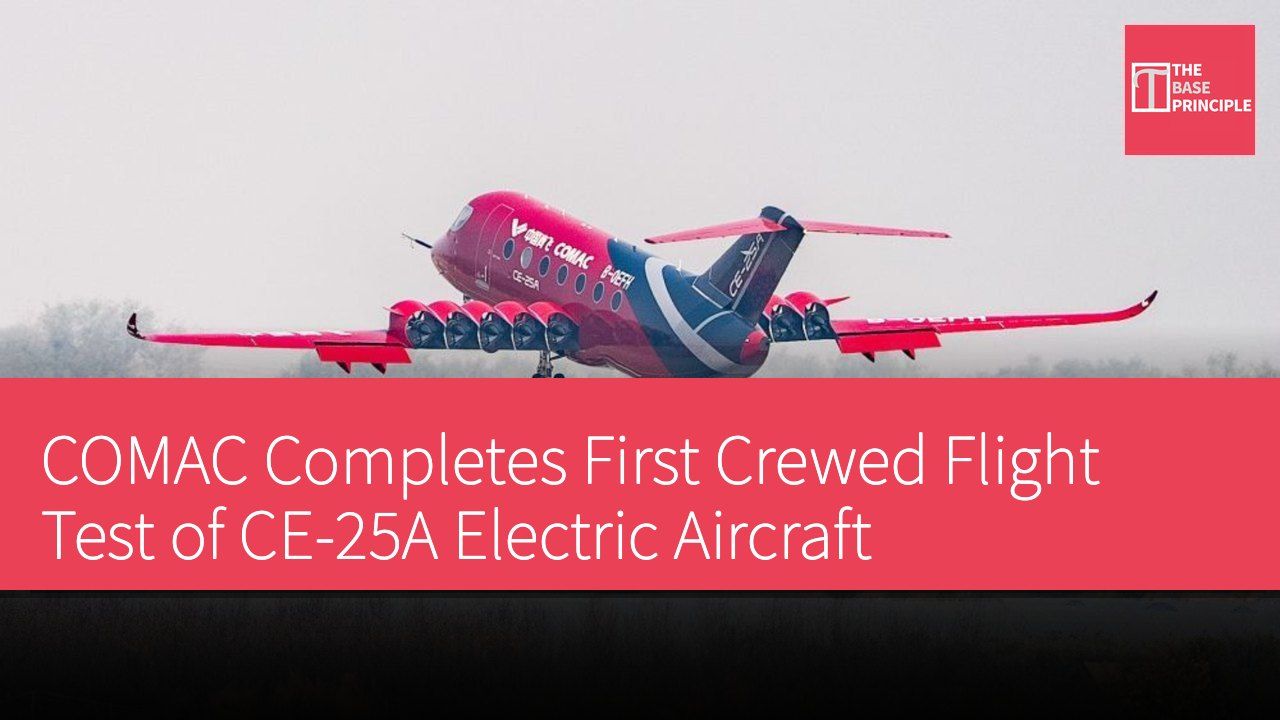
- The CE-25A electric aircraft completed its first crewed flight, carrying two pilots and one engineer.
- The aircraft is designed to carry 19 passengers, primarily for short-haul intercity routes.
- Following the first crewed flight, the CE-25A will continue flight testing to collect data.
- Commercial viability depends on factors such as range, charging infrastructure, and operational costs.
China's Commercial Aircraft Corporation (COMAC) has completed the first crewed flight of its CE-25A electric commercial aircraft, a 10-ton design aimed at short-haul intercity routes. During the flight in Shandong Province, it carried two pilots and one flight test engineer, with all systems operating normally and performance metrics meeting expectations. This milestone advances the development of an aircraft designed to use electric propulsion systems to carry up to 19 passengers. The CE-25A completed its first autonomous unmanned flight in early February this year and has since conducted 19 autonomous flight tests.
The aircraft was jointly developed by COMAC, the China Academy of Launch Vehicle Technology (CALT), and Shanghai Jiao Tong University, and is currently progressing towards regulatory certification. The Civil Aviation Administration of China has accepted its type certification application, although this does not mean the aircraft has been approved for commercial service.
Design and Performance of the CE-25A
The CE-25A has a maximum takeoff weight of approximately 22,046 pounds and is designed to carry 19 passengers. Reports indicate that its cruising speed reaches 186 miles per hour, with a cruising altitude of about 7,874 feet. The aircraft has a range of approximately 249 miles, classifying it as a short-haul regional transport rather than traditional long-haul commercial aviation. Its configuration is intended to support intercity connections, potentially serving routes that smaller aircraft can provide as alternatives to longer ground journeys. However, COMAC has not disclosed detailed information about the aircraft's battery capacity, motor configuration, charging requirements, or energy consumption.
These specifications are crucial for assessing its operational potential, especially since battery weight and energy density remain significant limiting factors for electric aviation. Additionally, this 19-passenger aircraft with a maximum takeoff weight of about 22,000 pounds presents quite different engineering challenges compared to smaller electric training aircraft and air taxis.
Importance of Crewed Flights
The first crewed flight represents an important developmental milestone following the CE-25A's initial intelligent unmanned flight on February 2. According to Xinhua News Agency, the aircraft has since completed 19 autonomous unmanned flight tests. The latest flight introduced crew members, carrying two pilots and one flight test engineer to evaluate the aircraft's performance under crewed operational conditions. The transition from autonomous testing to crewed flight is a significant step in the aircraft's development, allowing engineers to assess flight characteristics and onboard systems in the presence of crew members and accumulate the necessary test data for the certification process.
Furthermore, regulators must also evaluate the reliability of the propulsion system, battery safety, thermal management, electrical systems, emergency procedures, and performance under various operational conditions. Although the project combines aircraft development, aerospace engineering, and academic research, its commercial viability will depend on the relationship between available range and fully loaded passenger capacity, charging infrastructure, maintenance requirements, and operational costs.
Challenges and Prospects for Electric Aircraft Development
The CE-25A's first crewed flight marks a significant advancement in electric aviation technology, demonstrating the potential of electric propulsion systems in commercial aviation. As global demand for sustainable aviation solutions increases, the development of such electric aircraft could not only reduce carbon emissions but also transform transportation patterns for short-haul routes. However, limitations in battery technology remain a major challenge, affecting range and passenger capacity, which necessitates further technological breakthroughs and infrastructure development to support commercialization.