
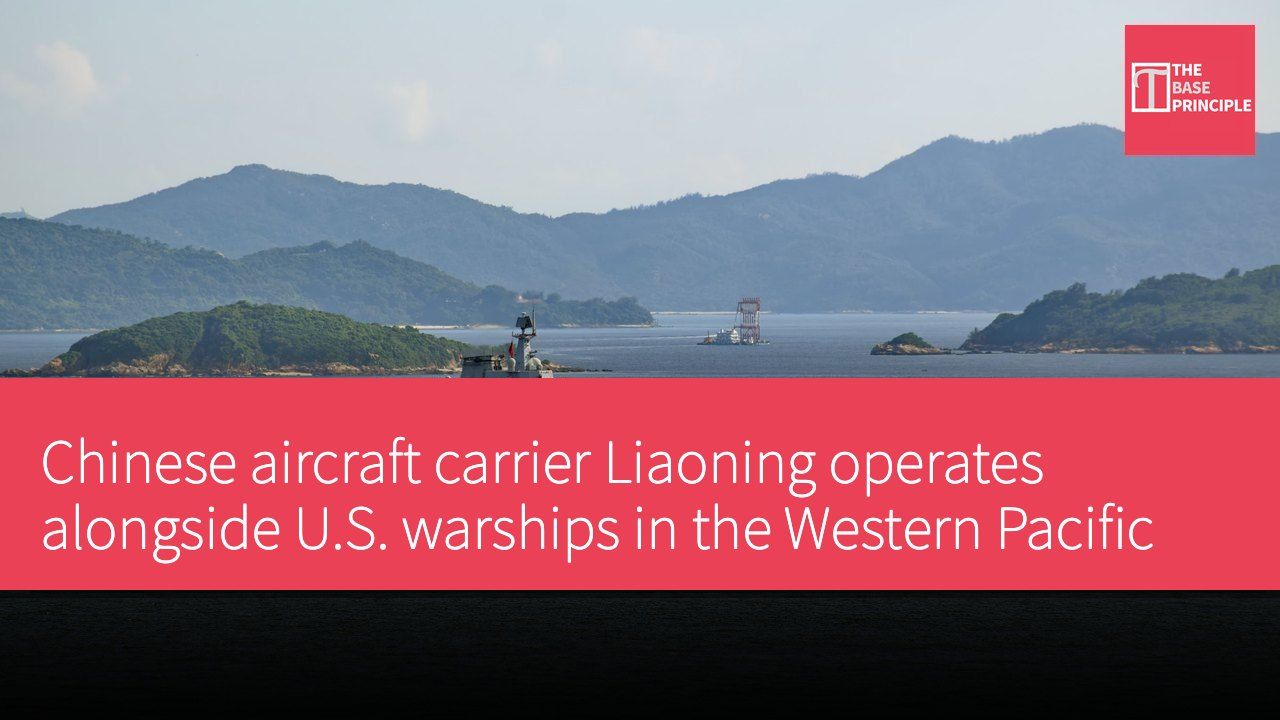
- The Chinese aircraft carrier Liaoning is operating concurrently with U.S. warships in the Western Pacific.
- The Liaoning task force includes four vessels and has circumnavigated the Philippines to enter the Pacific.
- This deployment marks the second time this year that the Liaoning has conducted exercises in the Western Pacific.
- Chinese military operations beyond the first island chain allow for broader training opportunities.
The Chinese aircraft carrier Liaoning and its accompanying vessels are navigating through the southern waters of the Philippines, potentially overlapping with the U.S. and its allies during the "Sharp Sword" military exercises taking place in the Philippine Sea. The Chinese carrier group began its deployment on October 14 and is operating beyond the first island chain, while the U.S. Navy's USS Theodore Roosevelt is conducting operations in the area alongside ships from Japan, Australia, Canada, and France. This arrangement results in the overlap of two independent military activities in this strategically significant area of the Western Pacific, although it remains unconfirmed whether the Chinese task force intentionally headed toward the exercise location or if the two carrier groups will directly interact.
Overlap of Liaoning with U.S. Exercises
The "Sharp Sword" exercises will take place from October 19 to 29, covering Japan and its surrounding waters. The Liaoning's route circumnavigates the Philippines, and this Chinese task force includes the Liaoning and three missile destroyers: the Type 055 Wuxi and Anshan, as well as the Type 052D Huainan. Reports indicate that Philippine Navy vessels followed the task force as it passed along the country's southwestern coastline. The Japanese Ministry of Defense reported that Chinese vessels entered the Pacific through the Miyako Strait on October 14 and subsequently turned toward the South China Sea before heading to southern Philippines the next day.
This route indicates that the task force is circling the Philippine archipelago counterclockwise, in contrast to the route taken during exercises in October 2024, according to the South China Morning Post.
Strategic Deployment of the Chinese Military
This deployment marks the second round of exercises for the Liaoning in the Western Pacific this year. The carrier group is expected to remain deployed for several weeks, overlapping with the "Sharp Sword" exercises. Japanese authorities have also detected Chinese aerial surveillance assets operating near the carrier earlier this month, including a Y-9 electronic reconnaissance aircraft and a WZ-7 high-altitude drone. However, it remains unclear whether these two aircraft moved southward with the carrier group.
During these two carrier operations in this strategically important region, the USS Theodore Roosevelt, as part of the U.S. Navy's Seventh Fleet, is conducting operations in the Philippine Sea alongside allied vessels. The first island chain, extending from Japan to Taiwan and then to the Philippines, is a core geographical feature in U.S. and Chinese military planning. Chinese military activities beyond this chain allow for broader training in the Pacific, while the U.S. and allied forces utilize regional exercises to practice coordination of maritime and aerial operations. The potential overlap between the Liaoning task force and multinational forces places both naval activities within the same broad operational area, but this does not alone indicate the emergence of conflict or suggest Beijing's intent to disrupt the exercises.
Previously, tensions have also arisen during earlier carrier deployments. According to reports from China's state broadcaster CCTV, Beijing stated that Japanese vessels and aircraft followed the Liaoning task force multiple times during distant ocean training in June. Reports indicated that the Type 054B frigate Luhe warned Japanese vessels, while J-15 fighter jets launched from the carrier intercepted Japanese P-3C maritime patrol aircraft.
Potential Impacts of U.S.-China Naval Activities
The simultaneous operations of the Chinese aircraft carrier Liaoning and the U.S. USS Theodore Roosevelt in the Western Pacific highlight the military tensions between the two nations in the region. The deployment of the Liaoning not only serves as a response to U.S. and allied military exercises but also reflects China's intent to strengthen naval training beyond the first island chain. As the naval activities of both countries overlap, the potential risk of conflict in the future warrants close attention, particularly against the backdrop of increasing geopolitical tensions.