
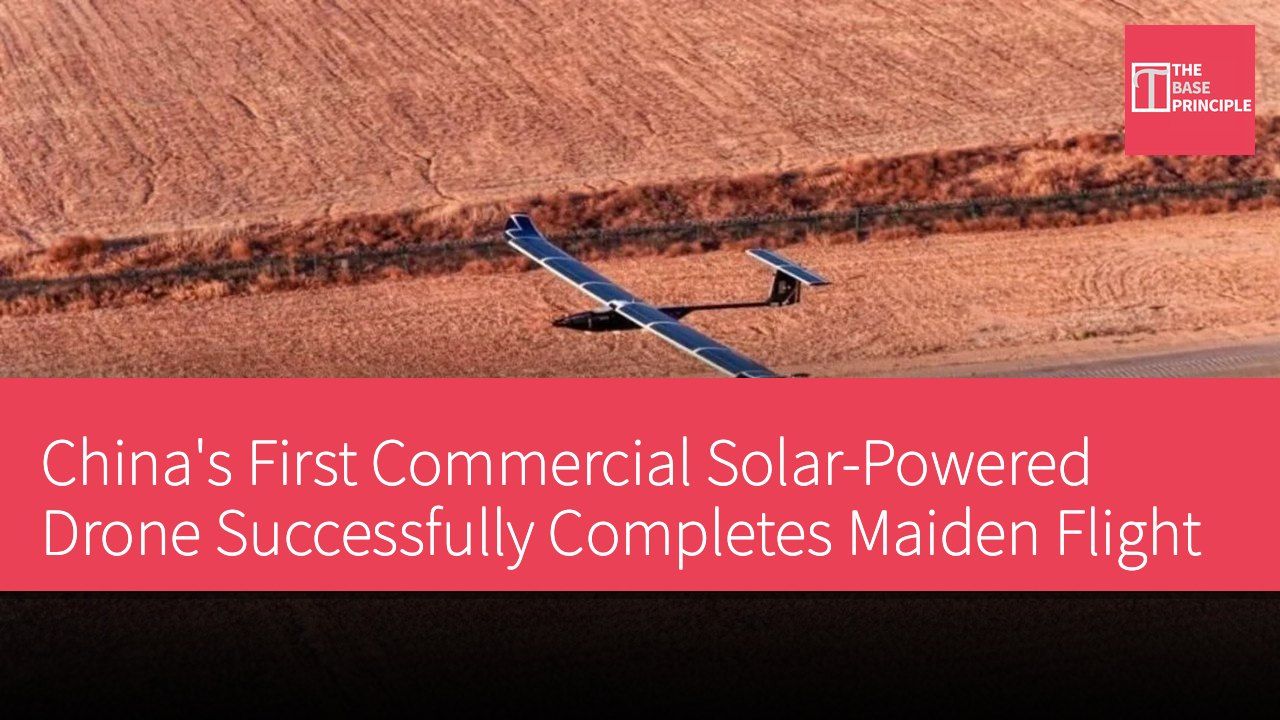
- China's first commercial-grade solar-powered drone, Light Cavalry, has successfully completed its maiden flight.
- The Light Cavalry is designed for a maximum endurance of 30 hours, suitable for various commercial missions.
- The launch system, which does not require a fixed runway, enhances the operational flexibility of the drone.
- The institute anticipates that the Light Cavalry will meet the market demand for long-endurance aircraft.
China's first commercial-grade solar-powered drone has successfully completed its maiden flight in the country's northwest, achieving takeoff, ascent, hovering, and safe landing. The aircraft, developed by the China Aerospace Science and Technology Corporation's 11th Research Institute, is named "Light Cavalry." The Light Cavalry is fully solar-powered, with a designed maximum endurance of 30 hours. The institute developed this aircraft for commercial missions requiring continuous low-altitude coverage, such as infrastructure inspections and land surveying. The maiden flight tested its control systems, avionics, and energy storage systems, while also evaluating its stability and maneuverability.
The Light Cavalry measures 10.5 feet in length, has a wingspan of 26 feet, and a takeoff weight of 99 pounds, with a service ceiling of 23,000 feet. The aircraft can carry over 11 pounds of equipment, and its payload can be swapped out for different missions. The Light Cavalry can be equipped with optical instruments for observation, communication equipment, or detection systems, allowing operators to perform a variety of tasks ranging from land surveying to ecological monitoring using the same airframe. Developers reported that all systems were functioning normally after landing. The tests documented in the report covered the aircraft's behavior from takeoff to landing, with 30 hours designated as its maximum designed endurance.
Flexible Launch System
The drone utilizes a vehicle-mounted launch system that does not require a fixed runway, with ground preparation taking approximately 20 minutes. This launch method allows personnel to operate in areas where air force bases are scarce, such as mountainous regions, remote coastlines, and wilderness areas. Developers believe that the drone has potential applications in post-disaster assessments, water resource monitoring, and coastal and port surveys. For infrastructure operators, the long endurance can help personnel cover more inspection areas in a single flight. The launch system also enables personnel to choose departure points closer to the areas that need surveying.
Smaller solar-powered drones face stricter power limitations. Most development efforts for solar-powered drones have focused on large and super-large aircraft, which primarily serve as research platforms or high-altitude pseudo-satellites. Smaller aircraft can cater to a broader range of commercial tasks, but their size makes it challenging to rely entirely on solar power for operations. The smaller airframes provide less surface area for solar panels, limiting the amount of electricity the aircraft can generate. Additionally, the structure, avionics, and energy storage systems still occupy a significant amount of weight. Improvements in materials, motors, and energy storage will help bridge the gap between the power generated by solar panels and the power required by the aircraft.
Market Demand and Environmental Considerations
The institute anticipates that the Light Cavalry will fill the gap in the market for long-endurance, low-altitude aircraft, and believes that solar-powered designs are an effective way to extend flight times and reduce carbon emissions in missions requiring continuous coverage over large areas.
Market Potential and Challenges for Solar-Powered Drones
The successful maiden flight of the Light Cavalry marks a significant advancement for China in the field of commercial-grade solar-powered drones. The long endurance and flexible launch system of such drones present substantial application potential in remote areas, particularly in post-disaster assessments and infrastructure inspections. However, smaller drones face power limitations, necessitating ongoing improvements in materials and technology to overcome these challenges. As market demand for environmentally friendly and high-performance drones rises, the introduction of the Light Cavalry may promote further development of related technologies.