
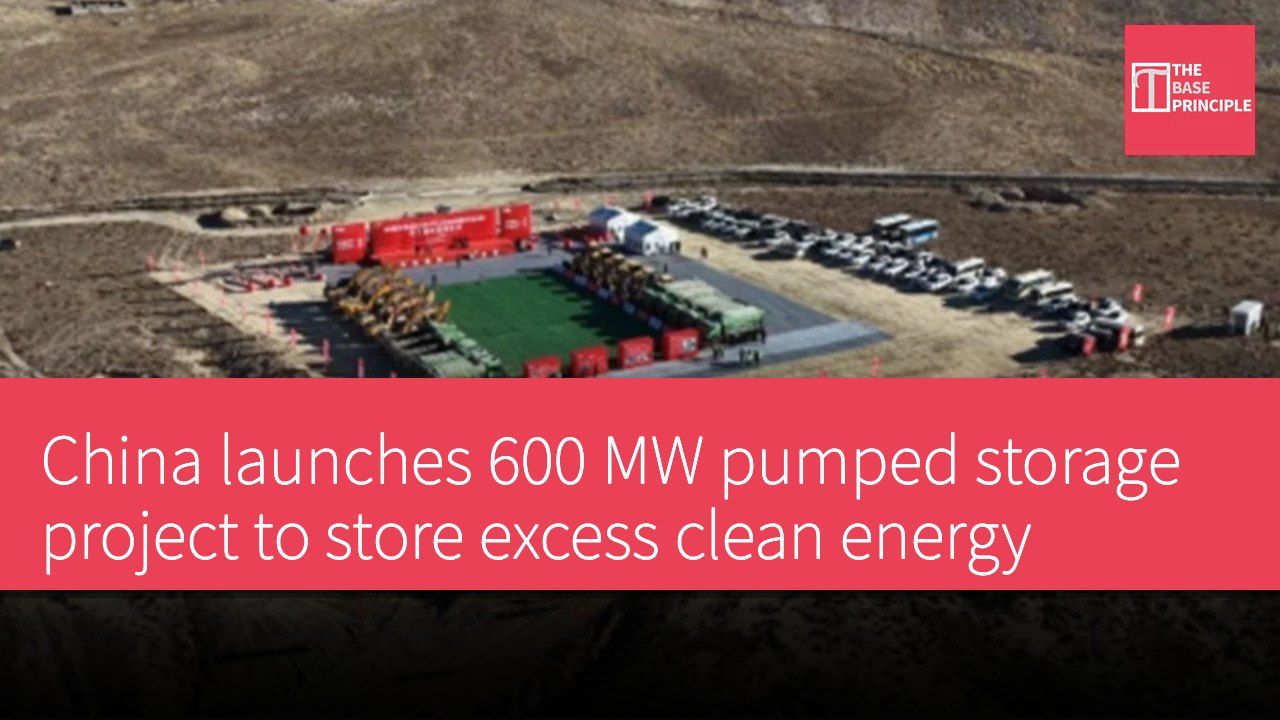
- China is building a 600 MW pumped storage power station in Qinghai Province to balance grid demand.
- The station will store excess electricity and supply power during peak demand.
- The station is listed as a key project in China's 14th Five-Year Plan.
- The clean energy capacity target for Delingha is to exceed 14 GW by 2030.
Function of the Pumped Storage Power Station
The project will include upper and lower reservoirs, a water transport system, and an underground power plant to store excess electricity for peak demand. During low electricity demand, the station will use surplus electricity to pump water from the lower reservoir to the upper reservoir. When demand rises, the station can release stored water to drive turbines and supply power to the grid. The plant is designed to generate 1.2 billion kilowatt-hours (kWh) annually, with 1.6 billion kWh used for pumping each year. By staggering electricity consumption and generation times, the station can help the grid manage peak demand and provide emergency backup capacity, assisting in frequency and phase regulation of the grid.
Project Background and Importance
Supporting the clean energy base in Delingha, the National Energy Administration has listed the station as a key project in China's 14th Five-Year Plan, which covers the period from 2021 to 2025. It also appears in the agency's medium- and long-term pumped storage development plan, which spans from 2021 to 2035. The project's aim is to fill the gap in large-scale energy storage in the region. Sun Chuanwang, a professor at Xiamen University's School of Economics, told Global Times on Tuesday that the station's proximity to the clean energy base will help Delingha store and utilize the electricity it generates. The city already has solar power facilities, green hydrogen production facilities, thermal absorption towers, and energy storage facilities.According to city government data, by 2026, Delingha will have installed 6.05 GW of clean energy capacity, with an additional 950 MW under construction. The city's goal is to exceed 14 GW of installed clean energy capacity by 2030.
Higher altitude pumped storage, Delingha's elevation record applies to Northwest China. According to Xinhua News Agency, there is a separate project in Daocheng County in southwestern Sichuan Province that will become the world's highest pumped storage power station, with an elevation of 4,300 meters. In Qinghai, the elevation of the upper reservoir marks the height at which the Delingha station stores water between pumping and generation.Future Outlook for the Station's Operation
The water transport system will connect the reservoirs and the underground power plant, enabling the station to switch between drawing power from the grid and supplying it. The goal of being fully operational by 2034 is four years after the deadline for Delingha to exceed 14 GW of clean energy capacity. Once fully operational, the station will provide a means for the grid to utilize surplus power during low demand and return some energy when households and businesses require more power.
Project Specifications Station Capacity 600 MW Annual Generation 1.2 billion kWh Annual Pumping Electricity 1.6 billion kWh Upper Reservoir Elevation 4,008 meters Daocheng Station Elevation 4,300 meters
Support of Pumped Storage Power Station for Clean Energy
The construction of the pumped storage power station is significant for China's push towards clean energy development. As the Delingha clean energy base expands, the station will not only effectively store excess electricity but also provide stable power supply during peak demand, thereby enhancing grid stability. Such facilities can assist in regulating grid frequency, reducing reliance on traditional energy sources, and promoting the use of renewable energy, aligning with China's long-term energy strategy.