
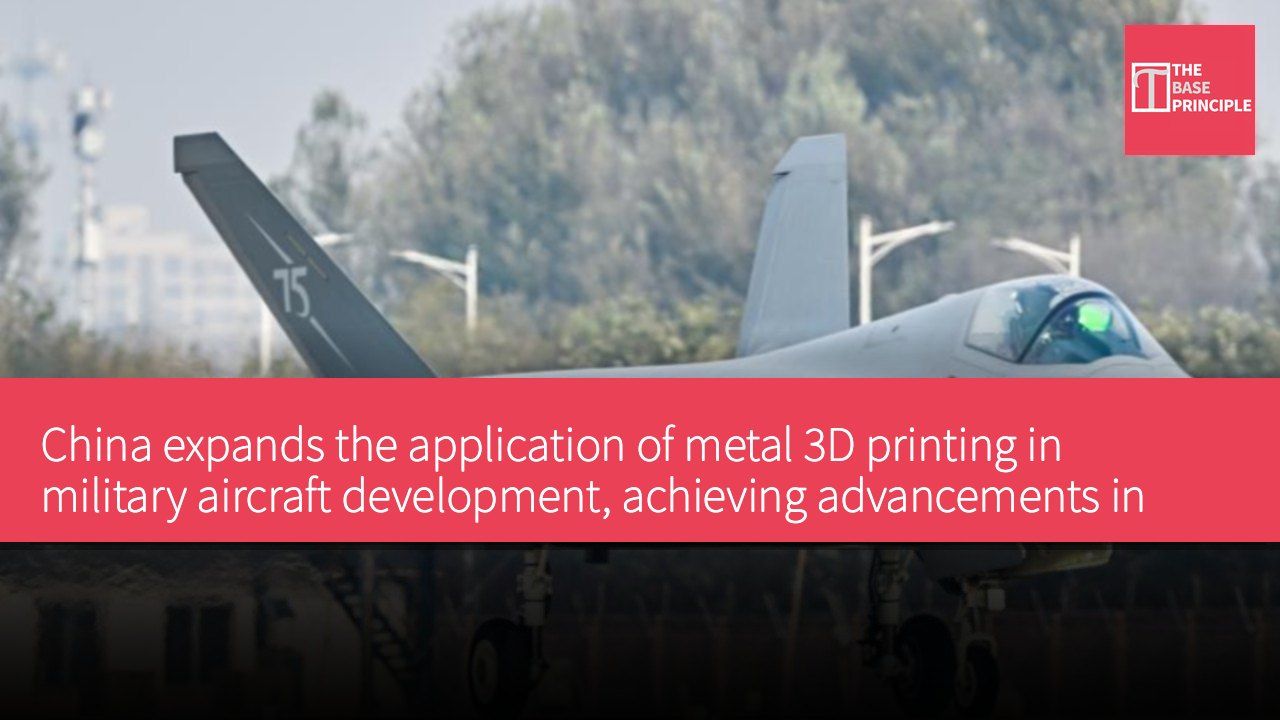
- China is expanding the application of metal 3D printing in military aircraft development.
- The research institute has developed an integrated structural component measuring 16.4 feet in length.
- 3D printing technology reduces the need for specialized tools and enhances design freedom.
- Engineers need to address manufacturing defects to ensure the structures are suitable for aircraft applications.
China is expanding the application of metal 3D printing in military aircraft development. Engineers from the research institute responsible for the J-35 fighter jet series report progress in producing large integrated fuselage structures and multifunctional components. This work focuses on reducing structural weight, simplifying the manufacturing process, and combining multiple functions into a single aircraft component. The research is conducted at the Key Laboratory of Aeronautical Science and Technology at the Shenyang Aircraft Design Institute of Aviation Industry Corporation of China (AVIC). According to AVIC, the laboratory has developed an integrated structural component measuring 16.4 feet in length, designed to bear and transfer loads within the aircraft's central fuselage.
The research institute has also developed a 3D-printed annular heat exchanger, installed inside the aircraft's air intake. This component integrates heat transfer, air extraction, structural support, and maintenance functions into a single unit.
Advantages of Integrated Structures
3D printing enables the production of large integrated aircraft structures. Traditional aircraft manufacturing often separates structural design from production, relying on molds, machining, and the assembly of multiple components. These limitations can increase development time, weight, and manufacturing complexity, especially when engineers need to produce structures with complex geometries. Metal additive manufacturing technology builds components layer by layer, reducing the need for specialized tools and allowing engineers to create shapes that are difficult or costly to achieve with traditional methods. According to AVIC, the Shenyang laboratory has produced an integrated structural component over 16.4 feet in length, designed to bear and transfer loads within the aircraft's central fuselage.
Producing large components with integrated structures can reduce the number of individual parts and connection operations required during assembly, giving designers more freedom to optimize material distribution and structural geometry.
The laboratory has invested over twenty years in additive manufacturing capabilities and claims to have applied six types of 3D printing processes, thirteen types of metal materials, and nineteen categories of printed structural components in aircraft development projects. Another development involves a multifunctional annular heat exchanger installed inside the aircraft's air intake. This component serves not only as a heat transfer device but also integrates heat exchange, air extraction, load-bearing, and maintenance functions. The design employs complex internal flow channels to increase the available heat transfer surface area while reducing the component's weight. AVIC states that engineers have incorporated manufacturing requirements into the design process from the outset, enabling them to develop internal geometries that are difficult to produce with traditional methods.
Challenges and Solutions
However, printing the component is only part of the challenge. Transforming laboratory prototypes into structures suitable for aircraft applications requires engineers to address manufacturing defects and validate the final components, Chinese media reports. Large-scale metal printing can generate thermal stresses during the build process, leading to warping or cracking. To address these issues, the research team has developed a process that combines segmented printing with additive welding, allowing separately printed parts to be integrated into larger structures. The Shenyang Aircraft Design Institute is one of China's major military aircraft development organizations. According to Chinese reports, the institute has been involved in the development of over forty major aviation equipment models across five series, including the J-8, J-11, J-15, and J-35, as well as unmanned aerial vehicles.
The laboratory's reporting work is part of integrating additive manufacturing into aircraft structural development, transitioning from experimental design to engineering applications.
Item Specification Length of integrated structural component 16.4 feet Types of 3D printing processes applied Six Types of metal materials used Thirteen Categories of printed structural components Nineteen
Impact of Metal 3D Printing on Military Aircraft
The application of metal 3D printing technology is changing the way military aircraft are designed and manufactured. Through the production of integrated structures, engineers can reduce the number of parts in the assembly process and optimize material usage, thereby enhancing the performance and efficiency of the aircraft. However, this technology also presents new challenges, particularly regarding thermal stress issues during the manufacturing process. Addressing these challenges is crucial for ensuring the reliability of aircraft structures and will influence the future development direction of military aircraft.