
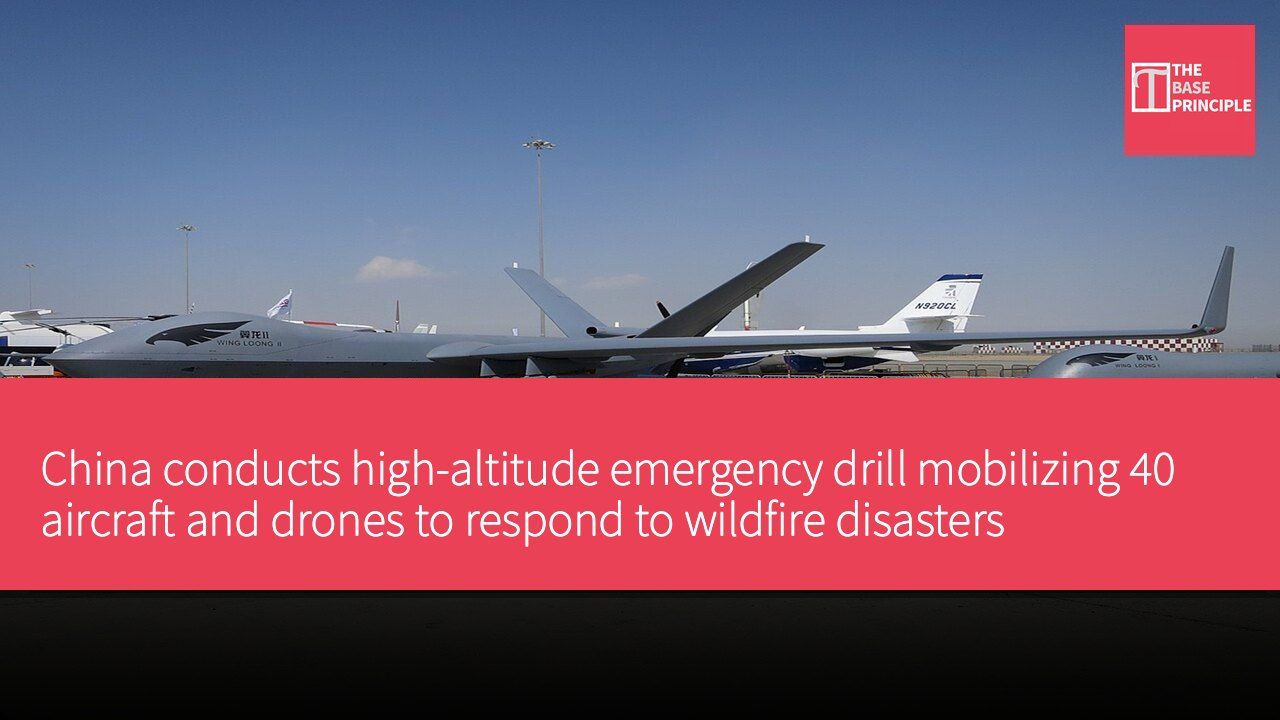
- China conducted a high-altitude emergency drill in Chongqing, mobilizing over 40 aircraft and drones.
- The exercise aimed to integrate military assets to respond to domestic emergencies.
- The drone systems can perform aerial reconnaissance and cloud seeding missions, enhancing response capabilities.
- China is coordinating various forces to address the increasingly frequent wildfire disasters.
In a high-altitude emergency preparedness exercise, Chinese rescue and military aviation units conducted a cross-service drill in Chongqing, located in the southwest region, utilizing advanced platforms. Beijing dispatched reconnaissance drones, transport aircraft, and seaplanes from its military and emergency toolkit. The simulated disaster scenario involved a devastating wildfire occurring within Chongqing's rugged karst terrain, gathering over 1,600 personnel and more than 40 aircraft to further enhance cross-service operational capabilities. China has recently intensified such drills to respond to multiple weather-related incidents.
Purpose of the Exercise and Resource Integration
According to reports from China Central Television (CCTV), the exercise aimed to test the integration of military frontline defense assets to respond to and manage domestic emergencies.
During the exercise, the drone systems included the Wing Loong II manufactured by Aviation Industry Corporation of China (AVIC) and the TB-001 twin-tailed scorpion produced by Sichuan Tengxin. These drones are frequently used by the People's Liberation Army for various purposes, from surveillance and reconnaissance to combat missions. The Wing Loong II and TB-001 models can achieve flight times exceeding 25 hours and reach altitudes of 26,247 feet (approximately 8,000 meters) during aerial reconnaissance and weather modification missions. In the training exercise, the drones hovered over the extensive area of the simulated fire, using synthetic aperture radar and infrared thermal imaging cameras to locate hotspots, capable of penetrating thick smoke to identify targets within the fire zone.
Applications and Capabilities of Drone Systems
The drone systems are equipped with laser rangefinders and advanced sensors, capable of transmitting real-time imagery directly to ground joint command centers. The multifunctional TB-001 has already assisted in addressing the ongoing drought and large wildfires in Sichuan Province in 2024. During the recent exercise, experts demonstrated its capabilities by deploying specialized rain catalysts for cloud seeding missions. Meanwhile, the Wing Loong II provided aerial communication relay support for humanitarian responses, a function that has been validated during landslide incidents along the China-Nepal border. Ground forces simultaneously deployed radar and electronic anti-drone systems to clear flight paths and address unauthorized civilian drone operations, ensuring flight safety during the exercise.
China utilized large aviation assets during this exercise, including the four-engine Il-76, which is used by the People's Liberation Army Air Force for rapid logistics troop transport and humanitarian disaster relief. The exercise also showcased a specialized commercial C909 regional aircraft firefighting variant for the first time. The displayed aerial firefighting capabilities also included AVIC's amphibious AG600 Kunlong, which can carry and release water to extinguish flames. This platform is also equipped with a firefighting variant of the MA60 turboprop regional aircraft, capable of dropping up to 6 tons of water in a single flight.
Coordinated Strategies for Wildfire Response
China's conduct of such cross-service exercises is a direct response to the widespread wildfire experiences observed in August 2022, when Chongqing faced extreme heatwaves with temperatures reaching 113 degrees Fahrenheit (approximately 45 degrees Celsius). China is currently working to coordinate civilian emergency agencies, military air units, and ground firefighting teams to refine an integrated aerial response plan, as wildfires become increasingly frequent in remote mountainous areas, particularly under severe drought conditions.
How China is Enhancing Emergency Response Capabilities
This high-altitude emergency drill reflects China's emphasis on responding to natural disasters, especially in the face of increasingly severe impacts from climate change. The use of drones and large aviation assets during the exercise demonstrates China's advancements in technological integration and resource allocation. These drills not only enhance the collaborative capabilities of military and civilian agencies but also provide practical experience for future disaster responses. As the frequency of disasters like wildfires increases, China's emergency management strategies will become increasingly important and may serve as a model for other countries.