
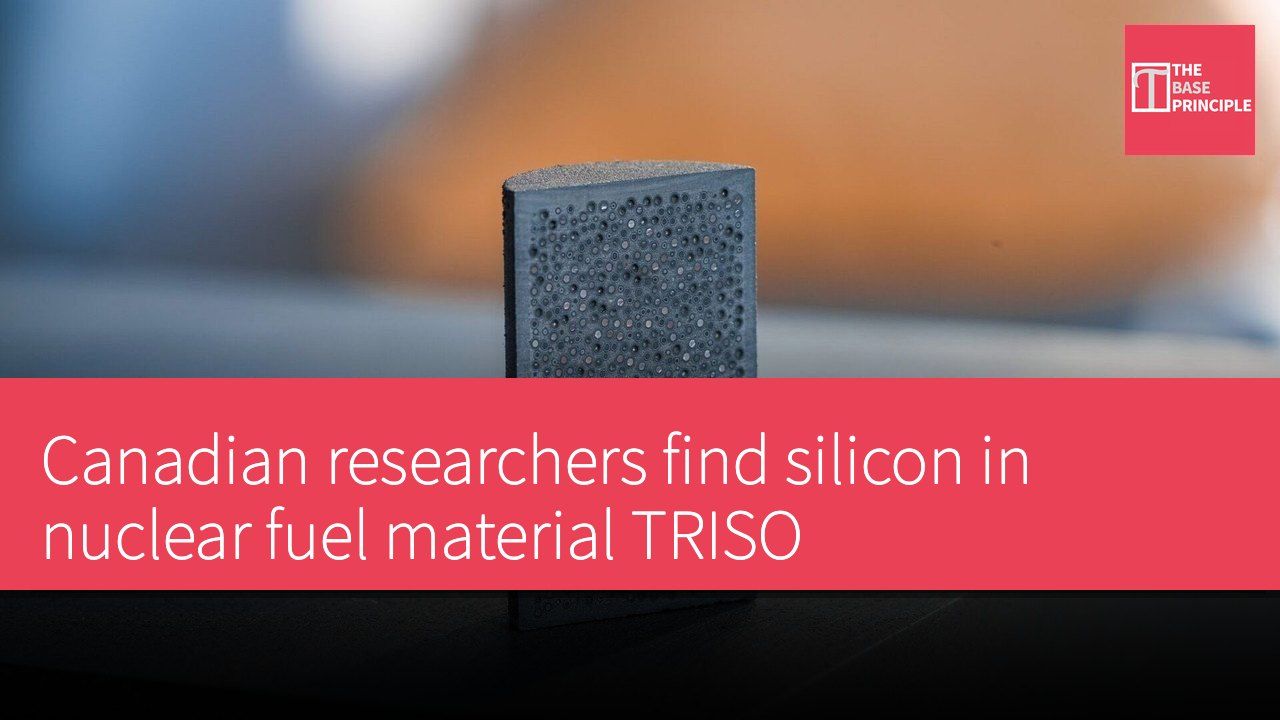
- Silicon was found in TRISO fuel particles, existing even before radiation exposure.
- This finding challenges the hypothesis that silicon originates from the protective layer.
- The research suggests that the presence of silicon may be related to the fuel's manufacturing process.
- The results have been published in the Journal of Nuclear Materials.
Researchers from Canada have discovered the presence of silicon in the robust nuclear fuel material TRISO, even before the particles enter the reactor. This finding comes from a study led by Professor Samantha Gateman and her team at Western University, who are investigating TRISO fuel particles as part of a larger project aimed at characterizing the chemical properties of the material. The research aims to examine the chemical properties of nuclear fuel materials to help guide future safe disposal and understand how they degrade over time through chemical reactions.
To determine where the corrosion or degradation of fission materials begins and how it spreads over time, postdoctoral researchers Soroosh Hakimian and Shamim Pourrahimi in Gateman's lab began examining the composition of the material. The size of TRISO fuel particles is comparable to that of small poppy seeds, encapsulated in protective coatings. In their experiments, the team found that silicon was already present in the particles before radiation exposure.
Surprising Discovery of Silicon
Gateman stated, "We found silicon in the fuel particles even before they entered the reactor. This means that when we see silicon in irradiated fuel, we cannot automatically assume it has migrated from the silicon carbide coating." Researchers noted that this finding is surprising because TRISO is considered one of the most robust nuclear fuel designs ever created. Each small fuel particle is surrounded by multiple layers designed to contain radioactive fission products.
Previous studies showed that silicon appeared in TRISO fuel after exposure to extreme temperatures and radiation in the reactor. In those studies, the migration of silicon from the surrounding silicon carbide protective layer was thought to be a possible source of the finding. However, the latest research by Gateman and her team indicates that silicon was present before the fuel entered the reactor.
Silicon Particles in the Manufacturing Process
According to the researchers, this establishes a new baseline for understanding the changes of silicon during reactor operation. Gateman stated in a statement that this also raises new questions about how the material initially entered the fuel particles. She mentioned that this discovery prompted the team to revisit the fuel manufacturing process. The fission material is produced through a process known as sol-gel manufacturing, where uranium-containing material is formed into small spheres by immersion in a hot silicon oil bath. These immersion cycles occur before the particles undergo any heat treatment and receive their protective coating.
To investigate whether silicon particles entered during the manufacturing process, the team studied the fuel particles in both bare and fully coated states. They found silicon at every stage, which surprised the researchers. Gateman remarked, "The surprising part is realizing that silicon may be related to how the fuel is manufactured. From a chemical perspective, the composition of the oil is important because the material interacts with it during the formation of the fuel particles."
The researchers concluded that the silicon present in TRISO is not a result of subsequent coating processes; rather, it was already present during the manufacturing of the nuclear particles. These results have been published in the Journal of Nuclear Materials.
Linking TRISO Fuel Manufacturing to Performance
The research on TRISO fuel reveals the presence of silicon in nuclear fuel particles, which not only challenges previous understandings of the source of silicon but may also impact future fuel design and safety. The findings from the research team suggest that the presence of silicon is closely related to the fuel's manufacturing process, which could change our understanding of the chemical properties of nuclear fuel materials. As nuclear technology advances, understanding the behavior of these materials is crucial for ensuring the safety and efficiency of nuclear energy.