
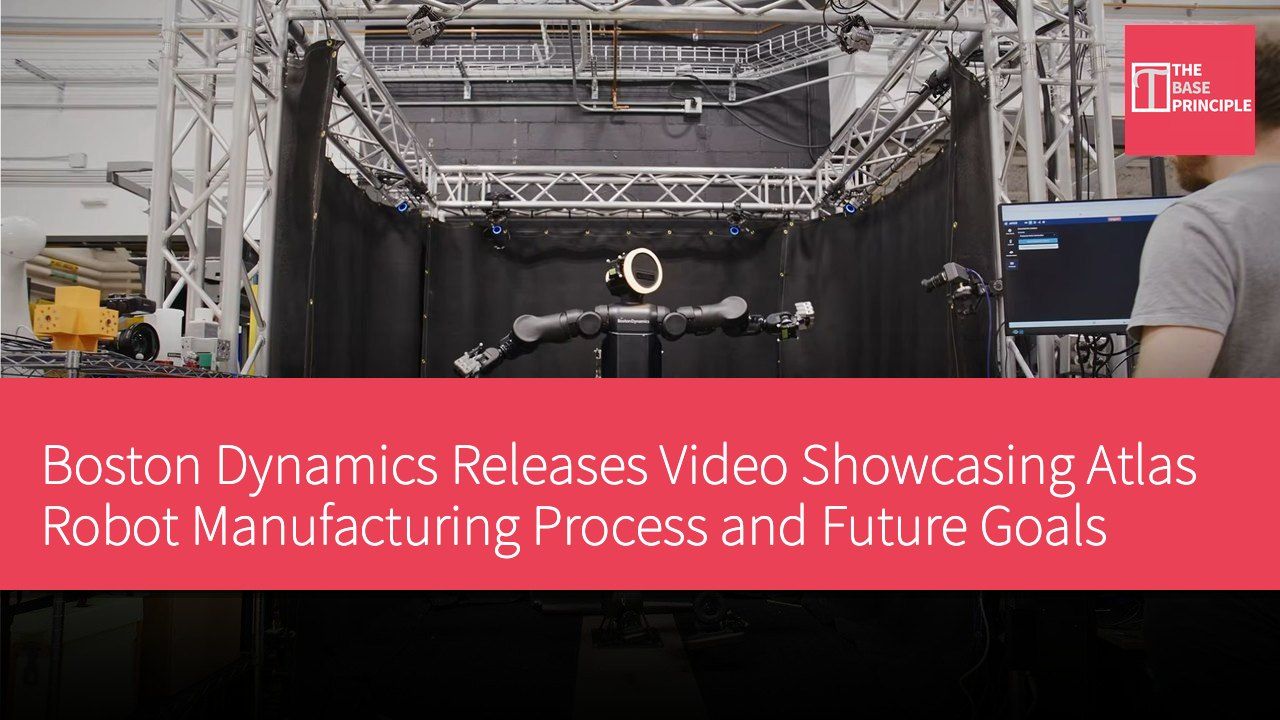
- Boston Dynamics releases a video showcasing the Atlas robot manufacturing process.
- The goal is to reduce construction time to about one hour, with hopes of achieving a few minutes in the future.
- In-house precision machining allows the team to quickly modify components and manufacturing processes.
- The video also serves as a recruitment effort, highlighting the demand for technical work.
Boston Dynamics has released a video that showcases the construction and maintenance process of its Atlas robot prototype operation team. The nearly six-minute video illustrates how the team combines precision machining, assembly, and maintenance to accelerate the development of the robot. The company states that its team can currently build a robot in about a day, with the goal of reducing this process to about one hour by next year. This approach applies manufacturing practices to research and development, enabling engineers and technicians to quickly modify components and processes as designs evolve.
Support for Rapid Hardware Development
The video demonstrates how the company's manufacturing process supports rapid hardware development, allowing engineers to transition more quickly from design changes to physical components and assembled robots. The company currently requires about a day to build a robot, with the goal of shortening this to approximately one hour by next year. Long-term future goals include reducing construction time to a few minutes. However, these targets only pertain to the robot construction process described in the video and do not establish production line output rates or commercial delivery timelines.
Boston Dynamics' prototype operation brings engineers and technicians together to develop, manufacture, assemble, and maintain robot hardware. The facility does not rely entirely on external suppliers for specialized components but conducts precision machining in-house, allowing the team to quickly modify components and manufacturing processes as designs evolve. This work includes manufacturing components with strict dimensional tolerances and performing specialized operations such as gear cutting. These capabilities are crucial for humanoid robots, as they require precisely manufactured mechanical parts to support coordinated movement, repetitive tasks, and reliable performance.
Integrating machining closely with engineering also shortens the feedback loop between design and testing. Engineers can discuss component requirements directly with technicians, make adjustments, and assess revised parts without waiting for lengthy external manufacturing processes. Components can transition from machining to assembly on the same day or the next, enabling the team to test design changes on physical hardware sooner. The facility has also developed efficient manufacturing methods for producing new components, including selecting appropriate cutting tools, improving machining procedures, and integrating robotic arms into assembly tasks. This approach allows manufacturing techniques to evolve alongside the mechanical design of the robots.
Balancing Design and Maintenance
For the design of Atlas itself, the emphasis on manufacturing efficiency is particularly important. Its components must strike a balance between flexibility, durability, cost, and ease of maintenance, especially as the robot advances toward broader industrial applications. The company recently introduced a four-fingered hand for Atlas, highlighting the need to consider practical requirements when designing robot hardware. The hand must be capable of performing multiple tasks while maintaining sufficient robustness and reparability to meet the demands of repeated use. Faster prototype development allows engineers to evaluate these trade-offs through physical testing and fine-tune components before entering broader production.
An integrated workflow also supports maintenance and repair, helping the team quickly identify hardware issues and return the robot to testing faster. During the research and development phase, repeated experiments and design revisions place additional demands on prototype hardware, making this particularly relevant. The push to shorten Atlas's construction time occurs against the backdrop of humanoid robot companies increasingly focusing on manufacturing scale. However, the time required to assemble individual robots differs from the speed of production lines producing multiple robots. Other manufacturers have reported hourly production targets, weekly output figures, and cumulative production milestones.
These measurements describe different stages of manufacturing, and without further information on assembly procedures, automation, testing, and the status of completed robots, direct comparisons cannot be made.
Boston Dynamics' approach focuses on improving the connection between engineering and manufacturing, supporting faster development through quicker component production and assembly. The video also serves as a recruitment effort, highlighting the technical work involved in building and maintaining Atlas.
The Importance of Enhancing Manufacturing Efficiency for Atlas
Boston Dynamics' design of the Atlas robot emphasizes manufacturing efficiency, as this is crucial for the robot's advancement into industrial applications. The balance between flexibility, durability, and ease of maintenance requires engineers to continually conduct physical testing and adjustments throughout the design process. By shortening construction time, the team can accelerate prototype development, which not only improves product quality but also speeds up time to market. As competition in the humanoid robot market intensifies, this integrated workflow will be key to future success.