
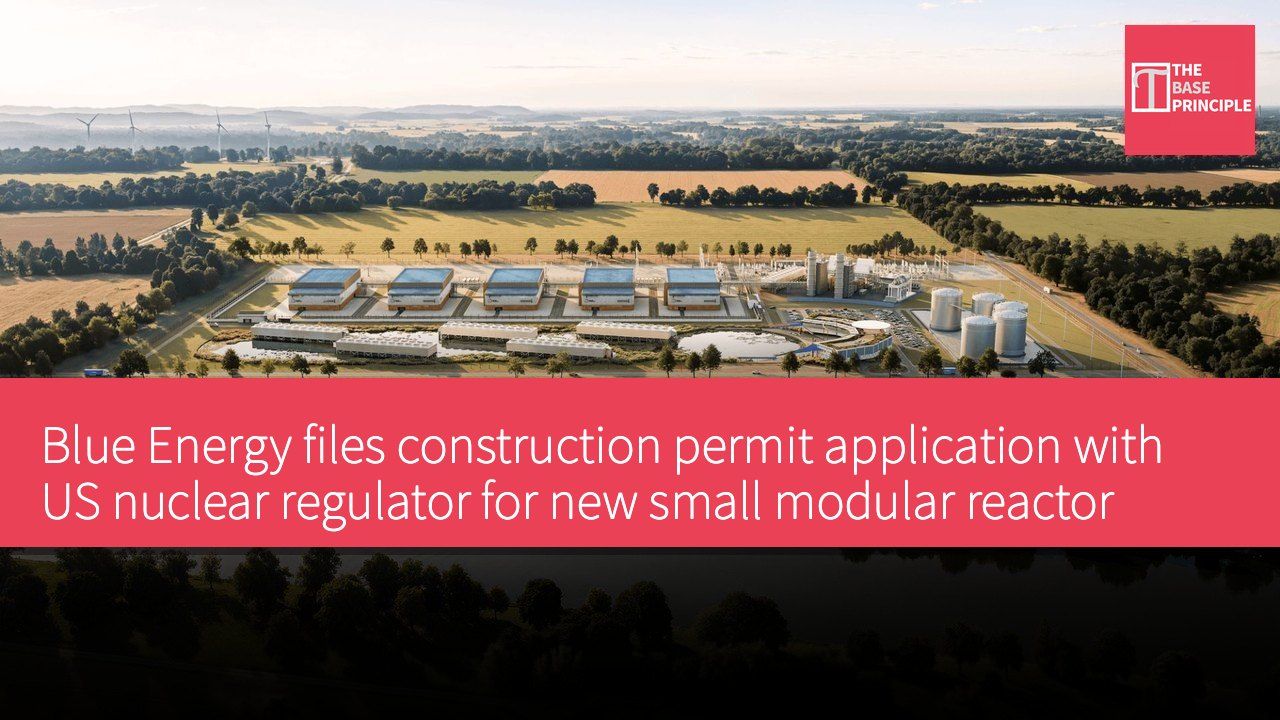
- Blue Energy has submitted the first part of its construction permit application to the US Nuclear Regulatory Commission.
- The facility is planned to combine nuclear energy with conventional natural gas, designed as a hybrid 2.5 gigawatt power complex.
- Blue Energy has signed a project acceleration agreement with GE Vernova to advance facility development.
- Multiple projects share engineering and licensing approaches, laying the groundwork for a fleet of BWRX-300 reactors.
Blue Energy is taking a significant step toward building a new reactor in Texas, having engaged with federal regulators. The company has formally submitted the first part of its construction permit application to the US Nuclear Regulatory Commission (NRC). The application focuses primarily on installing a BWRX-300 small modular reactor at the Port of Victoria. This marks the beginning of an extensive federal review, and the project plans to combine nuclear energy with conventional natural gas. The proposed facility, located near Victoria, is designed as a hybrid 2.5 gigawatt power complex.
Background of the construction permit application
Under this arrangement, Blue Energy intends to pair a GE Vernova 7HA.02 gas turbine with the advanced modular reactor. The facility is being developed to deliver a stable power supply for industries that consume large amounts of electricity. To meet federal licensing standards, Blue Energy is pursuing a phased submission strategy, having first submitted the initial package, but still needs to compile the technical site records before sending the remaining portions. The company added in a press release: "The company expects to submit the remaining application sections in 2027, following the completion of the one year of site-specific data collection required by the NRC."
Project progress and partnership developments
Accelerated partnership
Work on the Victoria facility has accelerated over the past few months through close industry ties. Blue Energy selected the BWRX-300 design earlier this year. In April 2026, the company signed a project acceleration agreement with GE Vernova Hitachi Nuclear Energy (GVH). Last month, the two partners deepened their collaboration further by signing an additional agreement to advance the 2.5 gigawatt complex. Under these arrangements, GVH provides important engineering work and technical information related to the reactor design.
Company leaders said this steady collaboration is turning a broad vision into practical reality. Blue Energy's CEO and co-founder Jake Jurewicz noted that the partnership has progressed from technology selection to NRC authorization in just a few months. He said this milestone helps demonstrate that their development approach can create a faster and repeatable path for deploying new nuclear power across the country.
Broader fleet expansion
The application also fits within a growing regional pipeline for this class of reactor. In Canada, Ontario Power Generation is already building a BWRX-300 unit at its Darlington site. In Tennessee, the Tennessee Valley Authority has filed a construction permit application for the same design at Clinch River, and NRC review is now approaching a decision. Jason Cooper, CEO of GE Vernova Hitachi Nuclear Energy, noted that these parallel efforts show what fleet deployment looks like in practice.
Because multiple projects share the same engineering, licensing approaches and supply chains, teams can directly apply practical lessons from one build to the next. Cooper explained that this work lays the foundation for a broader fleet of BWRX-300 reactors in the United States and internationally.
Potential impact of combining nuclear with natural gas
Blue Energy's new small modular reactor plan marks a pairing of nuclear energy with conventional sources, aimed at providing stable power for energy-intensive industries. The move not only strengthens supply stability but also advances nuclear technology. As multiple projects share experience across regions, this will help reduce construction costs and timelines, further promoting the adoption of nuclear power. The effort carries important implications for the future transformation of the US energy mix, particularly in the context of addressing climate change.