
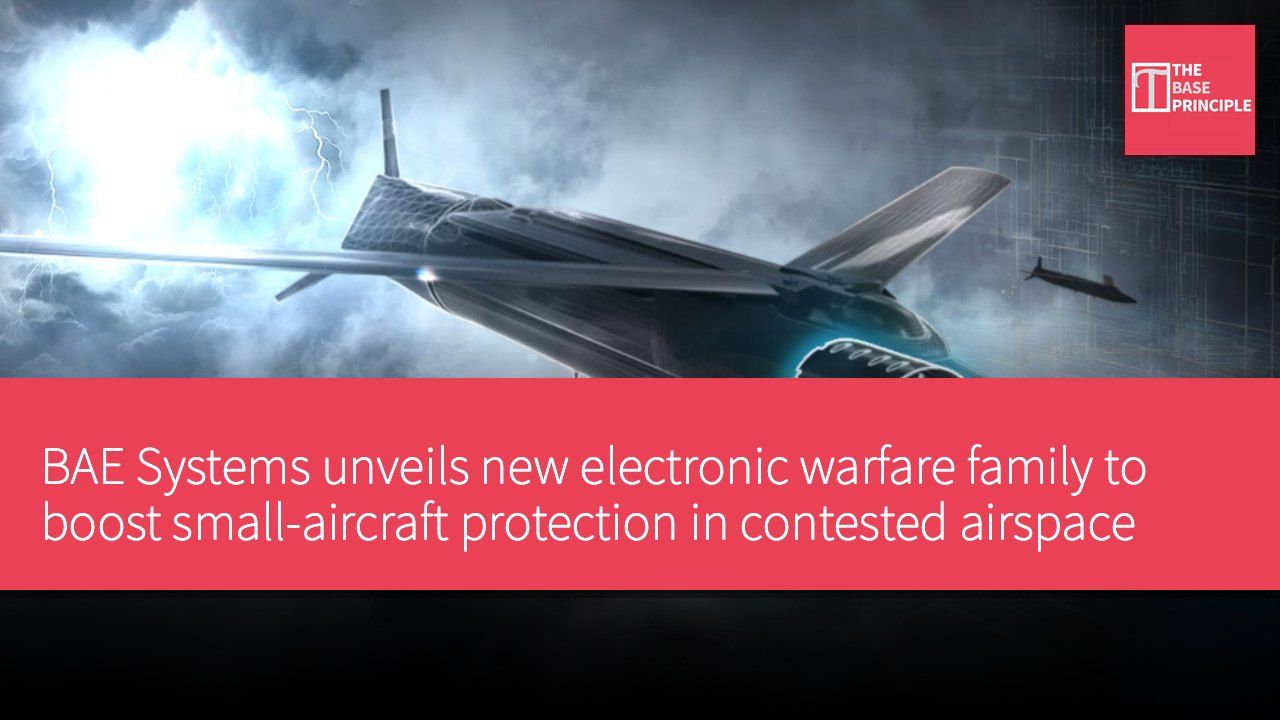
- BAE Systems has introduced a new electronic warfare system designed specifically for small aircraft.
- The Shadow EW series offers compact systems that suit platforms with limited space.
- The system can support multiple electronic warfare functions and is updatable through software changes.
- Use of commercial microchips simplifies production and improves scalability.
BAE Systems has launched a new electronic warfare family aimed at giving small aircraft stronger protection in contested airspace. The Shadow EW series addresses growing demand with compact systems that fit space-limited platforms. The new offerings focus on electronic sensing and self-protection without the size, weight or power requirements of traditional systems. BAE Systems has also designed the products for rapid production, making larger-scale deployment more practical. The architecture uses commercially available microchips to handle computational needs and simplify the supply chain.
This approach may help BAE Systems build systems more quickly as demand grows for affordable electronic warfare.
Electronic warfare solutions tailored for small platforms
Small electronic warfare platforms such as drones and other aerial systems are increasingly operating close to complex electronic threats. Their limited payload capacity makes it difficult to integrate traditional electronic warfare equipment. Shadow EW targets this constraint with compact, lightweight hardware built around open-architecture principles. The systems can also receive software updates after deployment, and this software-defined approach gives operators another option as adversaries change their electronic signatures and tactics. Hardware configurations can also be adjusted to suit different platforms and mission requirements.
BAE Systems says the family can support both crewed and uncrewed aircraft, with a platform-agnostic design intended to protect valuable payload capacity while adding radio-frequency capability. The systems can support a range of electronic warfare functions, including threat awareness, target locking, decoy operations and survivability, and can take part in coordinated electronic effects across multiple platforms.
Commercial components improve production efficiency
BAE Systems is leaning on commercial components to make high-volume electronic warfare production more feasible. Commercial microchips deliver significant computing performance without requiring specialized hardware for each configuration. The strategy reduces reliance on highly customized parts, simplifies procurement and helps manufacturers respond more quickly to changing production needs. Production scalability is central to the Shadow EW design philosophy. BAE Systems plans to use established manufacturing methods to support larger orders and faster delivery times — a factor that matters as the U.S. military explores more affordable ways to equip a growing fleet of autonomous and expendable systems.
Expanding electronic warfare capability becomes harder when every platform demands an expensive, custom solution.
Shadow EW separates the system's adaptability from its physical hardware. Operators can configure capabilities around specific threats and platform architectures. Software updates provide another route to changing the system after deployment. The flexibility is critical against adversaries that frequently modify their electronic warfare techniques. Rebecca Cruz, who leads BAE Systems' Shadow EW product line, said the battlefield environment is changing quickly. She noted that even smaller platforms need adaptable electronic warfare protection. The family is designed around a configurable approach that lets customers choose capabilities suited to their missions.
BAE Systems describes it as an affordable electronic warfare option intended for broader deployment. The company has not disclosed detailed performance figures for individual Shadow EW variants, and details such as detection range, frequency coverage, power consumption and platform integration options remain limited. The engineering approach focuses on shrinking electronic warfare hardware while leaning on software to keep the system adaptable. Commercial-scale manufacturing also helps BAE Systems keep production costs in check.
Market potential for the new electronic warfare system
BAE Systems' Shadow EW family targets the needs of small aircraft with flexible, efficient electronic warfare solutions. As drones and other small aerial systems see increasing use in complex electronic environments, the adaptability and lightweight design of these systems will be a competitive advantage. The use of commercial microchips not only lowers production costs but also speeds up response to market demand, a particularly important factor as the military explores affordable equipment options. These factors could give the Shadow EW family a significant position in the electronic warfare market going forward.