
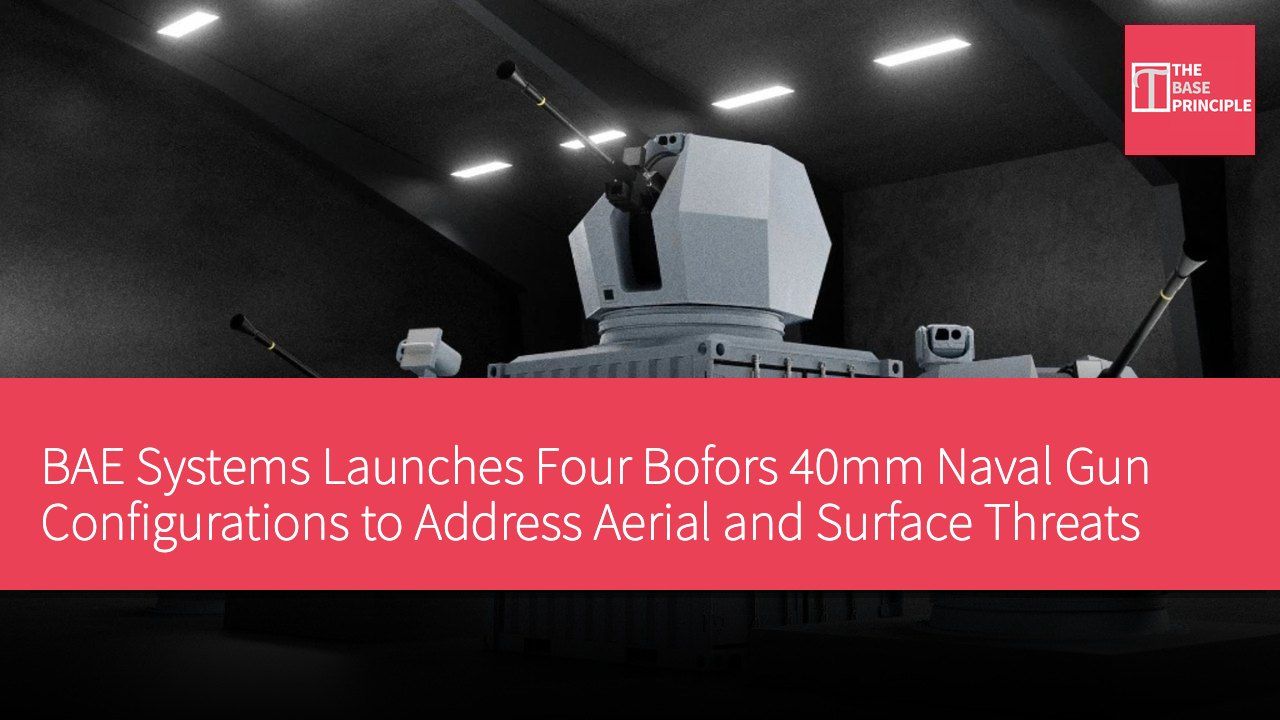
- BAE Systems has launched four Bofors 40mm naval gun configurations to address threats.
- The new series of guns utilizes programmable 3P ammunition to meet various operational needs.
- The Sea Tridon series combines electro-optical fire control systems to enhance operator control.
- All configurations share ammunition, simplifying logistics and training requirements.
Each configuration meets different operational needs, but all four utilize the company's programmable 3P ammunition. This announcement reflects the increasing challenges faced by naval forces. Drones, missiles, and other relatively inexpensive weapons present new demands on ship defense systems. BAE Systems positions its new series as a way to provide operators with more options without the need to introduce completely independent weapons and support systems.
Features of the New Gun Series
The Sea Tridon, which expands naval firepower, combines the Bofors 40mm gun with an integrated electro-optical fire control system. Its independent targeting capability gives operators greater control during engagements and simplifies integration with various ship designs. Sea TridonC deploys this configuration in a containerized form at sea, allowing crews to install it on military, government, or commercial vessels that require additional protection. Its design also enables temporary deployments without the need for permanent weapon installation. Sea Trinity introduces radar technology.The system combines the Bofors 40mm gun with a radar-based fire control system and 3P ammunition. BAE Systems describes it as a complete close-in weapon system (CIWS) designed to counter incoming missiles, drones, and other high-speed threats. The Bofors 40 Mk4 naval gun takes a different design approach. Its compact and lightweight design allows for integration with existing ship combat management systems, enabling strikes against aerial and surface targets without the more comprehensive configuration provided by Sea Trinity.
Versatility of Ammunition
Lena Gillström, President of BAE Systems Bofors, stated that the maritime threat environment is changing rapidly. She described this product family as a flexible option for navies seeking different defensive capabilities. The design of the ammunition is also noteworthy. All four configurations use Bofors 3P programmable ammunition, allowing crews to select the fuse settings for the projectile immediately before firing. The system offers six programmable fuse modes, enabling the same family of ammunition to address various types of targets, including aircraft, surface vessels, and coastal threats.This versatility changes the strategy operators face during engagements. Crews no longer need to rely on different types of ammunition for different targets but can adjust the projectile settings according to the situation. The shared ammunition also provides a common logistical foundation for all four configurations. BAE Systems stated that despite differences in sensor integration and fire control equipment, this larger family maintains commonality in training, logistics, and support. Gillström noted that operators can choose the configuration that best meets their operational needs while retaining access to established technologies and programmable ammunition.
BAE Systems will showcase the Sea Tridon system at the Euronaval exhibition in Paris in 2026. The system will be displayed at booth E30, alongside the company's broader range of naval defense products.
Item Specifications Gun Type Bofors 40mm Fire Control System Electro-Optical Fire Control System Ammunition Type 3P Programmable Ammunition
Flexible Options for Naval Defense Capabilities
The Sea Tridon series of guns launched by BAE Systems reflects the changing maritime threat environment, particularly the rise of drones and missiles. These new configurations not only provide diverse defensive options but also emphasize the flexibility of programmable ammunition, allowing operators to adjust their strike strategies based on actual conditions. This design not only enhances operational efficiency but also simplifies logistics management, enabling navies to respond more effectively to various challenges in the face of evolving threats.